
Planning a wedding sounds exciting at first. Then the details start piling up. Vendors, photos, ceremony timing, and reception events all need to fit into one day. Without a clear schedule, even a beautiful wedding can feel rushed or chaotic.
That’s where a wedding day timeline planner becomes essential. It helps couples organize the entire day step by step—from getting ready in the morning to the final send-off at night. When every event has a clear time and place, the day flows smoothly.
In this guide, you’ll learn how to create a perfect wedding timeline, what sections a planner should include, and how to keep your big day calm, organized, and memorable.
What Is a Wedding Day Timeline Planner?
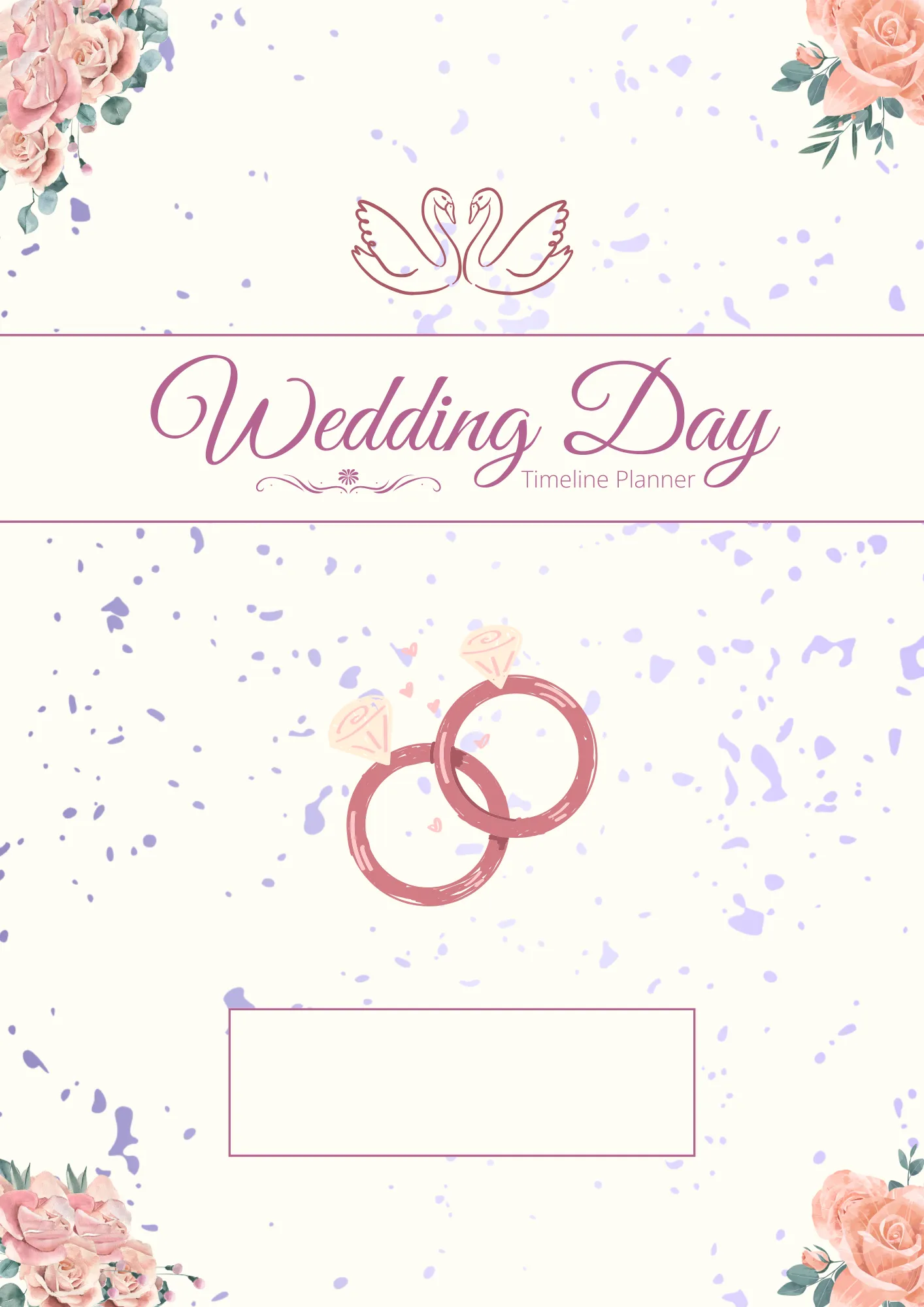
A wedding day timeline planner is a structured schedule that maps out every event during the wedding day. It lists activities in chronological order so vendors, the wedding party, and family members all know what happens next.
Instead of guessing when things should happen, a timeline planner turns the day into a simple, organized flow.
- Outline the entire wedding schedule from morning to night
- Include ceremony time, reception events, and photo sessions
- Assign responsibilities to vendors or helpers
- Share the schedule with your wedding coordinator
- Print copies for your bridal party and vendors
Helpful idea: Build your timeline two months before the wedding so vendors can confirm their availability.
Clear schedules remove confusion and keep the celebration running smoothly.
Why Couples Use a Wedding Timeline Planner
 Many couples underestimate how fast a wedding day moves. Without a timeline, important moments may feel rushed or disorganized. A timeline planner helps coordinate vendors, ceremony flow, and reception activities.
It also allows photographers, DJs, and caterers to prepare their services at the right time.
- Prevent ceremony delays
- Coordinate vendor arrival times
- Keep photography sessions organized
- Ensure guests know when events begin
- Reduce stress for the couple
Helpful idea: Add 10–15 minute buffers between major events like the ceremony and reception.
Small buffers protect the schedule if something runs slightly late.
A Simple Wedding Day Timeline Example
Most weddings follow a similar structure. The day usually starts with preparation and ends with a reception celebration. Seeing a simple example makes it easier to design your own schedule.
- 8:00 AM – Hair and makeup begin
- 11:00 AM – Photographer arrives
- 2:30 PM – First look at photos
- 4:00 PM – Ceremony begins
- 5:00 PM – Cocktail hour
- 6:30 PM – Reception and dinner
- 10:30 PM – Send-off
Helpful idea: Always confirm your timeline with the photographer because lighting conditions affect photo planning.
Photographers often shape the timeline to capture the best natural light.
Wedding Details Page: The Planner’s Information Hub
The wedding details page acts as the information center for the entire event. It stores the most important details couples and vendors may need during the day.
Instead of searching through emails or messages, everything appears in one organized place.
- Wedding date and ceremony time
- Ceremony venue address
- Reception venue details
- Wedding coordinator contact
- Photographer and vendor contacts
Helpful idea: Save a digital copy of this page on your phone for quick reference.
Having important contacts ready prevents last-minute confusion.
If you’re building your planning system, you may also find our wedding planning checklist guide helpful.
Keeping information centralized saves time on a busy wedding day.
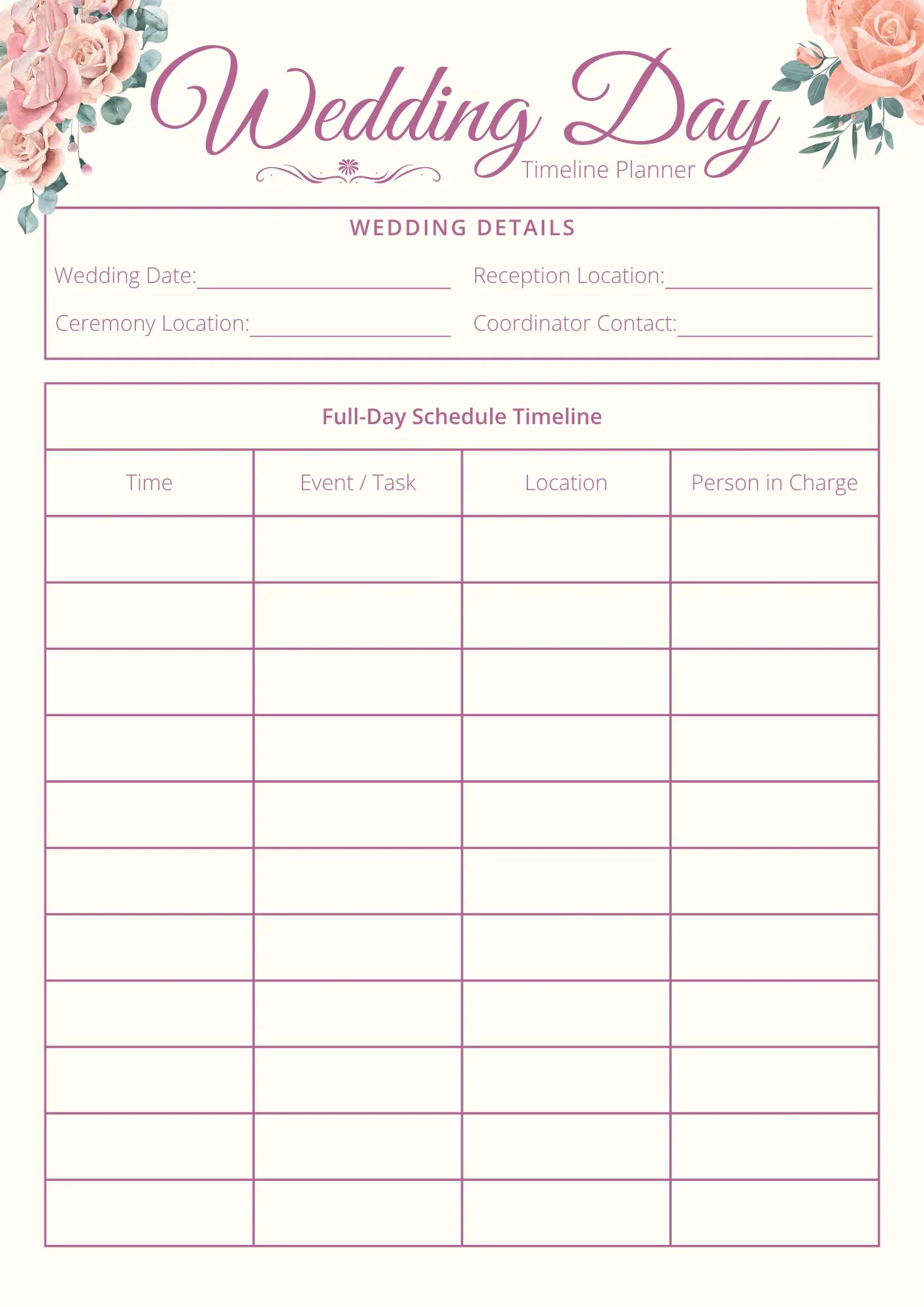
Full-Day Wedding Schedule Timeline

The timeline page is the heart of the planner. It organizes the entire day into a simple table that shows the time, event, location, and person responsible.
This structure helps vendors coordinate their services without constant communication.
- List the exact start time for each activity
- Include travel time between venues
- Add the responsible vendor or helper
- Highlight key moments like speeches or the first dance
- Share the timeline with vendors one week before the wedding
Helpful idea: Print multiple copies and give them to the wedding party.
Shared schedules improve coordination and reduce confusion.
Planning tools from The Knot wedding planning platform can also help couples organize their timeline digitally.
Getting Ready Checklist for the Wedding Morning
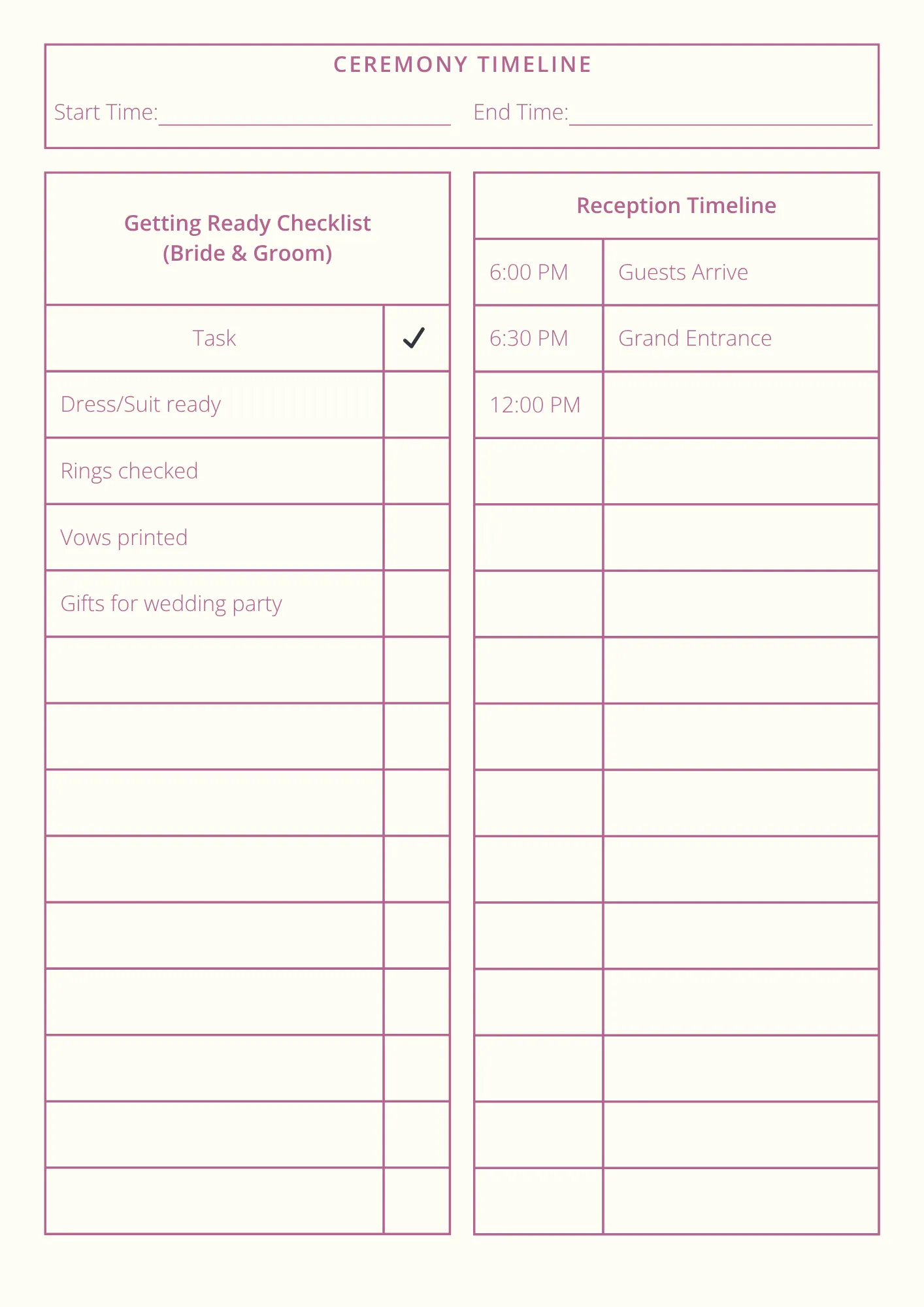
The wedding morning can feel exciting but busy. Small details like rings or vows can easily be forgotten during the rush. A getting-ready checklist ensures everything important is prepared before the ceremony begins.
- Wedding dress or suit ready
- Rings packed safely
- Printed vows prepared
- Marriage license ready
- Gifts for the wedding party
Helpful idea: Prepare a small wedding emergency kit with tissues, safety pins, and pain relievers.
Being prepared keeps unexpected issues from disrupting the morning.
Ceremony Timeline Planning
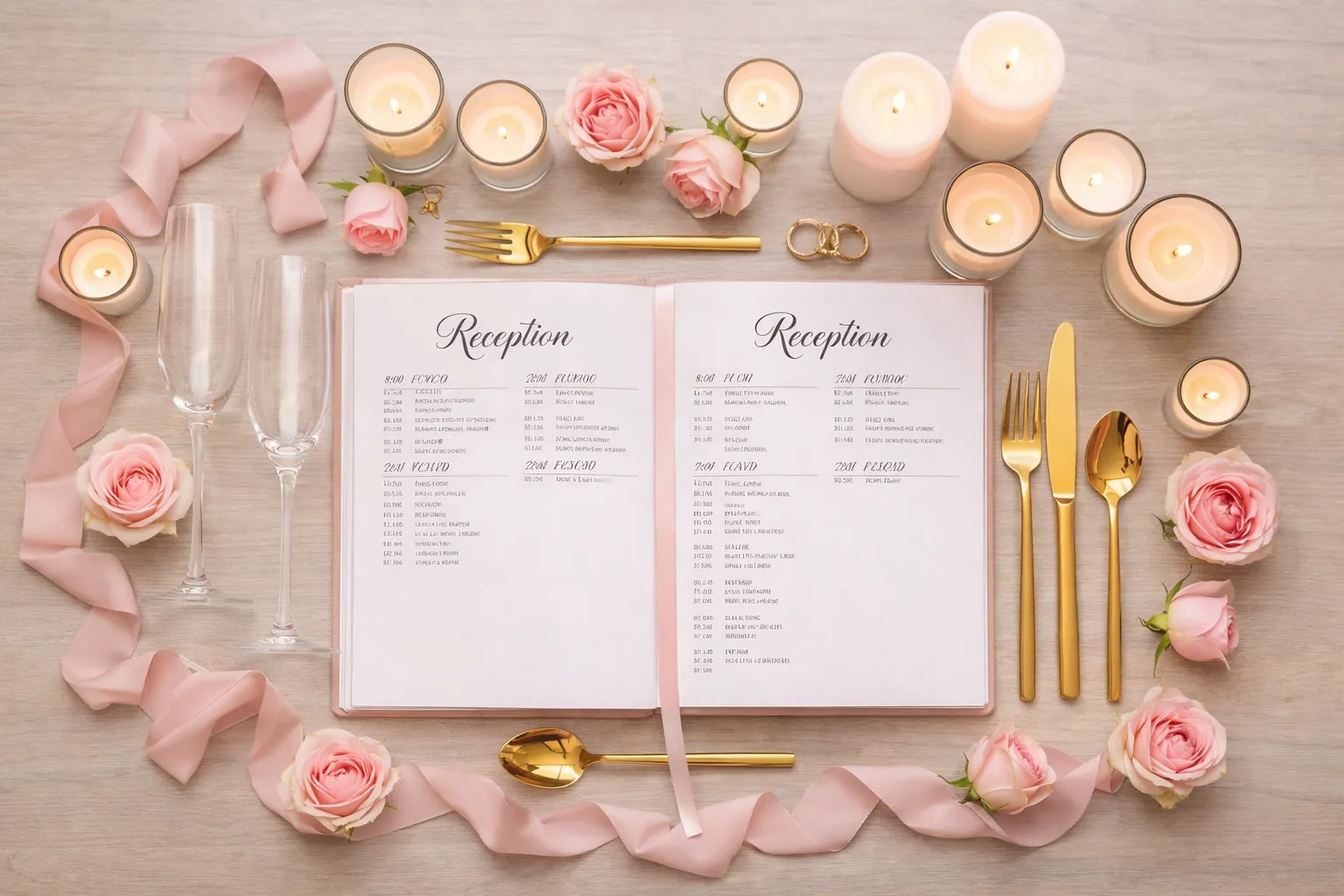
The ceremony timeline outlines the exact order of events during the wedding ceremony. When everyone understands the sequence, the ceremony flows naturally and feels relaxed.
Officiants, musicians, and coordinators all rely on this schedule.
- Guest seating and background music
- Processional entrance
- Welcome message or prayer
- Vows and ring exchange
- First kiss and recessional
Helpful idea: Rehearse the ceremony timeline during the rehearsal dinner.
Practice builds confidence and helps avoid awkward pauses.
Reception Timeline: Planning the Celebration
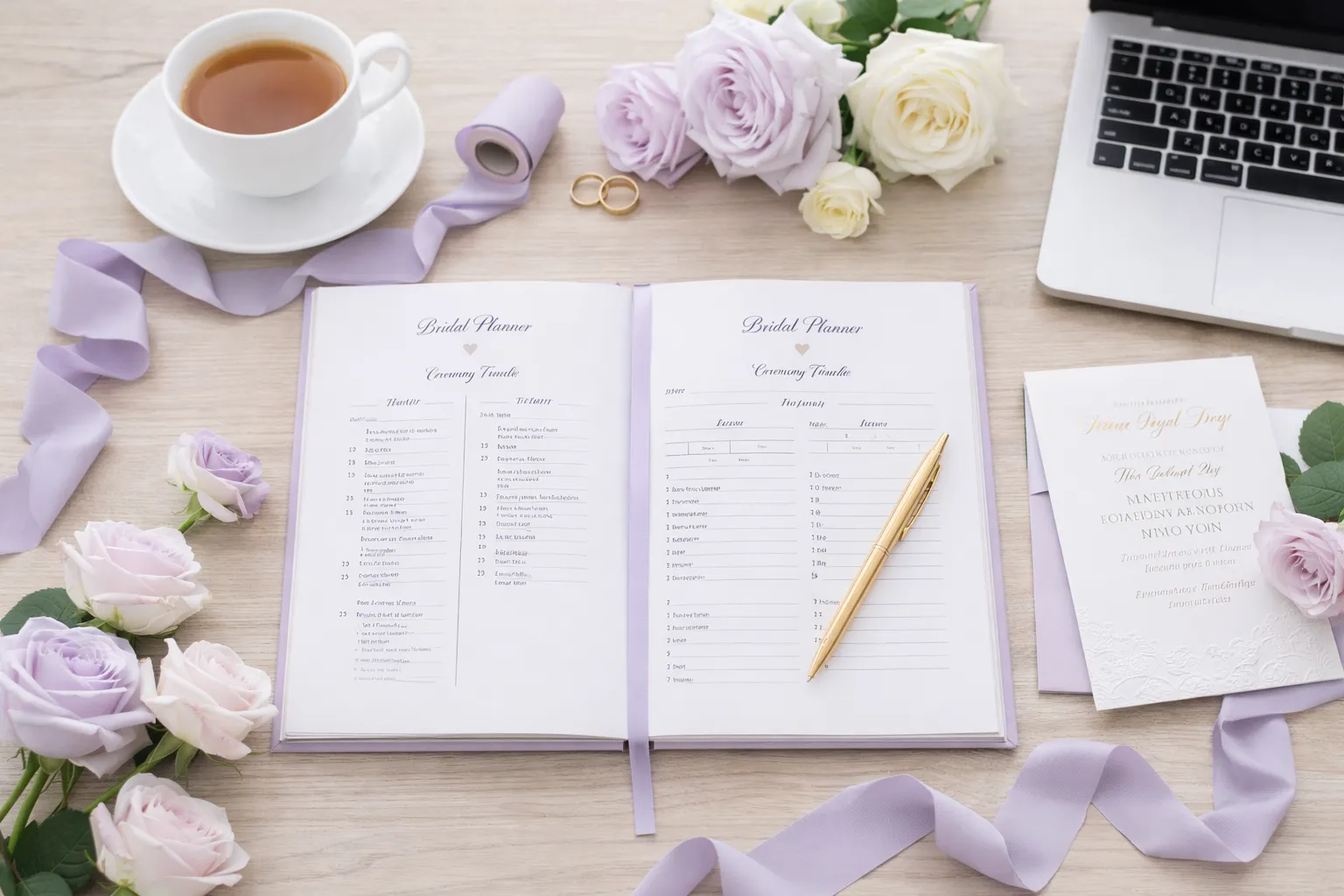
The reception timeline keeps the celebration balanced between dinner, speeches, and dancing. Without a clear schedule, the evening can feel rushed or disorganized.
A simple reception plan keeps guests engaged throughout the night.
- Guests arrive, and the cocktail hour begins
- Couple’s grand entrance
- Dinner service
- Speeches and toasts
- First dance and cake cutting
Helpful idea: Place speeches earlier in the evening so guests stay attentive.
Balanced timing keeps the energy high during the celebration.
For additional reception inspiration, you can explore ideas from Martha Stewart Weddings.
Must-Have Wedding Photo Moments Checklist
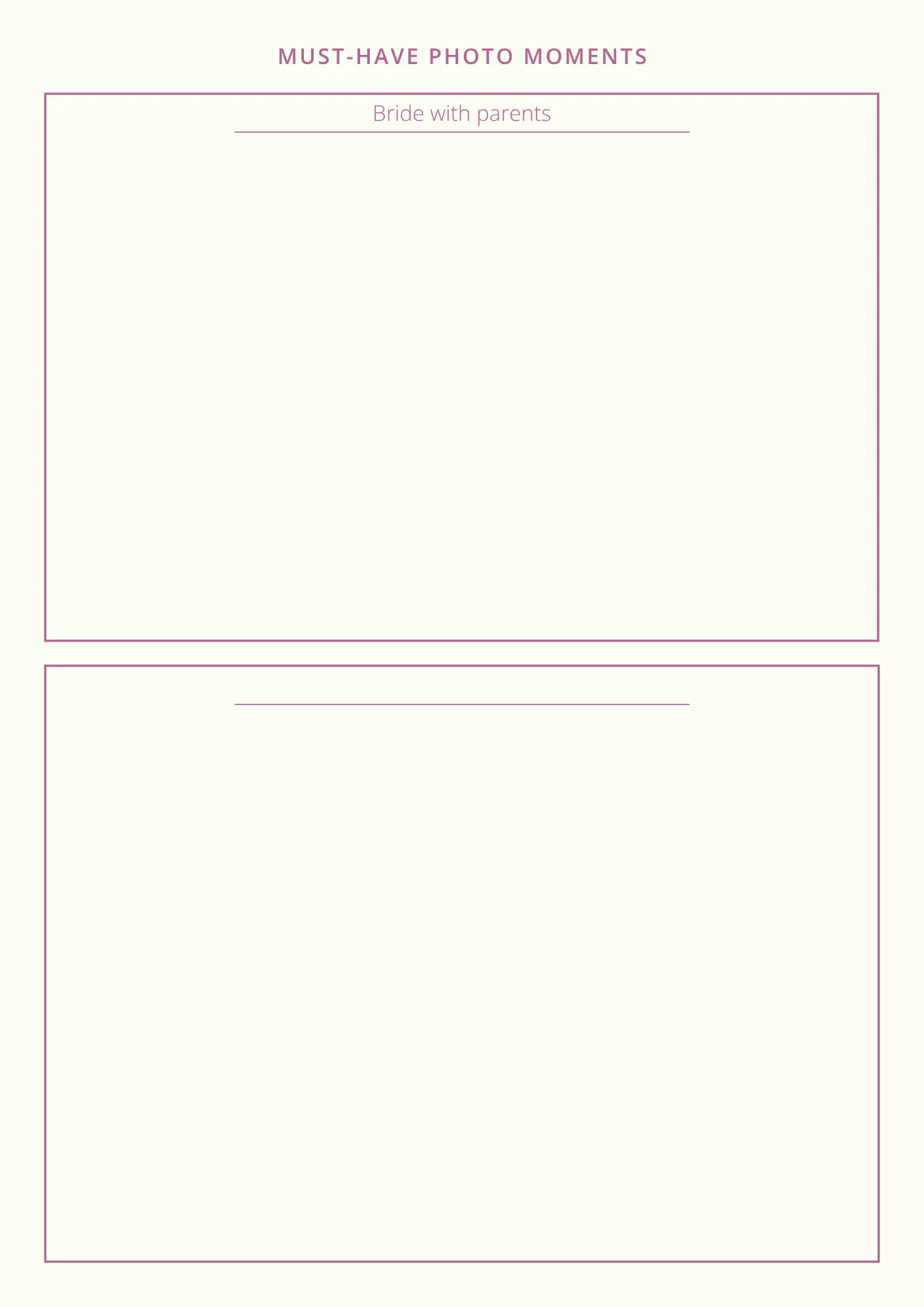
Wedding photos capture memories that last forever. A photography shot list ensures the photographer captures every meaningful moment.
Without a list, important family or emotional photos might be missed.
- Bride getting ready photos
- Groom preparation shots
- First look moment
- Couple portraits
- Wedding party photos
- First dance moment
Helpful idea: Send the shot list to the photographer one week before the wedding.
Clear communication allows photographers to prepare lighting and locations.
Thoughtful planning leads to better wedding albums.
Easy Planning Mistakes to Avoid
- Overloading the reception schedule with too many activities
- Forgetting buffer time between major events
- Not sharing the timeline with vendors
- Planning too many photos in a short time
- Skipping a ceremony rehearsal
- Forgetting printed copies of the timeline
FAQs
When should a wedding timeline be finalized?
Most couples finalize their wedding timeline 4–6 weeks before the wedding so vendors can review it.
Who manages the wedding timeline on the big day?
Usually, a wedding coordinator, planner, or trusted friend manages the schedule.
How long does a wedding ceremony typically last?
Most ceremonies last 20–30 minutes, although religious ceremonies may be longer.
Should photographers receive the timeline?
Yes. Photographers rely on the timeline to plan lighting, portraits, and group photos.
Conclusion
A wedding day moves quickly, but a well-organized schedule keeps everything calm and enjoyable. A wedding day timeline planner allows couples to manage every moment of their celebration with confidence.
From preparation in the morning to the final dance at night, a clear timeline ensures the entire wedding flows naturally. With simple planning, helpful checklists, and a structured schedule, couples can focus on what truly matters—celebrating their love.