


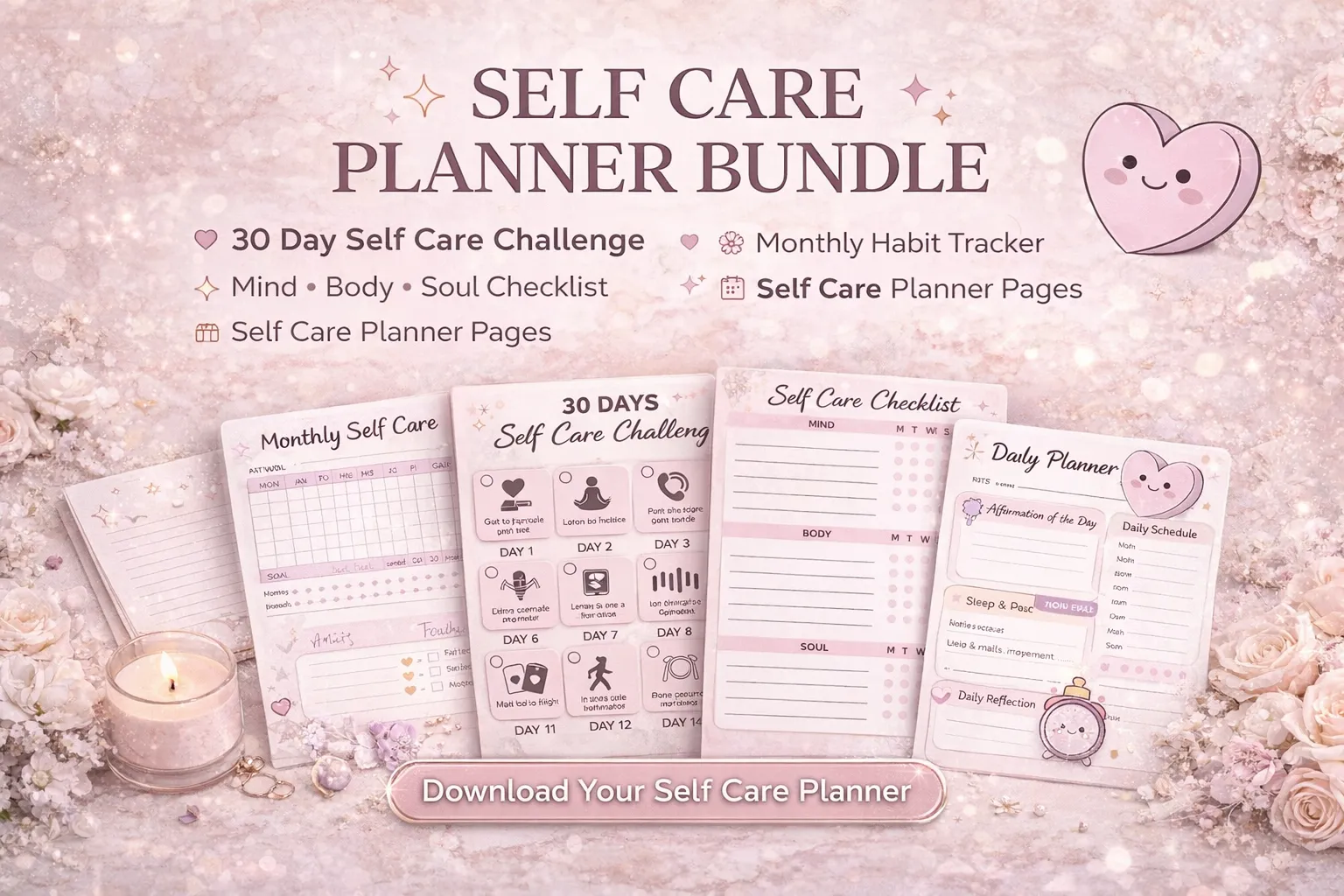
Taking care of yourself should not feel complicated or overwhelming. In fact, the best self-care routines are often made of very small daily actions. A 30-day self-care challenge helps you focus on simple habits that improve your mood, energy, and mental clarity without requiring huge lifestyle changes.
Instead of trying to fix everything at once, you follow one small wellness activity each day. Over time, these habits slowly build a routine that supports your mind, body, and emotional well-being.
If you combine the challenge with a self-care planner, weekly checklist, and monthly habit tracker, it becomes even easier to stay consistent and see your progress.
What Is a 30 Day Self-Care Challenge
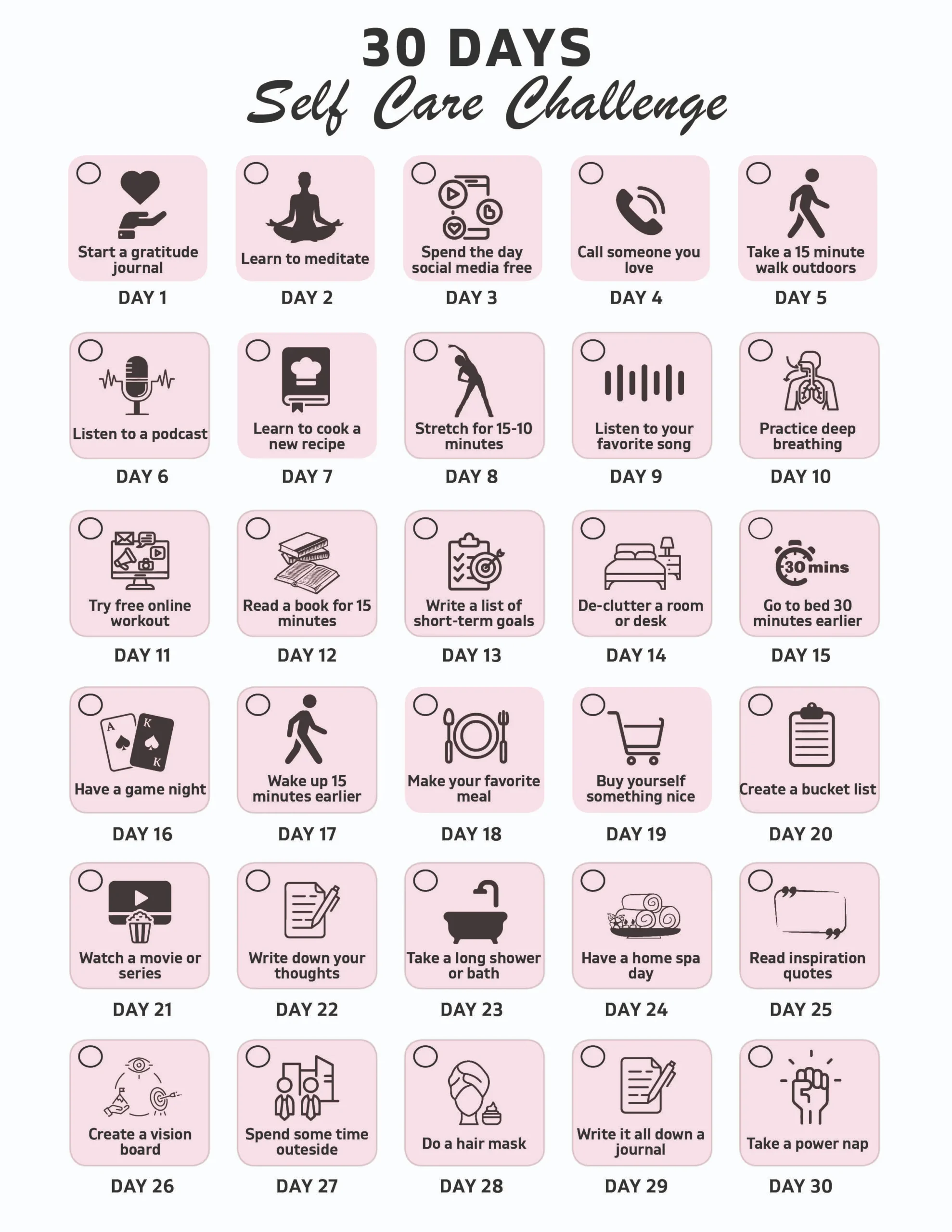
A 30-day self-care challenge is a simple wellness routine where you complete one small activity every day for an entire month. Each task focuses on improving mental health, relaxation, or daily balance.
The goal is not perfection. The goal is consistency. When you repeat small positive habits every day, they slowly turn into a natural routine.
Some challenges include activities like journaling, meditation, short walks, or decluttering your space.
Here is how most people approach the challenge:
- Choose one simple activity per day
- Keep the task under 20 minutes
- track your progress in a planner
- Focus on relaxation and mental clarity
- celebrate small wins every week
Helpful suggestion: place your planner somewhere visible, like your desk or bedside table.
This visual reminder makes it easier to stay committed to the challenge.
A daily reminder helps your brain connect the activity with your routine.
What Is Included in a Self-Care Planner
A self-care planner is designed to organize your wellness habits and help you track progress. Instead of remembering everything in your head, the planner creates a simple system that guides your daily routine.
Most printable planners include three main sections: a weekly checklist, a monthly habit tracker, and a 30-day challenge page.
These tools work together to help you build consistent habits.
Typical pages inside a self-care planner include:
- weekly self-care habit checklist
- monthly self-care habit tracker
- 30-day self-care challenge sheet
- space for personal notes and goals
- progress tracking grids
Helpful suggestion: print the planner pages and keep them inside a binder or folder.
Having a dedicated planner space makes the routine feel more intentional.
Writing things down strengthens commitment and improves consistency.
Weekly Self-Care Checklist for Building Habits
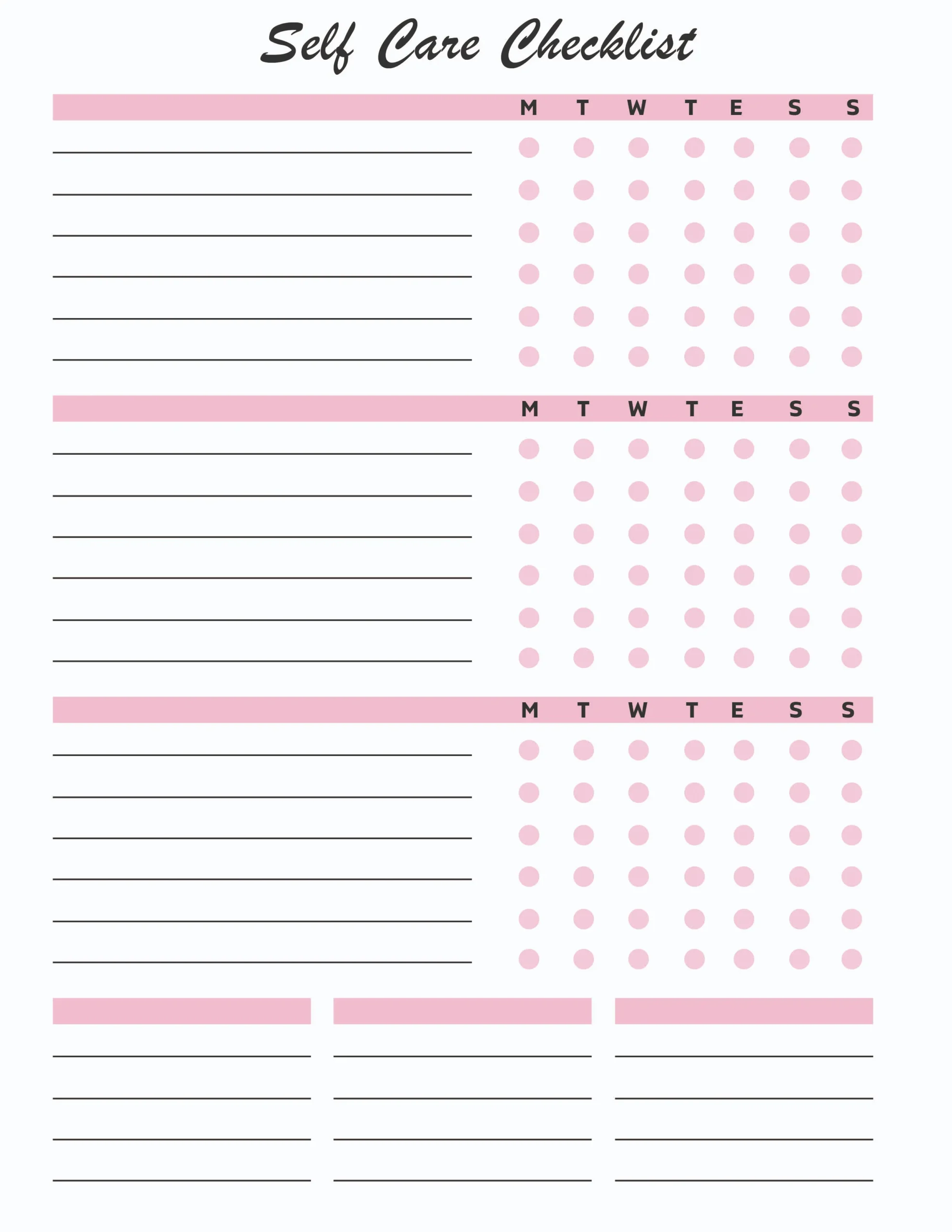
A weekly self-care checklist helps you track small habits throughout the week. Instead of wondering whether you completed a task, you simply mark it off each day.
This visual progress can be surprisingly motivating.
Many planners divide habits into three helpful categories: mind, body, and soul.
This makes it easier to balance different areas of wellbeing.
Examples of habits you might track:
- journaling or reading for the mind
- stretching or walking for the body
- gratitude practice for emotional wellness
- meditation or quiet reflection
- hydration or healthy sleep routines
Helpful suggestion: start with only three or four habits during your first week.
Keeping the list small makes it easier to stay consistent.
Small wins create positive momentum for long-term routines.
Monthly Self-Care Habit Tracker
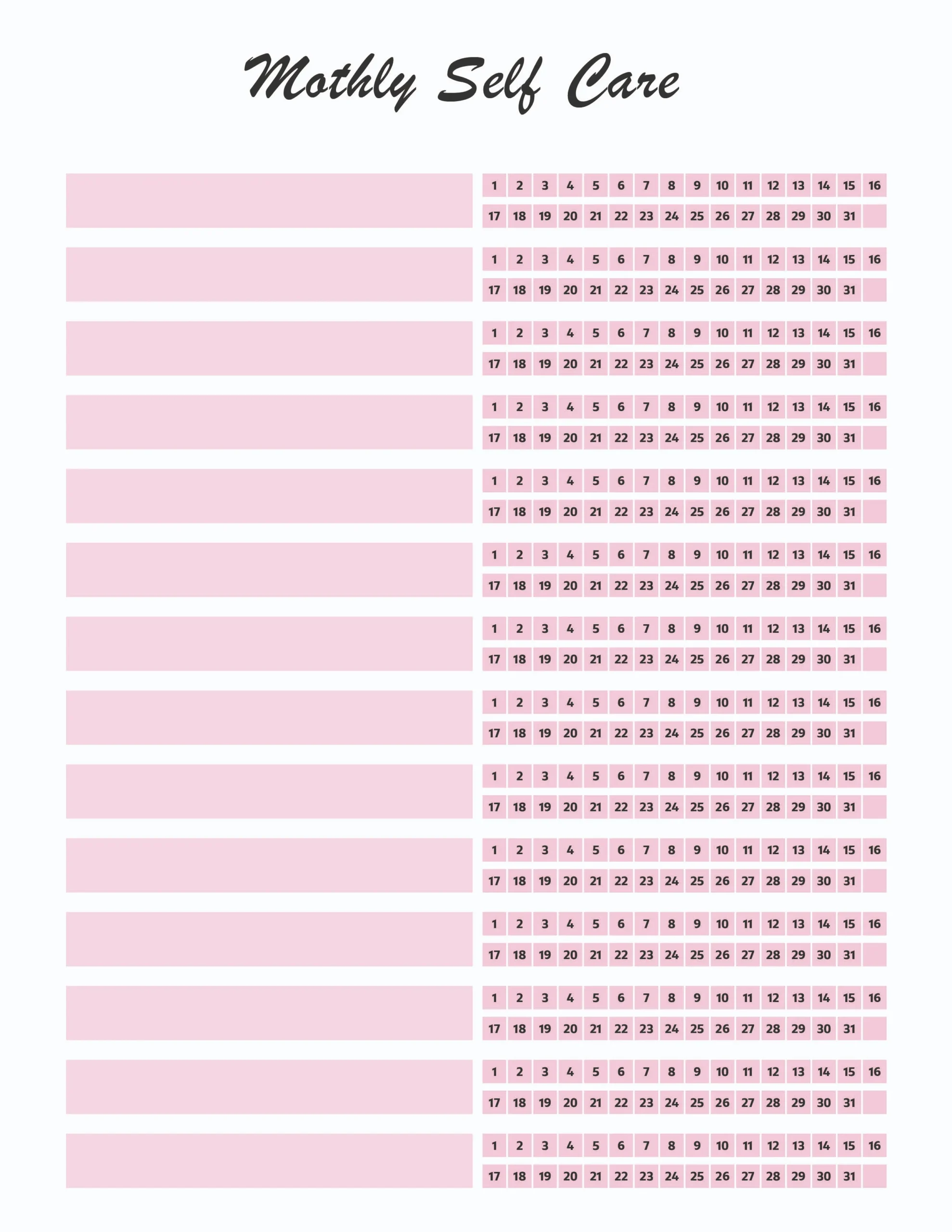
A monthly habit tracker gives you a bigger picture of your progress. Instead of focusing only on one day, you can see how consistent your habits are across the entire month.
This helps identify patterns and understand which routines are working best for you.
Many people track habits such as hydration, sleep, meditation, or exercise.
Ways to use a monthly tracker effectively:
- Choose 5–10 habits to monitor
- Mark each day you complete the habit
- Notice streaks and gaps in your routine
- Adjust habits that feel too difficult
- Review your progress at the end of the month
Helpful suggestion: Use colored pens or small stickers when marking completed habits.
Visual progress can make the experience more enjoyable.
Tracking habits visually strengthens motivation and accountability.
Daily Activities in a 30 Day Self-Care Challenge
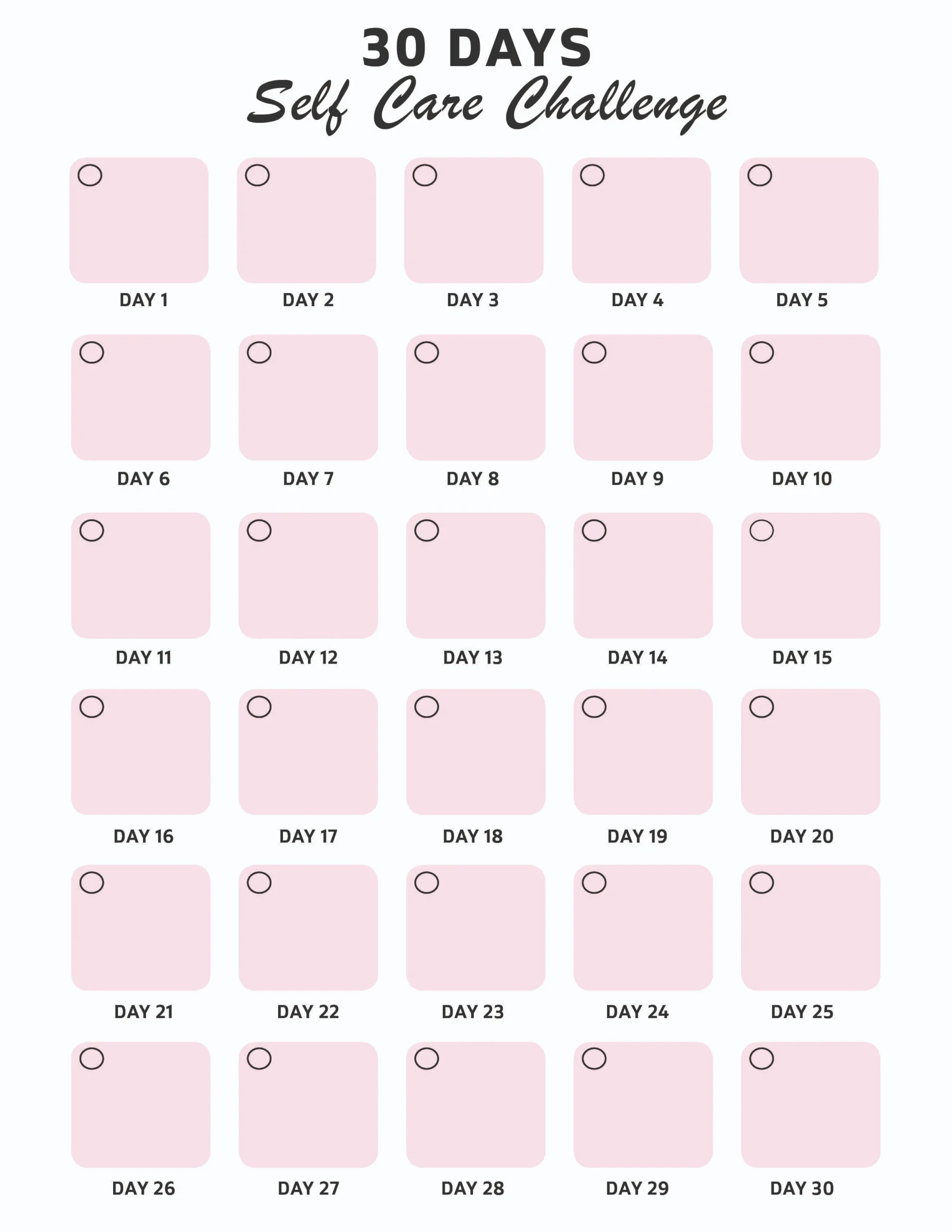
The most exciting part of the planner is the 30-day challenge page. Each day includes a small activity that supports mental wellness or relaxation.
These activities are intentionally simple so they fit easily into a busy schedule.
Examples of common self-care challenge tasks include:
- starting a gratitude journal
- learning a short meditation exercise
- spending a day away from social media
- calling someone you care about
- taking a short walk outside
- writing your thoughts in a journal
- Decluttering a small area of your room
Helpful suggestion: if a task feels overwhelming, shorten it instead of skipping it.
For example, take a five-minute walk instead of fifteen.
Consistency matters more than completing every task perfectly.
Small daily actions gradually build a stronger routine.
Benefits of Using a Self-Care Planner
A self-care planner turns good intentions into daily habits. Instead of thinking about self-care occasionally, you create a structure that encourages regular practice.
Many people notice positive changes within a few weeks.
Self-care planners can help with:
- reducing daily stress
- improving emotional awareness
- building healthy routines
- increasing productivity and focus
- strengthening mindfulness habits
Helpful suggestion: create a small morning or evening ritual when using your planner.
Even five minutes of reflection can make the process meaningful.
Daily rituals help your brain relax and transition between activities.
How to Stay Consistent With a Self-Care Routine
Consistency is the most important part of any self-care challenge. The goal is not to complete every activity perfectly. The goal is to create a routine that feels natural and enjoyable.
When self-care becomes part of your daily rhythm, it requires less effort.
Strategies that help many people stay consistent include:
- doing planner check-ins at the same time each day
- setting gentle reminders on your phone
- keeping activities short and manageable
- pairing self-care with relaxing music
- tracking your progress every week
Helpful suggestion: choose activities that genuinely feel relaxing or enjoyable.
Self-care should feel supportive, not stressful.
When habits feel pleasant, your brain is more likely to repeat them.
FAQs
How long should a self-care activity take?
Most activities should take 10–20 minutes to complete. Short tasks are easier to repeat daily and fit into busy schedules.
Can beginners follow a 30-day self-care challenge?
Yes. These challenges are designed for beginners and focus on simple wellness habits that require very little time.
Do self-care planners really help build habits?
Yes. Writing down habits and tracking progress visually improves consistency and motivation.
Should self-care be done every day?
Daily self-care helps maintain emotional balance. Even small actions like journaling or walking can make a difference.
What are some easy self-care habits to start with?
Simple habits include journaling, stretching, drinking enough water, reading for a few minutes, or taking short mindful breaks.
Conclusion
A 30-day self-care challenge is a powerful but simple way to improve your daily routine. Instead of making big lifestyle changes, you focus on small actions that support your mental and emotional well-being.
Using a self-care planner, weekly checklist, and monthly habit tracker makes the process even easier. These tools help you stay organized, motivated, and consistent.
Remember, self-care does not need to be perfect. What matters most is showing up for yourself every day, even in small ways.
Over time, these small habits can lead to significant changes in how you feel, think, and live.