
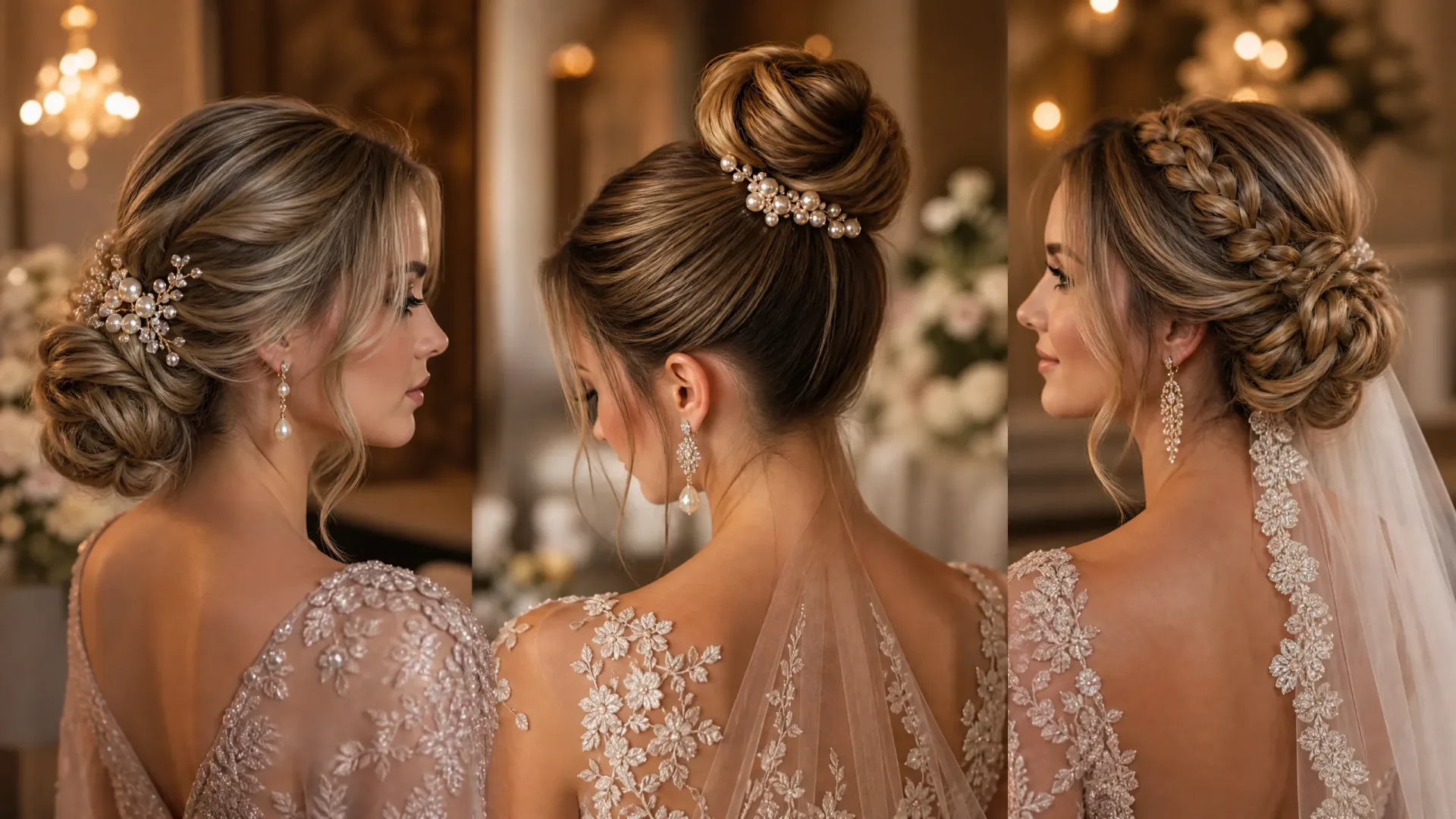
How to Plan a Wedding Updo With a Veil

A Wedding Updo With Veil should be planned as one full look, not two separate things. The hairstyle, veil comb, bun shape, dress neckline, and accessories all need to work together. Start with your veil length. A short veil needs less support. A chapel or cathedral veil needs a stronger base. Then think about where the veil should sit. It can go above the bun, under the bun, at the crown, or behind a high updo. Your hair texture matters too. Fine hair may need gentle teasing or a hidden anchor. Thick hair may need deeper pins. Curly hair may need soft sectioning so the veil does not flatten the curl shape.
For a full bridal hair plan, save elegant wedding updo hairstyle ideas with this guide.
Planning tip: Bring your real veil to the hair trial, not only a photo.
Best focus: veil height, secure comb, soft front, strong base, and easy removal.
Low Bun Styling With a Veil

A low bun is one of the safest choices for a bridal updo with accessories. It gives the veil comb a clear place to sit and keeps the full look soft, balanced, and easy to photograph. A veil above the bun feels more classic. It gives soft lift and makes the veil fall over the back in a smooth way. A veil under the bun feels more modern because the hairstyle stays visible from the back. A low bun also works with many necklines. It suits strapless dresses, square necklines, lace backs, off-shoulder gowns, and simple satin dresses. If your dress has a detailed back, keep the bun low enough to show the dress but high enough to avoid pulling at the nape.
For more bun shapes, use low bun wedding hairstyles for brides as a helpful next guide.
Soft choices: textured low bun, smooth bridal bun, low twisted bun, and loose chignon.
Common mistake: Placing a heavy veil into a weak bun can make the style sag.
High Updos for Long Veils

High updos can look beautiful with long veils when the shape is planned well. A high bun can add height, show the neckline, and give the veil a clean fall from the back of the head. This look works well with formal gowns, high neck dresses, long sleeves, and dramatic veils. It can also help petite brides who want a longer line in photos. But height should feel balanced, not stiff. A cathedral veil is heavier than a small veil, so the base must be strong. The comb often works better behind the high bun or slightly lower at the back of the head. This helps the veil fall without lifting the whole bun. If the bun is too high and the veil sits too high too, the style can feel crowded. Ask your stylist to test the exact veil spot from the front, side, and back.
Best match: high bun, clean crown, long veil, formal gown, and secure hidden pins.
Comfort note: A high bun should not pull at the hairline or feel heavy after one hour.
Chignon Styles That Support a Veil

A chignon is a soft, tucked bridal bun that works very well with a veil. It can sit low, slightly to the side, or centered at the nape. It gives the hair a polished shape without looking too heavy. A chignon supports a veil because it creates a firm base. The comb can slide into the hair above the chignon, under it, or behind it depending on the look you want. A smooth chignon feels classic and clean. A textured chignon feels romantic and relaxed. A braided chignon gives more grip and soft detail. If your veil has lace edges, a simple chignon can keep the focus on the veil. This style also works well with pearl pins, floral pins, and small hair combs. If you want a bridal updo with accessories, keep the chignon shape simple enough so the veil and accessory do not compete.
Best for: medium hair, long hair, lace veils, pearl details, and clean bridal photos.
Style note: A chignon looks softer when the front pieces and bun texture match.
How to Secure a Bridal Comb in the Hair

The veil comb needs grip. If the comb slides, the veil can pull, shift, or fall during the ceremony. A secure comb starts with the hair base, not with the veil alone. Your stylist may use gentle teasing, crossed pins, a small hidden braid, or a firm bun section to anchor the comb. Fine hair usually needs more texture. Thick hair may need stronger pins. Curly hair may need careful placement so the comb does not crush the curls. The comb should feel firm, but it should not hurt. If you feel pulling during the trial, say it early. A small adjustment can make the whole day more comfortable. If your scalp is sensitive or you react to metals or products, read neutral public guidance on contact dermatitis before using new clips, sprays, or hair accessories close to the skin.
Trial check: Turn your head, hug someone, sit down, and remove the veil once before approving the style.
Secure base ideas: hidden braid, crossed pins, textured crown, padded bun, and firm chignon.
Front Look Ideas When the Veil Frames the Face

The front look matters as much as the back. When the veil frames the face, every small detail shows. Your part, face pieces, volume, earrings, makeup, and neckline all affect the final look. A center part feels clean and modern. A soft side part feels romantic. Loose front pieces can frame the cheeks and jaw. Curtain bangs can look beautiful with a low bun and veil. But too many loose pieces can stick to lipstick or hide earrings. For a high-neck dress, keep the front cleaner. For an off-shoulder dress, soft face pieces can feel balanced. For a square neckline, gentle crown volume, and a neat front can look very pretty. If your veil has a blusher, test how it sits over your face. The hair should not poke through or create uneven bumps under the veil.
Front look choices: middle part, side part, soft bangs, face-framing pieces, and clean tucked sides.
Photo tip: Take trial photos with the veil both over the face and behind the shoulders.
Strong Hair Bases for Cathedral Veils

Cathedral veils are beautiful, but they need planning. They are long, dramatic, and often heavier than short veils. A weak updo can lose shape if the veil pulls on it for too long. A strong base can come from a low bun, braided bun, firm chignon, or tucked twist. The veil comb should sit where the hair has enough grip. The weight should not hang from loose crown hair alone. For outdoor ceremonies, think about wind. A long veil can move a lot. This can pull on the comb and make the hair feel tight. Ask someone to help manage the veil before walking, during photos, and before the reception. Outdoor brides should also plan shade and skin comfort. The NHS sun safety guide is a neutral public health source for long outdoor wedding days.
Best support: firm bun, hidden pins, veil helper, wind plan, and trial walk.
Common mistake: Testing a cathedral veil only while standing still indoors.
Modern Updo Ideas for Short Veils

Short veils are easier to wear, but they still need a clear plan. A birdcage veil, shoulder veil, elbow veil, or short soft veil can look modern with a neat updo. A sleek low bun gives a clean look. A soft twist feels more romantic. A textured bun feels relaxed. A short veil also works well with pearl pins, small bows, and simple combs because the veil does not cover the whole hairstyle. Short veils are helpful for brides who want less weight. They also work well for city weddings, courthouse weddings, reception looks, and dresses with strong back details. For short hair or medium hair, a small updo with a short veil can still look full if the comb placement is smart. A mini bun, tucked twist, or pinned wave can give enough base for the veil.
Modern pairings: short veil with sleek bun, pearl comb with tucked twist, birdcage veil with soft chignon.
Style tip: With a short veil, the front look and earrings become more important.
Lace Veil and Soft Bun Pairings

A lace veil already has strong detail, so the updo should help it shine. A soft bun, low chignon, or smooth twist can keep the whole look balanced. If the lace edge is wide, avoid placing too many accessories near the veil. Pearl pins, flowers, and large clips can make the back view feel crowded. If the veil is simple with light lace, you can add more texture to the bun. Dress fabric matters too. A lace dress with a lace veil may need a cleaner bun. A satin dress with a lace veil can handle a softer bun because the dress is simpler. The veil should not hide every detail of the updo. Ask your stylist to place the bun and veil so both show in photos. A side-back angle often shows lace, hair texture, and neckline together.
Best match: lace veil, low chignon, small earrings, clean neckline, and soft face pieces.
Avoid: heavy flowers, large combs, and too many visible pins near thick lace.
Braided Updos With Veil Details

Braids are helpful when wearing a veil because they add grip and texture. A braid can also make the style look pretty after the veil is removed. A side braid into a low bun gives a soft, romantic look. A crown braid can hold top layers and support the veil near the crown. A braided chignon can make the back view more detailed without needing many accessories. This style works well for outdoor weddings, boho gowns, lace dresses, and brides who want a softer shape. It also helps layered hair stay controlled. For more braid ideas, use soft braided wedding updo styles as a natural next read. It helps you compare crown braids, side braids, fishtail chignons, and textured braided buns.
Best braid types: side braid, crown braid, Dutch braid, fishtail braid, and hidden support braid.
Veil tip: Place the comb where the braid gives grip, but does not cover the braid detail.
Keeping the Hair Shape After Removing the Veil

Many brides remove the veil after the ceremony. That means the hairstyle still needs to look complete without it. A Wedding Updo With Veil should have enough shape, detail, and support to stand on its own. If the veil covers the back of the hair, add soft texture under it. If the veil sits over the bun, make sure the bun still looks neat after the comb comes out. If the veil is sewn or pinned strongly, ask who will remove it and how. Bring a small touch-up kit. It can include extra pins, a mini comb, blotting papers, and a small hair spray if your stylist recommends it. Keep the kit simple. You do not need to rebuild the style. Repeated tight styles can bother the hairline, especially if pins pull too hard. MedlinePlus has neutral public information on hair loss guidance, which is useful when thinking about scalp comfort and tight hairstyles.
Reception-ready details: textured bun, braid detail, pearl pins, soft front pieces, and clean pin placement.
Testing Your Veil During the Bridal Trial

The bridal trial is where small problems should show up. Do not only test the bun. Test the veil, comb, pins, front view, side view, back view, and removal plan. Wear earrings close to your wedding earrings. Bring your veil or a veil with the same comb style. Show your stylist dress photos, neckline photos, and any accessories you want to use. After the veil is placed, move around. Walk, sit, turn your head, hug someone, and look down. If the veil pulls or the comb shifts, the base needs more support. Take photos in natural light if possible. A style can look very different under salon lights. Check if the veil hides the bun, if the front feels soft, and if the comb makes a bump.
Trial checklist: real veil, earrings, dress neckline, accessory plan, photo angles, and removal test.
Important note: Do not approve a veil updo until you have tested movement.
Hair Switch Ideas From Ceremony to Reception

A ceremony-to-reception hair switch can be simple. You do not need a full second hairstyle unless you want one. Often, removing the veil and adding a small accessory is enough. A low bun can move from classic to party-ready with pearl pins. A chignon can feel softer with a few front pieces loosened. A braided bun can look complete after the veil is removed because the braid becomes the main detail. If you want flowers, add them after the ceremony instead of wearing them under a heavy veil. If you want a comb or bow, place it where the veil was anchored. This hides any small marks left by the comb. Keep the switch realistic. You may have only a few minutes between photos and entrance. Ask your stylist what can be done quickly without risking the full updo.
For accessory planning, read bridal updos styled with hair accessories before choosing pins, combs, bows, or flowers.
Easy switch: remove veil, smooth crown, add pins, refresh face pieces, and check the back view.
Must-Have Photo Angles for Veil Hairstyles

Veil hairstyles need more than one photo angle. The front shows your face and part. The side shows veil height and face pieces. The back shows the bun, veil fall, dress detail, and accessories. Ask for photos before and after the veil is removed. This helps you see if the style works for both ceremony and reception. It also gives you more Pinterest-friendly images to save, post, or use as future hair inspo. A side-back angle is often the best view for a Wedding Updo With Veil. It shows the bun, veil comb area, earrings, neckline, and soft texture together. For lace veils, take one close photo of the lace edge against the bun. Also ask for one movement photo. A veil can look very different when walking. This matters for aisle photos, outdoor portraits, and first-look shots.
Photo list: front view, side view, back view, veil close-up, walking shot, and reception look.
Final styling note: The best veil updo should feel secure, soft, and complete from every angle.