
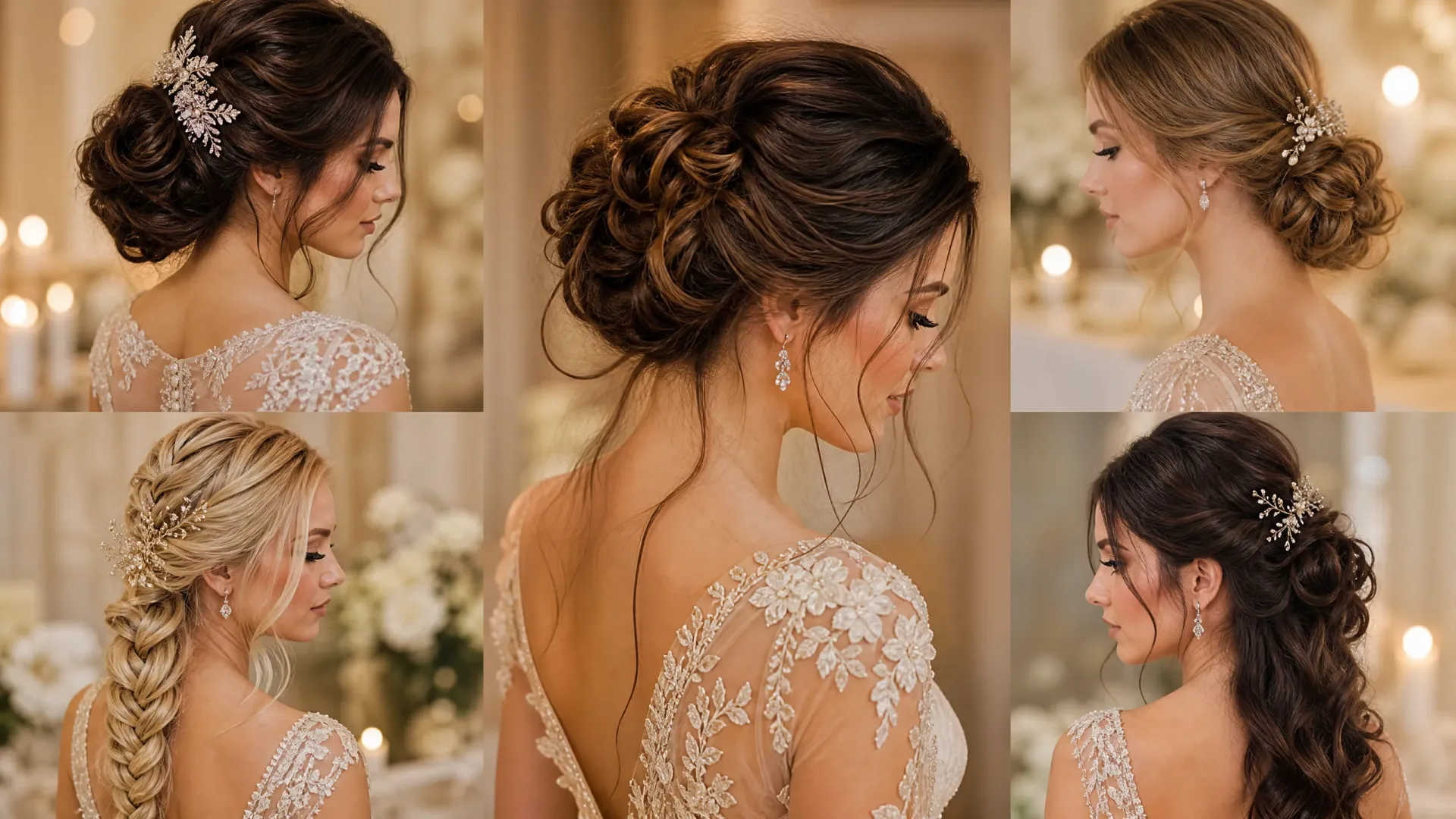
This guide gives soft, practical ideas for wedding updos with veil styles that feel secure, romantic, and photo-ready. You will find low nape buns, cathedral veil shapes, high bun placement, fingertip veil ideas, and veil wedding hairstyles that maintain balance in the front, side, and back views.
Wedding updo hairstyles with veil look best when the veil comb has a secure base, the bun height matches the veil length, and the hairstyle still looks neat after the veil comes off.
Low Nape Buns That Support a Veil
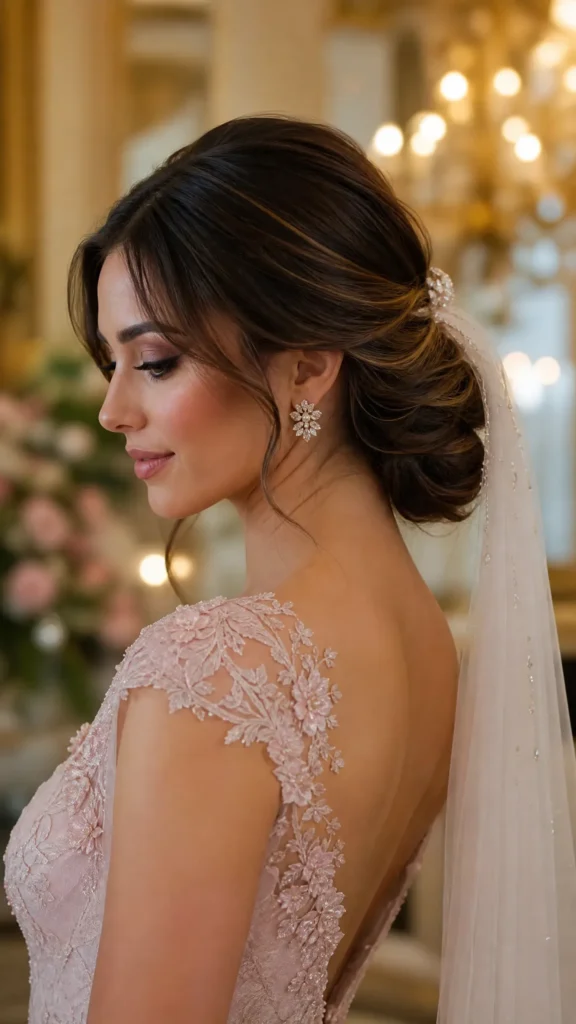
A low nape bun is one of the safest shapes for a bridal updo with veil. The bun sits close to the neck, providing a firm place for the veil comb to rest. It also keeps the hairstyle calm, classic, and easy to photograph from the back. This style works well with lace gowns, satin dresses, long sleeves, square necklines, and open backs. The bun can be smooth, softly twisted, or slightly textured. The important part is the base. A low bun should feel secure before the veil is added. If the veil is placed above the bun, the look feels more traditional. If it is placed under the bun, more of the hairstyle shows. A bride comparing both shapes can use low bun placement for soft bridal hair to understand how bun height changes the full look.
For fine hair, the bun can be built with small sections for fullness. For thick hair, the stylist can pin the bun closer to the head so the veil does not pull it down.
Nape bun tip: test the veil comb during the trial, not only on the wedding morning.
Chignon Shapes for Veil Above the Bun
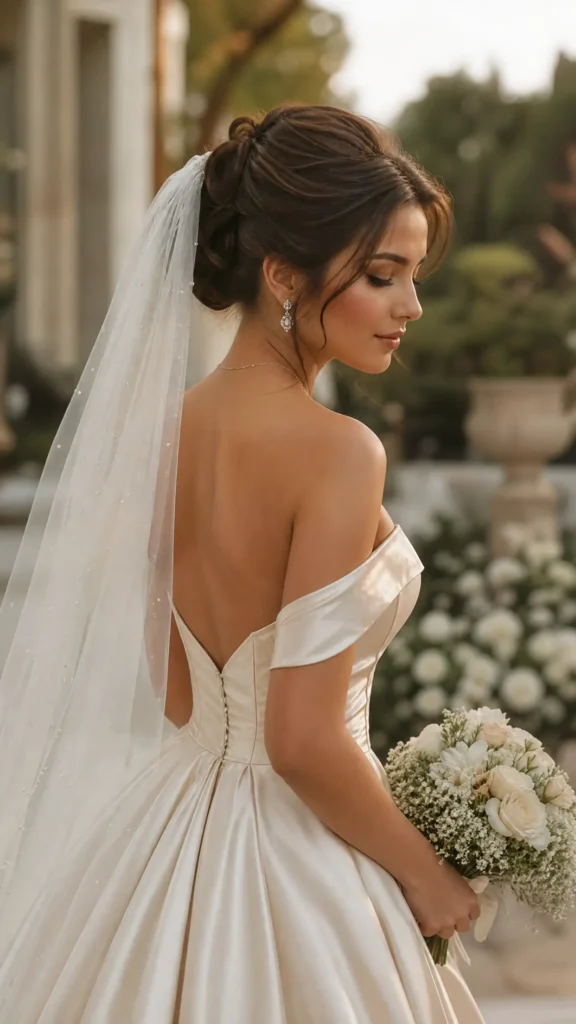
A chignon with the veil above the bun gives a soft ceremony look. The veil falls from the upper part of the hairstyle, while the bun stays visible below. This is a lovely choice for brides who want wedding updo hairstyles with veil that feel classic but not too stiff. The chignon can be round, twisted, tucked, or slightly loose. A smooth chignon looks formal with satin or crepe dresses. A softer chignon works well with lace, tulle, and romantic sleeves. The veil comb should sit in a hidden anchor above the bun, not only in loose hair. This placement is helpful for ceremony photos because the veil frames the head and shoulders. It can also give the veil a fuller fall. Brides who want more veil-specific inspiration can compare these shapes with soft bridal hairstyles shaped around a veil.
Do not make the chignon too high if the veil is thick or long. Too much height can make the back view feel crowded.
Chignon note: the veil should lift the look, not hide the bun shape.
Smooth Hairdos for Cathedral Veil Draping
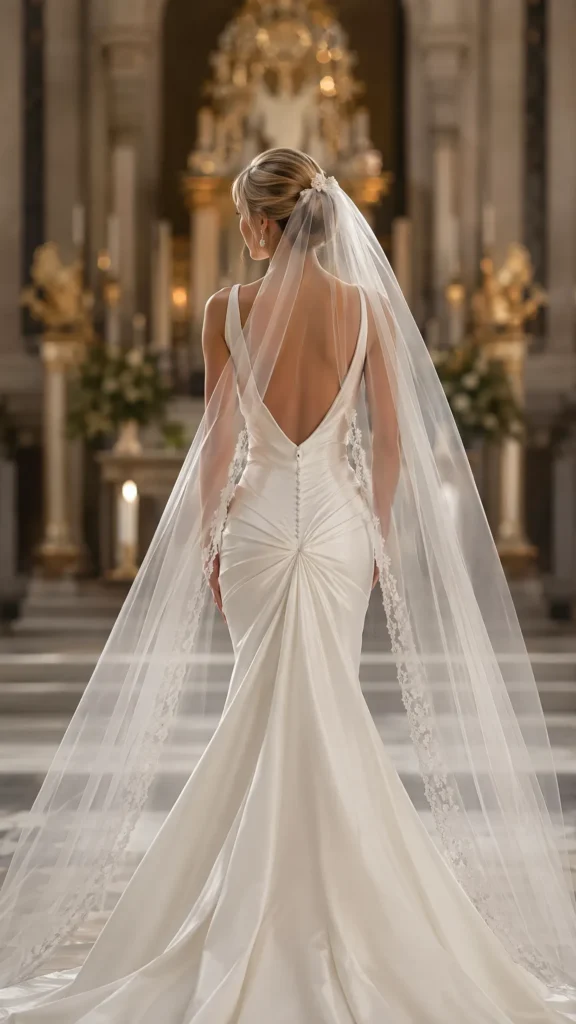
A cathedral veil has length and movement, so the hairstyle under it needs a clean base. A smooth bun, tucked roll, or polished chignon can help the veil drape without catching on too many loose pieces. This gives veil wedding hairstyles a calm, formal shape. This look works well for church ceremonies, ballroom weddings, long aisles, and dramatic dress trains. The hair does not need to be flat. It just needs a smooth outer line so the veil can fall cleanly from the comb. A center part can make the style feel modern and neat. A soft side part can make it look gentler around the face. The back should be checked with the veil fully spread because a cathedral veil can hide some hair detail.
A smooth hairdo also helps if the dress has strong detail, such as beading, lace, or a long train. In that case, the hairstyle should support the full bridal look without fighting for attention. Brides who like a polished base can connect this idea with classic bridal updos with modern twists.
Cathedral veil tip: check the hair while standing and walking, not only sitting at the trial.
Textured Back Views With Hidden Pin Support
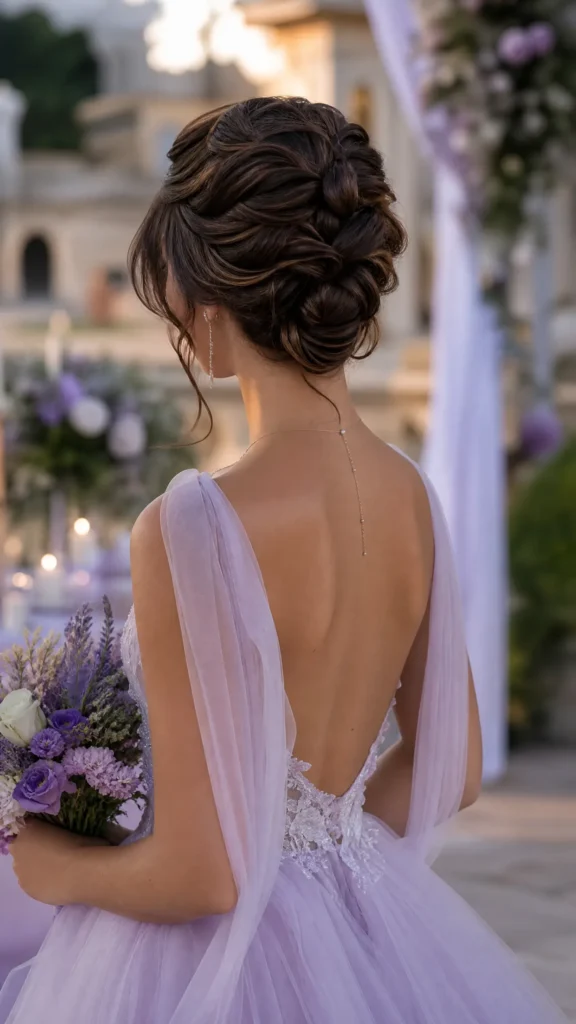
The back view matters in almost every wedding gallery. A bride is photographed walking down the aisle, standing at the altar, hugging family, and showing the dress from behind. For that reason, a textured back view needs both beauty and hold. A textured wedding updo with veil may include soft twists, loose bun pieces, small braid detail, or pinned waves. The outside can look airy, but the inside needs strong hidden pins. If the base is weak, the veil can pull the texture down. This style suits romantic gowns, garden weddings, tulle skirts, and dresses with soft back detail. It is also helpful when the bride wants hair that looks full without being too smooth.
Ask the stylist to build the support first, then place the soft pieces over it. The veil comb can sit inside the firm base while the textured pieces cover the pins. This keeps the style pretty but practical.
- Strong base first.
- Soft texture second.
- Veil test before final approval.
Side Part Looks Styled Around a Sheer Veil
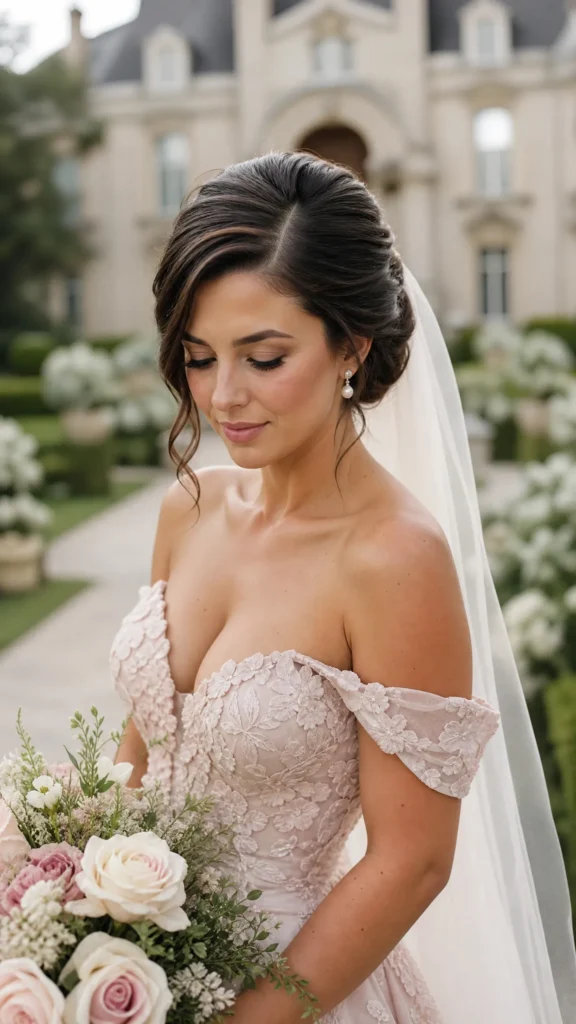
A side part can make a veil style feel soft and personal. It gives the front of the hair direction and helps the veil frame the face. This works especially well when the bride wants wedding updo hairstyles with veil that look gentle in close portraits. The side part can lead to a low bun, side chignon, tucked roll, or pinned twist. A sheer veil keeps the front detail visible, so the parting should be clean. The hair near the temple can be softly waved, tucked, or pinned behind the ear. This style suits pearl earrings, V-neck gowns, off-shoulder dresses, and soft makeup. It also works well for brides who do not like a center part or fully pulled-back hair.
A sheer veil can move in light wind, so the front pieces need gentle control. Too many loose strands near the eyes can become distracting during ceremony photos. A small hidden pin behind the ear can keep the side part neat without making it look harsh.
Side part tip: keep the part soft, but make the veil anchor firm.
High Bun Ideas for Veil Underneath Placement
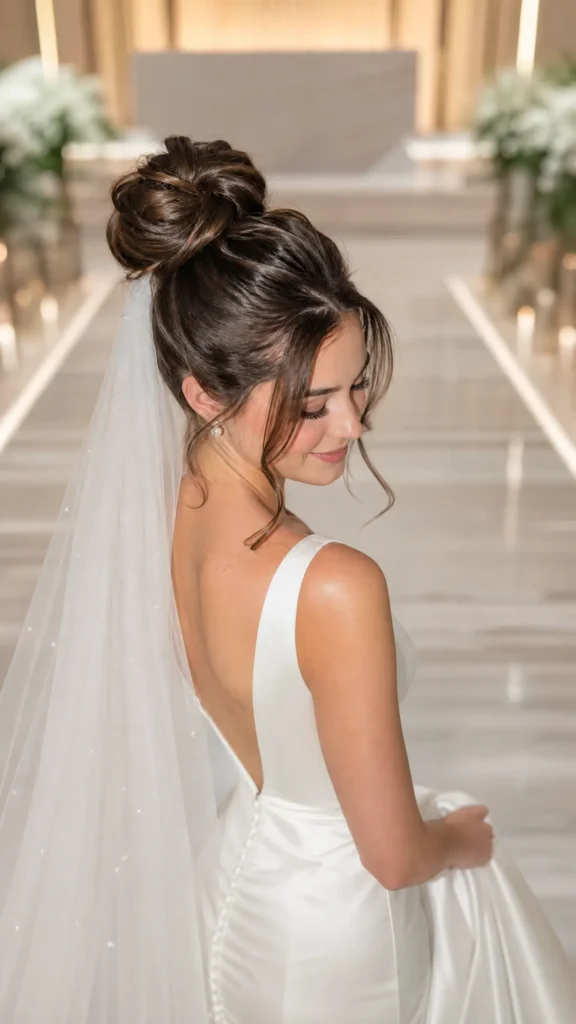
A high bun can look beautiful with a veil placed underneath. This placement lets the bun stay visible while the veil falls from below it. It feels fresh, clean, and a little more modern than placing the veil over the whole updo. This style works well when the bride wants height at the crown, a clear neckline, or a dress with shoulder detail. A high bun also pairs nicely with simple gowns, sleek makeup, and statement earrings. The bun can be smooth, braided, twisted, or softly textured. For a bridal updo with veil, the base of the high bun must be very secure. The veil should sit below or behind the bun, where it can be pinned into a firm section. If the veil is too heavy, the pins may need to spread wider under the bun.
This shape is not only for tall brides or formal weddings. It can also work for petite brides because it lifts the eye upward. The key is scale. A very large high bun can look unbalanced with a heavy veil.
Placement tip: test the veil underneath the bun and behind the bun. The better option depends on the veil weight and the bun size.
Loose Bridal Hairdos With Soft Veil Movement
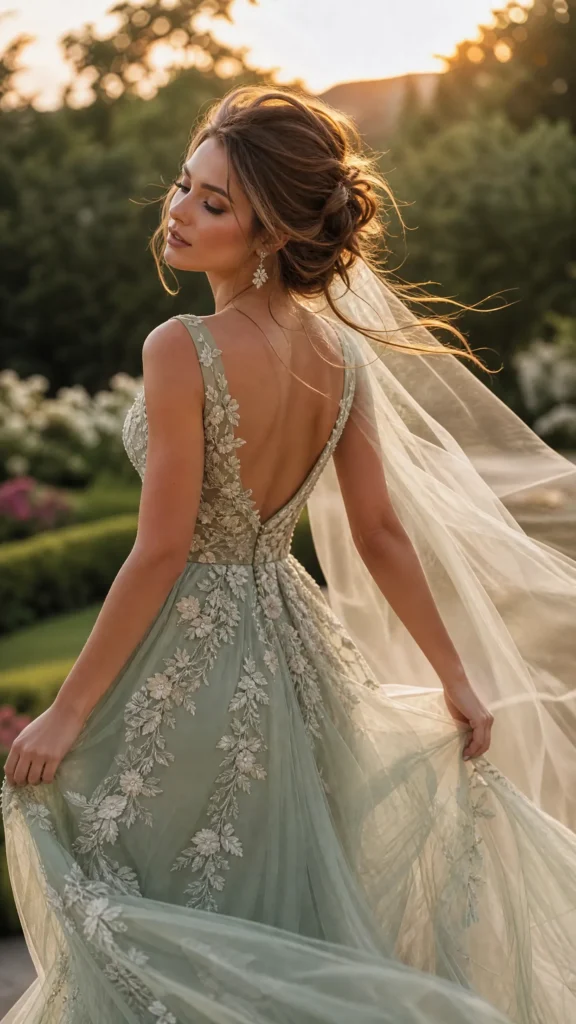
Loose bridal updos look romantic with a veil because they allow soft movement around the face, nape, and shoulders. The goal is not messy hair. The goal is a relaxed shape with a secure base. This is where veil placement matters most. A loose hairdo can be a low twisted bun, a soft pinned curl shape, a relaxed chignon, or a half-tucked updo. The veil should attach to a hidden, strong point, not to the loose outer pieces. This keeps the style from slipping during the ceremony. This look pairs well with outdoor weddings, soft tulle, floral lace, garden ceremonies, and romantic bridal portraits. It is also a good choice for brides who want the hairstyle to feel natural instead of polished and flat.
If heat styling is used before pinning, keep the hair gentle. The American Academy of Dermatology shares neutral advice on hair habits that can damage hair, which is useful when planning curls, irons, or heavy styling before a long event.
Soft movement note: loose pieces should frame the style, not carry the veil weight.
Clean Nape Styles for Classic Ceremony Photos
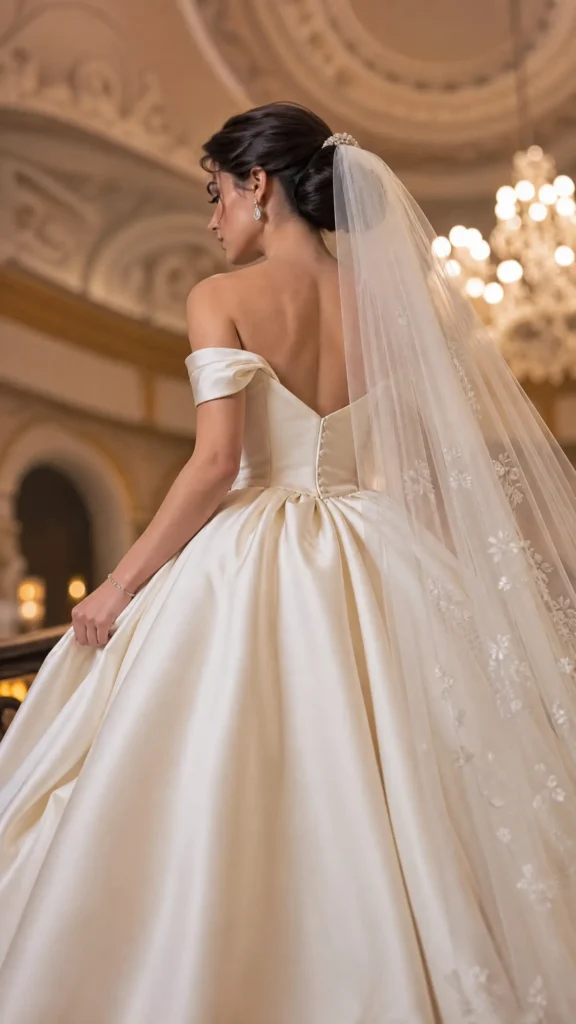
Clean nape styles look timeless in ceremony photos. The hair sits low, smooth, and close to the neck, while the veil falls neatly around the shoulders. This is one of the most polished ways to wear wedding updo hairstyle with veil. This style works well for classic brides, formal venues, church ceremonies, and dresses with detailed backs. A clean nape bun can be round, twisted, folded, or shaped like a soft roll. The sides should be neat, but not pulled so tight that the face looks hard.
A real example: a bride wearing an ivory satin gown with a square neckline and pearl studs could choose a clean, low roll with the veil placed just above the bun. The front would stay smooth for portraits, while the back would show the veil, bun, and neckline in one clear view.
Clean nape styles also help when the veil has lace edging. Since the hair is controlled, the veil detail can show without catching on loose pieces.
Photo tip: check the nape from both sides because ceremony photos often catch turning angles.
Romantic Bun Shapes Under Fingertip Veils
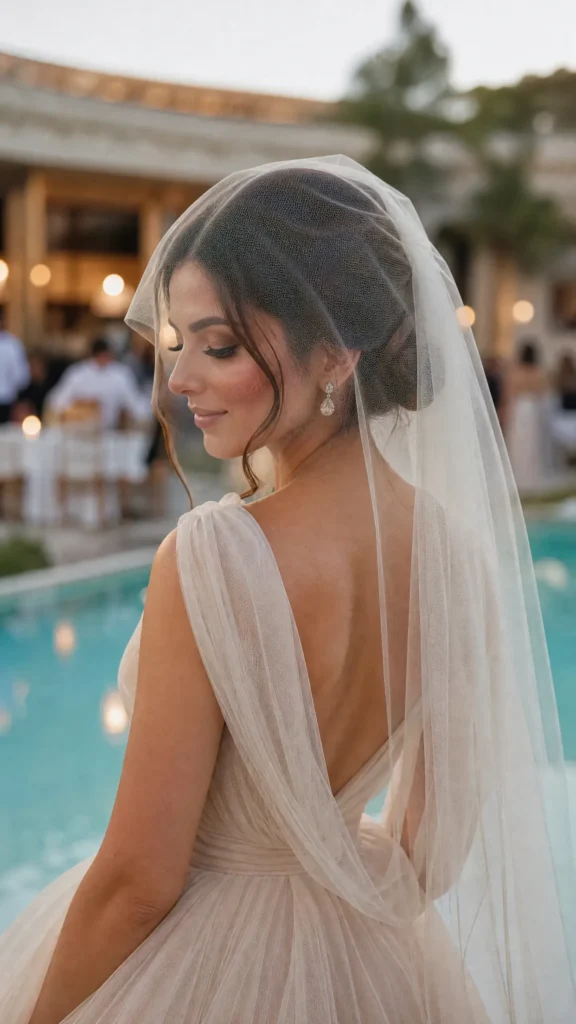
A fingertip veil is light enough to work with many bun shapes. It usually falls around the hips or fingertips, so the hairstyle can stay visible while the veil adds softness. Romantic bun shapes are a natural match for this veil length. A low bun, side bun, soft chignon, or tucked twist can all work under a fingertip veil. The bun should be shaped clearly so it does not disappear under the fabric. A little texture around the outside helps the hair show through sheer veil layers. This type of wedding updo with veil suits garden weddings, ballroom weddings, and dresses with soft movement. It also works well for brides who want a veil for the ceremony but plan to remove it before the reception.
If the veil has lace trim, place the bun where the lace does not cut across the hairstyle in photos. If the veil is plain, the bun can have more texture or a small accessory.
Fingertip veil tip: take one back photo with the veil flat and one with movement to check both views.
Pinned Twists That Keep Veil Weight Balanced
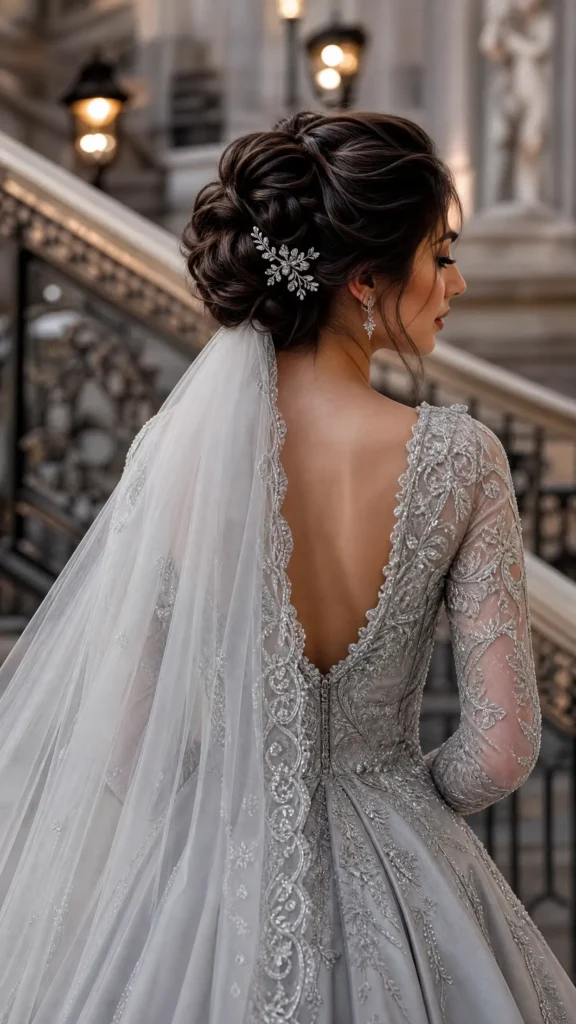
Pinned twists are useful because they create strong paths inside the hairstyle. The twists can guide hair toward a bun, hold shorter layers, and give the veil comb a better place to sit. This makes them a smart choice for veil wedding hairstyles that need both softness and hold. The twists can start near the temples, cross at the back, or wrap into a low bun. They look gentle on the outside, but they can hide strong pin support underneath. This is helpful for medium hair, layered hair, and hair that slips out of smooth buns. A pinned twist-updo also works with small accessories. Pearl pins, tiny flowers, or a slim comb can sit near the twist without blocking the veil. If the bride has sensitive skin, MedlinePlus offers neutral information on contact dermatitis, which can help when choosing metal clips, pins, or coated accessories.
Do not place all the veil’s weight on one twist. The comb should be supported across the base, not one side only.
Balance tip: spread the veil support across hidden pins so one section does not pull.
Hairline Framing Details for Veil Portraits
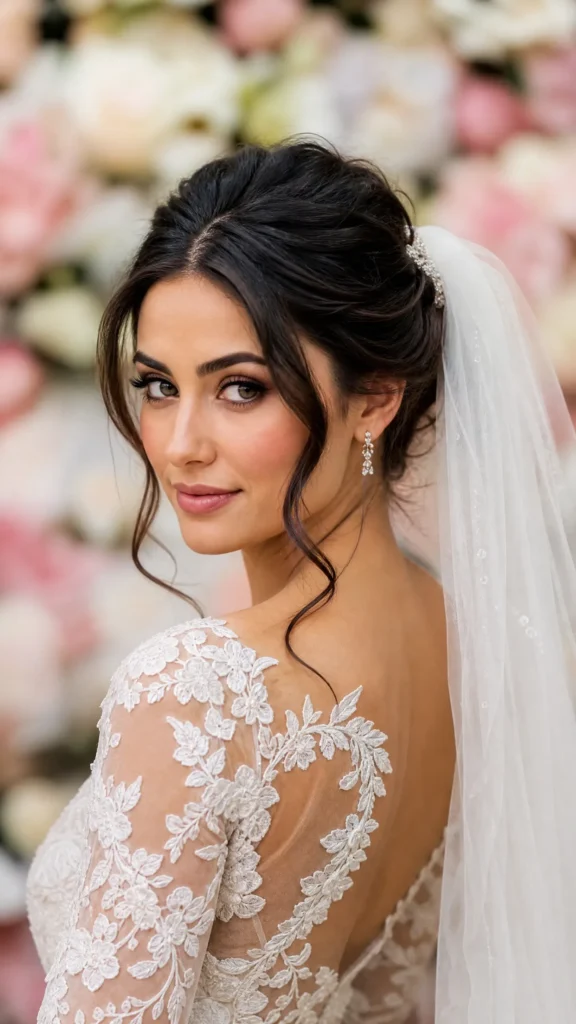
Veil portraits often focus on the bride’s face. That means the hairline matters. Soft front pieces, a smooth side part, gentle waves, or tucked face framing sections can make a bridal updo with veil look more natural in close photos. The goal is to frame the face without hiding it. A few shaped pieces near the temples can soften the look. A clean middle part can feel modern. A soft side sweep can feel romantic. The veil should sit behind the hairline or at the chosen anchor point without pushing the front flat. This detail is important for blusher veils, sheer veils, and close-up ceremony photos. If the veil covers the face, the front hair should still look neat under the fabric. If the veil stays back, the hairline should connect smoothly with the updo.
The history and meaning of the veil as a traditional garment can vary across cultures, so the final placement should also respect the bride’s ceremony style, family tradition, and comfort.
Portrait note: Take close photos with the veil forward and back before choosing the final front shape.
A veil and updo should feel like one plan, not two separate choices. The bun height, veil comb, dress neckline, hair texture, and ceremony photos all shape the final look. A low nape bun may feel classic. A high bun with the veil underneath may feel modern. A chignon above the bun may feel soft and formal. Before the wedding day, test the hairstyle with the actual veil or a similar comb. Move your head, sit down, stand up, and take photos from the front, side, and back. The best bridal hair is secure enough to hold the veil, soft enough for portraits, and neat enough to still look beautiful after the veil comes off.