
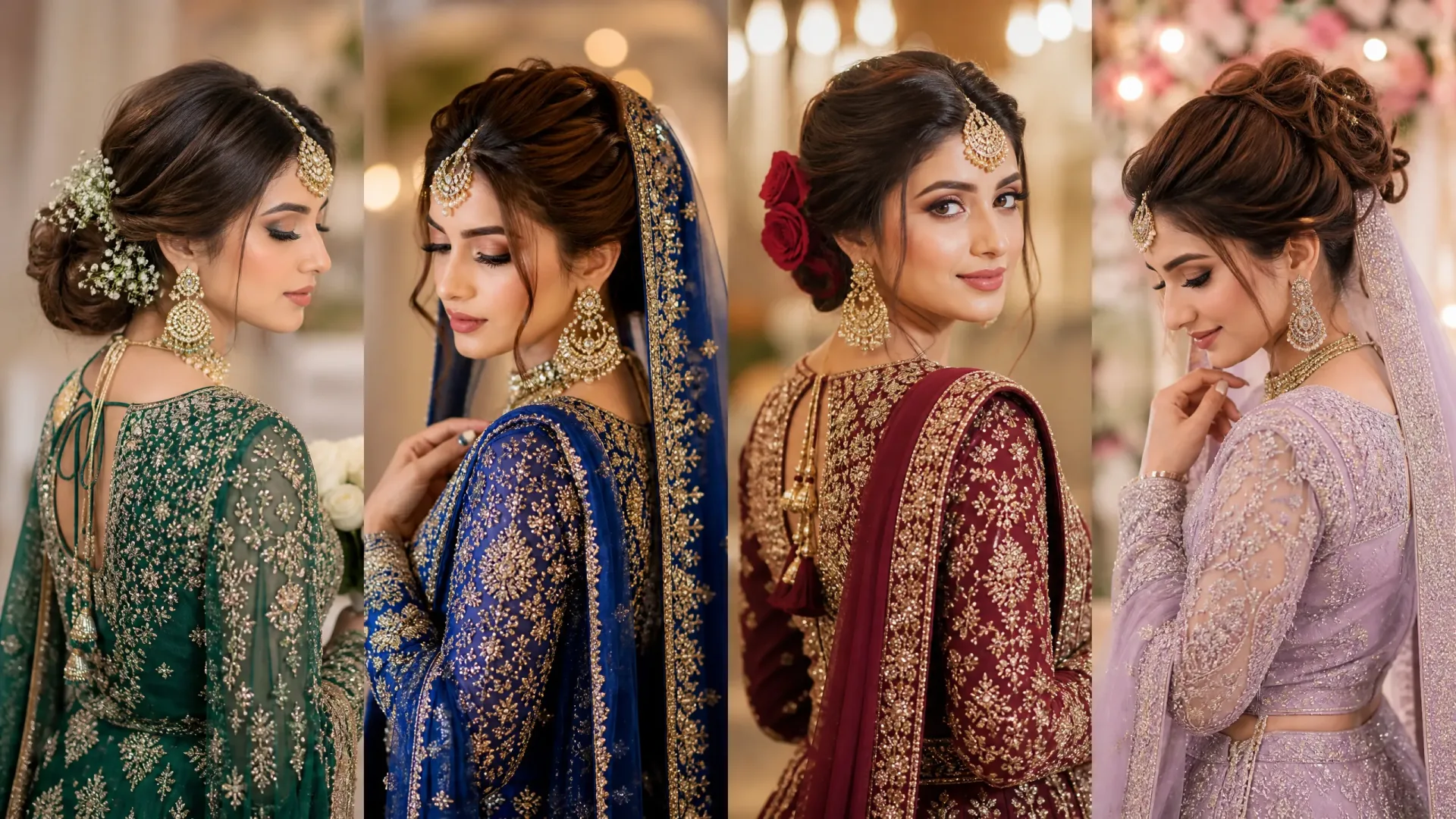
Western bridal updo hairstyles with dupatta look best when the dupatta base is secure, the bun sits low enough to support fabric, and the front leaves clean space for tikka and jewelry.
Low Nape Juda Styles That Sit Neatly Under Dupatta

A low nape juda is one of the most reliable choices for western bridal updo hairstyles with dupatta. The bun sits close to the neck, so the fabric can rest above it, over it, or slightly behind it without pushing the whole style out of shape. This placement gives the bride a calm back view and a secure base for long ceremony hours. This look works well with lehengas, shararas, ghararas, sarees, and fusion bridal gowns. A smooth juda feels classic. A softly textured juda feels more modern. The key is keeping the inner pin base firm while the outside stays gentle and bridal. For brides who want a traditional bun with a soft finish, low Indian bridal bun shapes made for dupatta support connect well with this look because the bun height, fabric weight, and jewelry balance all work together.
Low bun focus: keep the juda close to the head so the dupatta does not pull the bun down.
Center Part Hairdos With Maang Tikka Space

A center part can make a bridal updo with dupatta look neat, balanced, and traditional. It gives the maang tikka a clear path to sit on, while the rest of the hair moves into a bun, juda, or tucked roll at the back. This works well when the bride wants the front to feel clean and photo-ready. The part should be clear, but not harsh. A little softness near the roots keeps the face from looking pulled. If the bride is wearing a heavy tikka, matha patti, or passa, the stylist should leave enough jewelry space before pinning the dupatta.
This style fits Nikkah, Barat, and formal reception looks. It also suits round, oval, heart, and long face shapes because the center line gives structure. Tikka space is not only about beauty. It also helps comfort. Jewelry that is squeezed between tight hair and dupatta pins can feel heavy after a few hours.
Important tip: place the tikka first during the trial, then check where the dupatta should sit.
Soft Bun Shapes for Nikkah Bridal Looks

Nikkah bridal hair often looks best when it feels soft, calm, and respectful. A soft bun shape can hold the dupatta while keeping the face gentle. This makes it a lovely choice for western bridal updo styling with traditional clothing, light jewelry, and soft makeup. The bun can sit low at the nape or slightly above it. A smooth front gives a clean look for signing photos, close portraits, and family pictures. A soft back bun gives the dupatta a place to rest without hiding the hairstyle fully. The goal is quiet bridal polish, not a stiff shape.
For a Nikkah look, avoid too much height or too many loose pieces. Pearl pins, a small floral detail, or a slim accessory can add detail without competing with the dupatta. Brides choosing between a bun, chignon, and formal juda can connect this look with soft bridal updo shapes for wedding day styling.
Nikkah hair tip: keep the bun soft outside, but make the pin base strong inside.
Side Framing Pieces With Traditional Jewelry

Side framing pieces can soften a traditional bridal look, especially when the outfit, dupatta, and jewelry are heavy. A few shaped strands near the cheeks can make western bridal updo hairstyles with dupatta feel modern without losing the cultural mood. This detail works well with jhumkas, passa, tikka, matha patti, and soft bridal makeup. The pieces should be controlled and shaped. Too much loose hair can tangle with earrings or awkwardly sit under the dupatta. The best front pieces are soft but placed. For round faces, side framing can add length. For long faces, softer pieces near the cheeks can balance the shape. For brides with strong jawlines, a gentle side curve can make the front look calmer in photos.
Traditional jewelry balance matters here. If the earrings are large, keep the side pieces thin. If the jewelry is simple, the hair can have more softness near the face.
Face framing note: curl or smooth the front pieces before the dupatta is pinned so they do not get crushed later.
Heavy Dupatta Hair Support Around the Crown

A heavy dupatta needs more than a pretty bun. It needs smart support around the crown. This is where the stylist builds a hidden structure under the hair so pins can hold the fabric without pulling on one small area. A good wedding updo with dupatta spreads weight across the crown, bun, and side pins. Crown support can come from soft backcombing, crossed pins, small anchor braids, or firm sections near the top. The outside can still look smooth and elegant. The support should stay hidden inside the shape.
This is important for embroidered dupattas, velvet borders, long veils, and layered bridal outfits. If all the weight sits near the tikka or one pin, the bride may feel scalp pain during photos and ceremony moments. A neutral source from the American Academy of Dermatology explains that hairstyles that pull on hair can stress the scalp, so bridal weight should be spread with care.
- Crown anchor for fabric support.
- Low bun base for balance.
- Soft front for comfort and photos.
Floral Bun Ideas for Mehndi and Barat Events

Floral buns are beautiful for Mehndi and Barat events because they bring color, softness, and tradition into the hairstyle. A floral juda can sit under the dupatta, around the bun, or slightly to one side, depending on the outfit and jewelry. This gives a bridal updo with dupatta a festive finish without making the hair look too heavy. Flowers should not block the dupatta pins. They should sit around the bun or below the main fabric line. This keeps the hairstyle pretty while still being practical. Fresh flowers feel soft for Mehndi. Pearl flowers, fabric florals, or tiny decorative pins can work better for Barat if the dupatta is heavier.
Smaller floral clusters usually look more graceful than one oversized flower, especially when the bride is already wearing tikka, jhumkas, necklace layers, and a detailed dupatta border. For brides comparing flower placement with bun shape, floral bridal Juda hairstyles for Mehndi and Barat looks fit naturally with this planning.
Floral bun tip: keep flowers away from the main dupatta anchor points.
Sleek Front Sections With a Voluminous Back

A sleek front with a voluminous back gives the bride a clean photo look without making the hairstyle flat. The front stays smooth for tikka, makeup, and dupatta framing. The back has enough fullness to hold the bun shape and support the fabric. This style works well for western bridal updo looks because it mixes modern polish with traditional bridal volume. The sleek front suits center parts, side parts, and tikka placement. The fuller back keeps the hairstyle visible under the dupatta. For fine hair, volume can come from soft padding, curls, or careful sectioning. For thick hair, the stylist should control the back so it does not become too wide. The goal is balanced bridal volume, not a heavy crown.
A voluminous back is useful for back photos, side portraits, and dupatta shots. It stops the hair from disappearing under fabric. The front should stay smooth, but not tight enough to create discomfort around the temples.
Photo tip: take one photo with the dupatta on and one without it to check the back volume.
Dupatta Friendly Bridal Hair for Round Faces

Round faces often look lovely with height at the crown, soft side framing, and a bun that does not sit too wide. A dupatta can add more width around the face, so the hairstyle should bring gentle lift and clean lines. For western bridal updo hairstyles with dupatta, round face styling works best when the front is not pulled flat across the head. A center part with crown lift, a soft side sweep, or light cheek framing can help create balance. The goal is length and softness at the same time. The bun should sit low or mid-low, not too far out from the sides. A wide bun plus a heavy dupatta can make the head shape look broader in photos. A slightly vertical shape is usually more flattering.
Jewelry matters too. Large jhumkas can add width, so the hair near the ears should stay neat. If the bride wears a passa, the other side should feel lighter. If the dupatta has a thick border, test whether it adds width around the cheeks.
Round face tip: keep lift at the crown and softness near the cheeks, but avoid bulky sides under the dupatta.
Loose Textured Buns for Walima Styling

Walima bridal styling often feels softer, lighter, and more graceful than the main ceremony look. A loose textured bun can fit this mood well, especially with pastel outfits, soft makeup, pearl jewelry, and a lighter dupatta. This kind of bridal updo with dupatta uses pinned waves, soft twists, or loose bun pieces to create gentle movement. The bun should look airy, but the base still needs to be firm. The dupatta may be lighter, but it still needs a stable place to sit. Loose texture works well with net dupattas, delicate borders, soft embroidery, and romantic photography. It also helps the hair show shape from the back. The mistake to avoid is making the bun too loose. A Walima style can be relaxed, but it should not slide as the bride greets guests or takes portraits.
When decorative pins, combs, or pearls are part of the look, bridal hair accessory placement for wedding updos helps connect the accessory choice with the bun shape and dupatta base.
Walima hair note: keep the outer texture soft and the inner pins strong.
Polished Juda Looks With Jhumka Balance

A polished juda can look rich and graceful with jhumkas, but the balance has to be right. Large earrings already add detail near the jaw and neck, so the hair should frame them without crowding the sides. For wedding updo with dupatta styling, a polished juda often works best with smooth sides, clean parting, and a low bun. The dupatta can sit at the crown, while the jhumkas stay visible from the front and side. This gives the full look a clean jewelry frame. If the bride wears very heavy jhumkas, avoid thick loose curls around the ears. They can tangle with the jewelry and make the face area look busy. If the earrings are smaller, the hair can have more side softness.
Metal jewelry can bother sensitive skin for some people. MedlinePlus gives neutral information on contact dermatitis from jewelry and cosmetics, which can be useful when testing bridal accessories before the event.
Jhumka balance tip: leave space between the side hair, earring, and dupatta border.
Traditional Hair Shapes With Modern Softness

Traditional bridal hair does not need to feel stiff. A soft front, gentle crown lift, and neat juda can keep the look respectful while still feeling modern. This is the heart of many western bridal updo hairstyles with dupatta. The traditional part can come from the center part, tikka, dupatta, bun placement, and jewelry. The modern softness can come from light texture, face framing, soft volume, and a less rigid finish. Both can work together when the shape is planned well. This style is useful for brides wearing South Asian outfits with western makeup, lighter jewelry, or a modern blouse cut. It also works for brides who want cultural detail without a very heavy hairstyle. A soft traditional bun can be smooth in front and slightly textured at the back.
Small flowers, pearl pins, or a slim accessory can add beauty without crowding the dupatta line. The best version keeps the outline clean and the details gentle.
Modern softness note: keep the outline clean, then add softness in small places.
Crown Lift Ideas for Bridal Dupatta Photos

Crown lift can make dupatta photos look more balanced. Without lift, the dupatta may flatten the top of the head and make the bun look heavier. A little height at the crown gives the fabric a better fall and makes the bride’s profile look softer. For western bridal updo styling, the crown lift should be gentle. It should not look like a hard bump. The lift can come from soft teasing, sectioned pinning, natural volume, or a hidden support base. This matters most in side portraits, sitting photos, and close dupatta shots. The crown is often visible under sheer fabric, so the shape should look smooth and even. If the dupatta has a heavy border, test how it sits over the lift. If the crown collapses, the fabric can make the whole style look flat.
Brides with fine hair may need light padding or careful pinning. Brides with thick hair may only need controlled volume at the crown. The goal is soft bridal height, not extra bulk.
Dupatta photo tip: check the crown from the side while wearing the actual dupatta.
Elegant Pinned Hairdos for South Asian Outfits

Elegant pinned hairdos work well with South Asian outfits because they can be shaped around the dupatta, tikka, earrings, neckline, and bun placement. The style can be simple, but the pinning must be smart. A pinned bridal updo with a dupatta may use twists, tucked sections, small rolls, or soft waves that lead into a bun. These details help the hairstyle look polished without making it too heavy. They also give dupatta pins stronger places to hold. This look suits lehengas, sarees, ghararas, shararas, and fusion gowns. It is also helpful for bridesmaids or sisters of the bride who want a formal South Asian hairstyle without the full bridal weight.
For simple versions, keep the front smooth and the bun low. For more detailed versions, add twists near the side or a small floral accent near the juda. The final shape should support the outfit, not fight it. A pinned style works best when the fabric line, jewelry space, and bun shape all feel connected.
Final styling note: a dupatta-friendly updo should look graceful, feel secure, and still let the bride move comfortably.
A bridal dupatta should feel like part of the hairstyle, not something added at the end. The bun height, crown support, tikka space, jhumka balance, and dupatta weight all need to work together. A low nape juda may feel classic. A soft Nikkah bun may feel calm. A floral Mehndi bun may feel festive. A textured Walima bun may feel light and romantic. Before the final day, test the full look with the real dupatta, jewelry, and blouse neckline. Sit, stand, turn your head, and take front, side, and back photos. The best bridal updo is not only beautiful. It is comfortable, secure, and ready for every moment of every ceremony.