
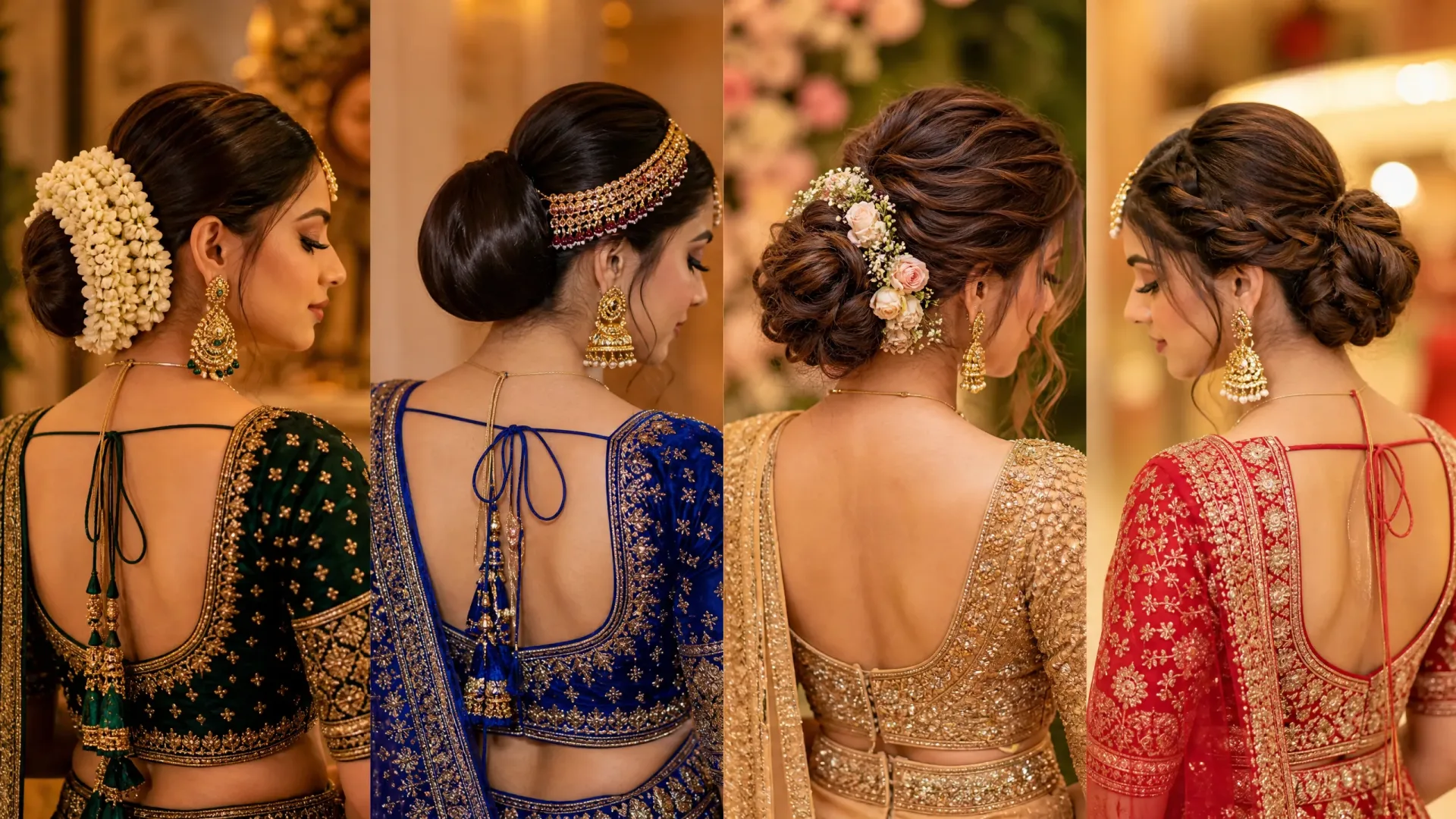
This guide gives practical ideas for Indian bridal bun looks with gajra, mogra, tikka space, saree styling, lehenga balance, and Indian wedding updo planning. Each style is made to feel graceful, secure, and beautiful in wedding portraits.
Quick Answer: Indian bridal bun hairstyles look best when the bun shape supports jewelry, dupatta, flowers, and photos without feeling too tight or hidden.
Gajra Wrapped Buns for Classic Bridal Looks

A gajra wrapped bun is one of the most classic Indian bridal bun hairstyles. The bun sits low or mid-low, while the gajra circles the shape like a soft white frame. It gives the hair a traditional finish without needing a very complicated design. This style works beautifully with sarees, lehengas, silk outfits, gold jewelry, and temple-style accessories. A rounded bun gives the gajra a clean base. A slightly textured bun gives the flowers more movement. The key is keeping the gajra placement even, so it does not look heavier on one side. For brides who want a calm, formal look, the front can stay sleek with a center part. For a softer look, add light lift at the crown and a few shaped pieces near the ears. The bun should stay close to the head, especially if a dupatta will sit over or near it.
A gajra bun connects naturally with traditional bridal juda hairstyles with floral detail because both rely on bun shape, flower size, and secure pinning.
Classic bun tip: keep the flower ring neat, but let the bun stay softly full.
Image Prompt: Realistic gajra wrapped Indian bridal bun hairstyle on a natural South Asian bride wearing classic wedding jewelry, soft natural light, clear details, Pinterest-style photography, realistic skin tone, no blur, no text, no watermark, 1200×800
Center Part Juda Styles With Maang Tikka

A center part juda gives the bride a neat and balanced front view. It creates a clear line for the maang tikka and keeps the hair controlled around the face. This makes it a strong choice for a bridal juda with traditional jewelry. The center part should be clean, but not harsh. A little root softness helps the face look gentle in close photos. If the bride wears a heavy tikka, matha patti, or passa, the stylist should mark the tikka space before building the bun. This avoids a squeezed look at the front. This juda style suits lehengas, sarees, ghararas, shararas, and embroidered dupattas. It also works well for round, oval, and heart-shaped faces because the center line gives structure.
The back can be a smooth bun, floral bun, braided bun, or low rounded juda. If the outfit is very detailed, keep the bun simple. If the outfit is plain, the bun can carry more flower or pearl detail.
Important styling note: place the maang tikka before final hair spray, then check the front in natural light.
Sleek Saree Hairdos With Rounded Bun

A sleek saree hairdo with a rounded bun feels polished, graceful, and timeless. The front stays smooth, while the bun gives shape at the back. This is one of the most elegant Indian wedding updo choices for brides wearing silk sarees, Banarasi sarees, Kanjeevaram sarees, or formal reception sarees. The rounded bun should sit where it supports the neckline. A low bun works well with a blouse that has back detail. A mid-low bun works well when the bride wants the bun to show in side photos. The shape should feel full, but not oversized. A sleek front looks good with bold earrings, chokers, temple jewelry, and a clean center part. It also helps the saree border and blouse design stay visible. If the bride wears flowers, they should sit around the bun, not cover the whole shape.
This style links well with soft wedding updo shapes for formal bridal looks because the rounded bun is a classic base that can be styled many ways.
Saree bun tip: keep the sides smooth, but avoid pulling the front too tight.
Lehenga Friendly Hair Shapes With Crown Volume

A bridal lehenga often has heavy fabric, embroidery, jewelry, and a dupatta. The bun needs enough shape to balance all that detail. A lehenga-friendly bun usually works best with soft crown volume, a firm base, and a rounded or slightly wide back shape. For Indian bridal bun hairstyles, crown volume should look gentle, not like a hard bump. The lift can come from soft sectioning, careful pinning, or natural hair fullness. It helps the dupatta sit better and gives the face a softer frame. This style works well with center parts, side parts, and tikka placement. Brides with fine hair may need a light base for fullness. Brides with thick hair may need the crown controlled so it does not become too bulky.
A lehenga bun should also match the blouse and dupatta. If the dupatta is worn over the head, the crown needs support. If the dupatta sits on one shoulder, the bun can show more detail.
Crown volume note: check the profile view with the real dupatta before the final style.
Braided Bun Designs for Traditional Ceremonies

A braided bun gives traditional bridal hair more texture and support. The braid can wrap around the bun, sit inside the bun, or lead from the side into the juda. This makes the hairstyle look detailed while still staying secure for a long ceremony. This kind of Indian bridal bun works well for temple weddings, pheras, Nikkah-inspired fusion events, and formal family portraits. The braid adds grip, which can help hold flowers, pins, and dupatta fabric. For long hair, the braid can create a fuller bun without needing too many accessories. For medium hair, the braid can be placed around the outer edge of the bun to make it look thicker. A side braid can also soften the face and guide the hair toward the back.
Brides who like woven hair can connect this idea with braided wedding updo hairstyles for bridal bun shapes because braid patterns and bun placement work together.
Braided juda tip: widen the braid slightly after pinning so it looks full but neat.
Low Floral Juda Looks for Wedding Portraits

A low floral juda looks beautiful in wedding portraits because it gives the back of the hairstyle a clear focal point. The bun sits near the nape, while flowers add softness around the shape. This is a strong choice for brides who want a traditional look with a romantic finish. For bridal juda styling, flowers should frame the bun instead of hiding it. Small roses, mogra strands, jasmine, baby’s breath, or pearl florals can work depending on the outfit. The flower size should match the jewelry and dupatta. A low floral bun works well with open backs, detailed blouse designs, sheer dupattas, and side portraits. It also helps when the bride wants the bun to show under the dupatta instead of disappearing.
A real example: a bride wearing a deep maroon lehenga with antique gold jewelry could choose a low rounded juda with mogra along the lower edge and two pearl pins near the side. The look would feel traditional, rich, and balanced in close photos.
Portrait tip: take back photos with flowers before approving the final placement.
Heavy Dupatta Hairdos With Secure Pinning

A heavy dupatta needs a bun that is pretty and strong. The pins should not pull from only one small area. The weight needs to be spread across the crown, sides, and bun base. This keeps the bride more comfortable during long wedding events. For Indian bridal bun hairstyles, secure pinning can come from crossed pins, a small hidden braid, a firm bun base, or sectioned support under the crown. The outside can still look soft and elegant, but the inside needs structure.
This matters for velvet borders, heavy embroidery, stonework dupattas, and long ceremony hours. If the dupatta pulls too much, the front can flatten and the bun can loosen. A neutral dermatology source such as the American Academy of Dermatology explains that hairstyles that pull tightly on hair can stress the scalp, so weight should be spread with care.
- Firm crown support for dupatta weight.
- Low bun base for better balance.
- Gentle front tension for comfort.
Pearl Detailed Buns for Reception Styling

Pearl detailed buns feel soft, polished, and perfect for reception styling. They are less heavy than large flower buns but still add bridal detail. Pearl pins can sit around the bun, along one side, or inside soft twists that lead into the back shape. This style works well with pastel lehengas, white sarees, ivory gowns, champagne outfits, and modern reception jewelry. A pearl bun can make an Indian wedding updo feel elegant without losing tradition. The pearls should not be placed randomly. They need a pattern. A few pearls near the lower bun can look delicate. A full pearl ring can look formal. Scattered pearl pins can work when the bun has soft texture.
If the bride has sensitive skin, hair accessories should be tested before the event. MedlinePlus gives neutral information on contact dermatitis from jewelry and cosmetics, which can help when choosing pins, clips, and coated accessories.
Pearl bun tip: keep pearls close to the bun so they do not catch on the dupatta.
Mogra Garland Placement Around the Nape

Mogra garlands bring a soft, traditional finish to bridal hair. Around the nape, they can frame the bun without covering the whole hairstyle. This placement feels graceful with sarees, lehengas, and dupattas because it keeps the flowers close to the bun base. For Indian bridal bun styling, mogra should follow the curve of the juda. A tight garland can look stiff. A loose garland can slip or look uneven. The best placement is firm, even, and shaped around the bun. Mogra works well with gold jewelry, red outfits, ivory sarees, and green bridal accents. It can also soften a sleek bun without making the hair look too busy. If the bride wears a heavy necklace, keep the flowers higher on the bun so they do not crowd the neck.
Brides who want flower-focused styling can connect this with wedding updo hairstyles shaped with flowers because flower placement changes how the bun looks from the back.
Mogra tip: place the garland after the bun is fully pinned and balanced.
Polished Front Sections With Full Back Shape

A polished front with a full back shape gives the bride the best of both sides. The front stays smooth for tikka, makeup, and portraits. The back gives the bun enough fullness to show in photos. This is a useful balance for many Indian bridal bun hairstyles. The front can have a center part, side part, or soft lifted crown. The back can be a rounded bun, floral juda, braided bun, or pearl-detailed shape. The important thing is connection. The front should flow into the back without looking like two separate styles. This look suits brides who wear heavy earrings, chokers, matha patti, or dupatta over the head. A polished front helps the jewelry look clean. A full back keeps the hairstyle visible behind the fabric.
For fine hair, volume can come from curls, sectioning, or a light base. For thick hair, the shape should be controlled so the bun does not look too wide.
Back shape note: check side photos to make sure the bun does not overpower the face.
Temple Jewelry Friendly Bridal Hair Ideas

Temple jewelry is bold, rich, and full of detail. The hairstyle should support it without making the full look feel crowded. A low or mid-low bun works well because it keeps the focus on the face, jewelry, and saree or lehenga. For bridal juda styling with temple jewelry, the front should stay clean. A center part, sleek side part, or soft lifted crown can all work. The bun can be wrapped with gajra, mogra, or small flowers, but the decoration should not compete with the jewelry. Large earrings and necklaces need space. Avoid thick loose curls near the ears if they will tangle with jewelry. If the bride wears a headpiece, the bun can stay simpler at the back.
This style is especially strong for silk sarees and traditional ceremony outfits. It also works for brides who want a powerful bridal look without a very high hairstyle.
Jewelry balance tip: leave breathing room between the earrings, hairline, and bun details.
Soft Traditional Buns With Modern Texture

Soft traditional buns are perfect for brides who want culture and modern style in one look. The bun keeps the classic bridal shape, while light texture makes it feel fresh. This is a beautiful option for brides who do not want a very sleek or very heavy hairstyle. This kind of Indian wedding updo can include a soft crown, loose outer bun pieces, tiny flowers, pearls, or a gentle twist near the side. The front can stay clean for tikka and makeup, while the back carries more movement. Modern texture works well for reception looks, pastel outfits, fusion gowns, and brides who want a lighter finish. It also looks beautiful in natural light because the bun has shadows and shape.
The key is not making the bun too loose. A soft bun still needs a firm center. The outer pieces can look relaxed, but the inside should stay secure through photos, greetings, and dancing.
Final styling note: choose a bun that feels secure, balanced, and true to your bridal outfit.
An Indian bridal bun should feel beautiful from every angle. The front should frame the tikka and makeup. The sides should balance earrings and jewelry. The back should show the bun, flowers, dupatta, and outfit detail clearly. Before the final wedding day, test the full look with the real outfit, jewelry, dupatta, and flowers. Sit, stand, turn your head, and take photos from the front, side, and back. A strong bridal bun is not only about style. It is about comfort, culture, and a shape that holds through the full celebration.