
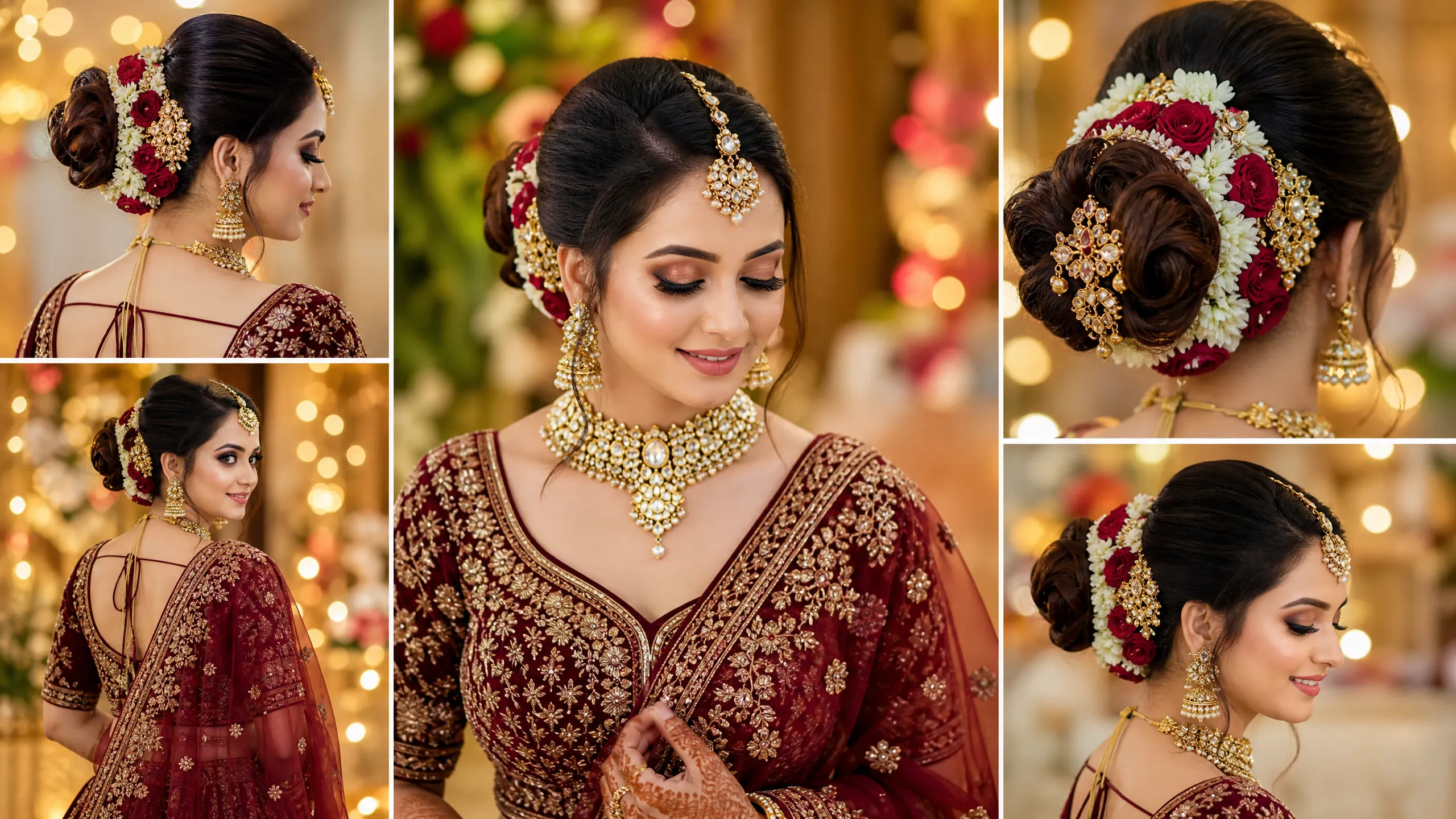
Indian bridal bun hairstyles include gajra juda, floral nape buns, braided juda, sleek saree buns, and dupatta-friendly bridal buns. Secure shape supports jewelry. Floral detail adds tradition. Balanced placement keeps the full look graceful.
Gajra Wrapped Juda Styles for Wedding Day

A gajra wrapped juda is one of the most loved Indian bridal bun hairstyles because it feels traditional and photo-ready. The bun sits at the back, while the flower garland frames the round shape. This style works beautifully with lehengas, silk sarees, temple jewelry, and classic bridal makeup. The gajra should sit close to the bun, not hang loose or cover the whole back. Ask for gajra curve placement so the flowers follow the juda shape cleanly. A fuller bun can hold a thick garland better. Fine hair may need padding or careful sectioning so the juda looks balanced under the flowers.
This look is also practical for brides who want the back of the hair to feel complete without many pins or clips. Keep the front simple if the gajra is heavy.
If you want a wider base of soft bun ideas before choosing a traditional version, low bun wedding hairstyles for a soft elegant bridal look can help compare placement and shape.
Center Part Hair With Maang Tikka Balance

A center part is often the anchor for a maang tikka. It gives the jewelry a clear line and makes the front of the hairstyle feel formal. The bun at the back should support this clean front view without pulling the hair too flat. The maang tikka should sit straight along the part. If the front sections are uneven, the jewelry can shift or look off-center in photos. Ask for the tikka line symmetry before the final pins are set. This style suits brides wearing heavy necklaces, matha patti, or a dupatta over the head. The clean parting helps the face stay framed even when the outfit has many details.
Keep a little softness near the roots. Too much tightness can feel harsh and uncomfortable. The back bun can be smooth, floral, or full, depending on the outfit.
Tip: test the maang tikka with the dupatta on, not just with the hair alone.
Sleek Saree Hairdos With a Rounded Bun

A sleek saree hairdo works well when the saree is rich, bright, or heavily bordered. The hair stays smooth at the front and gathers into a rounded bun at the back. This gives the outfit a clean finish without taking attention away from the saree. A rounded bun suits silk sarees, Kanjivaram-style drapes, and formal reception sarees. The bun can be plain, framed with a gajra, or dressed with a small accessory. Use the saree bun proportion so the back view feels balanced with the pallu. The front should not look oily or stiff. A light shine is enough. If the bun is too small, it may disappear under jewelry or flowers. If it is too large, it can feel heavy.
This hairstyle on a saree works best when the bun height matches the blouse back and jewelry size. Keep the neckline visible and comfortable.
For modern versions of classic updos, classic bridal updos with modern twists can help shape a cleaner saree look.
Lehenga Friendly Bun Shapes With Crown Volume

Lehenga hairstyles often need more shape because the outfit is full. A bun with light crown volume helps balance the skirt, blouse, dupatta, and jewelry. It can make the profile look softer and more bridal. The crown should have lift, but it should not look puffed or stiff. Ask for a lehenga crown lift that blends into the bun. This small height can help the dupatta sit better, too. This style works well with low, mid, or rounded buns. A low bun feels romantic. A mid bun may support heavier dupatta placement. A fuller juda can balance a heavily embroidered lehenga.
One realistic example: a bride has a red lehenga with a heavy dupatta and a layered necklace. A flat bun makes the outfit look top-heavy. A softly lifted crown and rounded back bun give her face and jewelry more balance.
Keep the crown comfortable. If it pulls at the front hairline, the style needs adjustment before the ceremony.
Braided Bridal Hair Gathered Into a Juda

Braided bridal hair can make a bride feel more detailed and secure. A braid may start at the side, crown, or back, then gather into the bun. This adds texture without needing too many accessories. A braided juda works well for brides who want traditional styling with a softer finish. The braid can help hold layers and frame the bun. Ask for woven Juda structure so the plait does not disappear inside the bun. This style suits lehengas, sarees, and pre-wedding events too. A side braid can soften the face. A crown braid can add volume. A back braid can make the photo view more interesting.
Keep the braid secure but not tight. Tight braids and tightly pulled buns can create scalp discomfort. If your hairline feels sore during the trial, ask for softer tension.
For more braid-focused wedding ideas, braided bridal hairstyles for elegant brides can help compare plaits, crowns, and nape styles.
Mogra Garland Placement Around the Nape

Mogra garlands add a soft, traditional feel to a bridal bun. The flowers can frame the nape, circle the juda, or sit along the lower curve. This look is simple, fragrant, and very visual for wedding photos. The garland should not sit too low on the neck. It should hold close to the bun so it feels like part of the hairstyle. Ask for mogra nape framing that stays neat from the back. This works well for sarees, South Asian wedding looks, and classic bridal outfits. A fresh garland looks beautiful, but it needs good pinning. Artificial mogra can be useful if the ceremony is long or warm.
A common mistake is using a garland that is too thick for the bun size. The flowers can hide the juda. Choose the garland after deciding on the bun shape.
If fresh flowers sit close to your skin, test comfort before the event. Some people can react to fragrance, pollen, or pins.
Floral Back View Styles for Traditional Photos

The back view matters in Indian wedding photos because the dupatta, blouse, jewelry, and bun often appear together. Floral bun styling can turn that view into a strong bridal moment. The flowers should frame the hair, not hide it. This style works with roses, mogra, baby’s breath, orchids, or mixed small blooms. The flower choice should match the outfit’s mood. Ask for a floral photo balance so the bun, dupatta, and blouse all show clearly. For a heavily embroidered lehenga, use fewer flowers. For a plain saree or minimal blouse, a fuller floral ring can add depth.
Take a trial photo from behind. Check if the bun looks centered, if the flowers are even, and if the dupatta covers the design. A beautiful back view should still look clean when the bride turns, sits, and walks.
Neutral cultural background on Indian wedding flowers can help with styling context, but the final choice should match family tradition and comfort.
Heavy Dupatta Hairdos With Secure Shape

A heavy dupatta changes everything about bridal bun placement. The bun must support fabric weight, pins, movement, and long ceremony time. A pretty bun is not enough if it cannot hold the full look. The stylist should test the dupatta with the bun during the trial. The fabric may sit above the bun, rest over the crown, or frame the back. Ask for the dupatta support point before final approval.
A mid or low-mid bun often works better for heavy fabric than a very low bun. It gives the dupatta something to rest against without pulling at the neck.
Comfort matters. The American Academy of Dermatology notes that tightly pulled buns and updos can contribute to traction-related hair concerns when tension is repeated or strong. AAD guidance on tight hairstyles is a useful, neutral reading for scalp comfort.
The bride should be able to turn her head, sit, and smile without pain.
Pearl Detailed Buns for Reception Styling

Pearl detailed buns can feel elegant for reception styling. They add shine without the freshness concerns of flowers. Pearls can sit along a twist, around the bun, or near one side of the juda. This look suits pastel lehengas, ivory sarees, metallic blouses, and soft evening makeup. Ask for pearl reception spacing so the bun still shows between the pins. The pearls should match the jewelry tone. Bright white pearls may look strong against cream outfits, while softer ivory pearls may blend better. A few well-placed pins can look more refined than a crowded spray.
A pearl bun is also helpful when the bride removes the dupatta after the ceremony. The hair still looks finished for reception photos.
For brides choosing between pins, combs, flowers, and pearl accents, bridal hair accessories for wedding hairstyles can help plan the detail without overloading the bun.
Polished Front Sections With a Full Back View

Some Indian bridal looks need a very polished front and a full back view. The front supports the maang tikka, matha patti, earrings, and dupatta border. The back carries the juda, flowers, or bun shape. This style works best when both views are planned together. A smooth front with a tiny bun can feel unbalanced. A full bun with messy front sections can look unfinished. Ask for front-back harmony during the trial. The front can be center parted, side parted, or brushed back, depending on the jewelry. Keep the hairline soft if the face needs gentleness. Keep it sleeker if the jewelry is very traditional.
A full back view is useful for aisle photos, seated portraits, and dupatta shots. The bun should look finished even if the dupatta shifts.
If new sprays, gels, or smoothing products will touch the hairline, test them early. The FDA explains that cosmetic products can cause reactions in some people and are generally not FDA-approved before sale, except color additives. FDA personal care product safety Q&A gives a neutral background.
Temple Jewelry Friendly Bridal Hair Ideas

Temple jewelry can be heavy and detailed, so the hair should support it without crowding the face. A bridal bun works well because it keeps the neck and ears visible. The front should be smooth enough for jewelry placement but not too tight. This style suits jhumkas, passa, matha patti, layered necklaces, and traditional saree or lehenga looks. Ask for jewelry-friendly spacing around the ears and hairline. If earrings are large, avoid thick side pieces. If the necklace is heavy, keep the bun higher than the neckline so the full look does not feel crowded.
The bun can be rounded, floral, or sleek. The key is to leave breathing room between the jewelry and hair details.
A useful trial step is to wear the real earrings and headpiece. Photos without jewelry can make the hair look right, but the full bridal set may change the balance.
Soft Traditional Bun Looks With Modern Texture

A soft traditional bun with modern texture is a good choice for brides who want culture and softness together. The bun keeps the juda shape, but the surface has gentle pulls, waves, or twisted sections. This look works well with lighter lehengas, pastel outfits, garden venues, and reception styling. It can also suit brides who do not want a fully sleek bun. Ask for modern Juda texture that still feels wedding-ready. The texture should not fight the jewelry. If the bride is wearing a heavy maang tikka, keep the front cleaner. If the jewelry is minimal, the bun can have more soft detail.
This style also photographs well because the bun has dimension. It works especially nicely with highlighted hair or brunette hair where wide sections can show shape.
A common mistake is making the bun too undone. Traditional bridal styling still needs a firm base, clear outline, and secure pins.
For brides who want a soft but formal shape, wedding hairstyles with veil ideas can also help with fabric and head-covering placement.
Low Floral Juda Styles for Classic Brides

A low floral juda is classic, soft, and easy to picture with traditional bridal outfits. The bun sits near the nape, while flowers frame the shape. It can feel rich with a saree and romantic with a lehenga. This style works best when the flowers are placed with care. A full ring can look traditional. A half ring can look lighter. A side cluster can feel modern. Ask for classic floral framing that matches the outfit’s weight. If the dupatta will cover the head, make sure the flowers are still visible from the back or side. If the bride will remove the dupatta later, the bun should look complete on its own.
Choose flower size based on bun size. Small mogra suits compact buns. Roses or mixed blooms suit fuller shapes.
Indian bridal bun hairstyles are most beautiful when they feel personal. The right juda should respect tradition, support the outfit, and stay comfortable through the full wedding day.
Indian bridal bun hairstyles are not just about making a bun. They bring together the outfit, dupatta, jewelry, flowers, family tradition, and wedding photos. A good juda should hold the look together from the front, side, and back. Bring your real or sample jewelry, dupatta, and flower plan to the hair trial. Take photos with the saree or lehenga neckline in mind. Bridal juda planning should include comfort, support, and cultural detail.
The best style may be a gajra bun, braided juda, pearl reception bun, or low floral shape. Choose the one that lets your face, outfit, and tradition feel balanced. A beautiful hairstyle on saree or lehenga should feel secure, graceful, and true to the bride.