
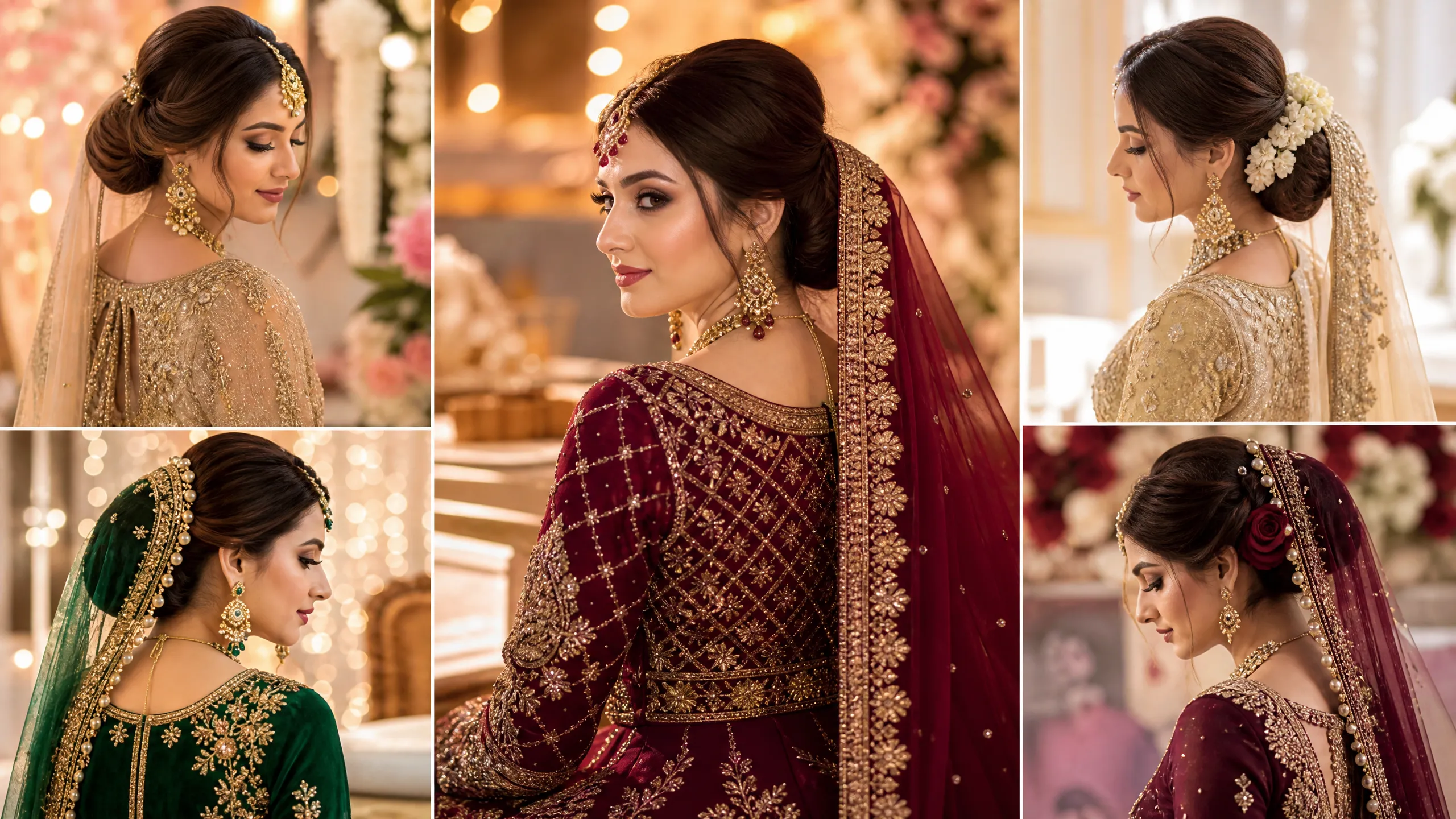
Nape Juda Shapes That Sit Neatly Under Dupatta

A nape juda works well when the dupatta needs to sit softly over the head and fall behind the shoulders. The bun sits low enough to feel graceful, but it still gives the fabric a resting point. This helps the dupatta look planned instead of floating away from the head. The bun should not sit so low that it touches the blouse or neck jewelry. Ask for nape juda height that leaves space between the bun and the outfit. That small gap helps the back view look clean. For heavy bridal fabric, a very soft bun may not hold well. A firm inside with a smooth or floral outside is safer. Brides who want a low bun with a fuller shape can compare ideas from soft, elegant low bun wedding hairstyles before planning the dupatta setting.
Keep the juda rounded if the dupatta border is wide. A slimmer bun may work better with a lighter Nikkah dupatta.
Center Part Hairdos With Maang Tikka Space

A center part is one of the most important front details in Pakistani bridal hair. It gives the maang tikka a straight path and keeps the dupatta from making the front look crowded. This is especially useful for Nikkah, and Barat looks where the jewelry is central. The part should be clean, but not harsh. A little softness near the roots can stop the front from looking flat. Ask for maang tikka spacing before the dupatta goes on. If the bride wears matha patti, jhoomar, or passa, the stylist needs to place the front jewelry before final pinning. The bun may look finished without jewelry, then feel off once the headpiece is added.
A common mistake is making the center part too tight. It can pull at the hairline and make the bride uncomfortable during long ceremonies. The front should hold, but the scalp should not feel sore.
Soft Bun Styling for Nikkah Bridal Looks

Nikkah bridal hair often feels softer than Barat hair. The outfit may be ivory, pastel, gold, blush, or champagne. A soft, low bun matches that mood because it looks calm, modest, and elegant without feeling heavy. The bun can be smooth, loosely twisted, or lightly textured. It should still feel formal, especially if the dupatta is worn over the head. Ask for Nikkah bun softness that keeps the front neat and the back gentle. This style works well with smaller jewelry, pearl details, delicate tikka, and sheer dupattas. A low bun can also keep the neck clear for layered necklaces.
If the dupatta is very light, the bun can be softer. If the dupatta has heavy embroidery or border work, the inner pinning needs more hold. For more fabric-friendly ideas, wedding hairstyles with veil ideas can help with placement thinking, even when the fabric is a dupatta.
Crown Lift Ideas for Heavy Dupatta Photos

A heavy dupatta can flatten the top of the hair if the crown is not planned well. Soft lift at the crown helps the fabric sit better and gives the side profile more shape. The lift should look natural, not like a high puff. This is useful for Barat brides wearing heavier lehengas, ghararas, or shararas. A slight crown lift can balance the outfit and keep the face from looking pulled down by fabric. Ask for a crown lift support that sits under the dupatta.
One realistic example: a bride has a deep red lehenga and a wide embroidered dupatta border. A flat middle part makes the headpiece look heavy. A soft crown lift and low-mid bun create better balance, so the tikka, dupatta, and jewelry all show clearly.
Do not add too much height if the maang tikka is large. The goal is support, not a raised bridal puff.
Sleek Front Sections With a Voluminous Back

Sleek front sections can make the bridal face look polished. A voluminous back bun gives the dupatta and jewelry enough shape behind the head. This front-back contrast works well for brides who want clean photos without losing fullness. The front should be smooth around the parting and temples. The back can have padding, twists, or a full rounded juda. Ask for front-back volume so the style does not look flat from the side.
This look works with tikka, jhumkas, choker sets, and dupatta borders. It also helps when the dress has a heavy neckline because the clean front keeps the face open.
- Temple smoothness helps jewelry sit cleanly.
- Full back shape keeps the dupatta lifted.
- Soft shine finish looks polished without heaviness.
If new gels or sprays touch the hairline, test them before the event. The FDA explains that cosmetic products and ingredients generally do not need FDA approval before sale, except for color additives, so early product testing is sensible.
Floral Bun Details for Mehndi and Barat Events

Flowers can change the mood of a Pakistani bridal low bun quickly. For Mehndi, flowers can feel bright and playful. For Barat, they can feel classic and rich. The key is matching the flower size to the outfit and dupatta. Small mogra, roses, baby’s breath, or mixed floral clusters can sit around the bun. A full floral ring can feel traditional. A side cluster can feel modern. Ask for a floral bun scale so the flowers do not hide the juda. This works best when the dupatta placement is tested with the flowers. A heavy border can cover the bun, while a sheer dupatta may let the floral shape show.
If the event is outdoors, consider heat, sun, and flower freshness. CDC sun safety guidance recommends shade, sunscreen, protective clothing, and sunglasses to reduce sun exposure during outdoor time.
For a budget-friendly version, use fewer blooms and place them only on the visible side of the bun.
Side Framing Pieces With Jhumka Balance

Side framing pieces can soften a bridal face, but they must work with jhumkas. Pakistani bridal jewelry often has size, movement, and shine. If the hair covers the earrings, the full look can feel crowded. The best face pieces are light and shaped away from the jewelry. Ask for a jhumka breathing room near the ears. This keeps the earrings visible in side photos and close portraits. This style suits brides who want a softer front with a low bun. It can work for round, oval, and heart-shaped faces if the pieces are placed carefully.
A common mistake is leaving thick side strands loose under the dupatta. They can tangle with earrings or flatten against the face. Keep the front soft, but controlled.
If the dupatta is pinned close to the ear, leave even more space around the jewelry. The hair, pin, fabric, and earring should not all sit in one tight area.
Dupatta Friendly Hairdos for Round Face Shapes

Round face shapes often look balanced with soft height at the crown and gentle framing near the cheeks. A very flat front with a heavy dupatta can make the face look shorter. A low bun can still work if the front and crown are shaped well. Ask for a round face balance with soft lift and clean side control. The bun should sit low or low-mid, depending on the dupatta weight. This does not mean the hair has to be loose. A sleek center part can still work if the crown is not pressed flat and the tikka has clear space.
- Soft crown height helps lengthen the profile.
- Controlled side strands keep the cheeks open.
- Low-mid placement supports heavier fabric.
For accessory planning around face shape and outfit detail, bridal hair accessories for wedding hairstyles can help decide where pins, combs, and pearl pieces should sit.
Loose Textured Buns for Walima Styling

Walima styling often feels lighter and softer than Barat styling. Pastel outfits, soft makeup, and delicate jewelry pair well with a loose textured bun. The bun can sit low at the nape with soft turns, tucked ends, and a gentle back view. The texture should feel planned, not messy. Ask for Walima texture control so the bun keeps a clear shape. A few pulled sections can add romance, but the base still needs to hold. This style works well when the dupatta is lighter, draped farther back, or used mainly for photos. It also suits pearl details or a small hair vine.
A Pakistani bridal hairdo for Walima should still feel formal enough for reception photos. If the front is too loose, the tikka or side jewelry may shift. Keep the face area steady and let the bun carry the softness.
For reception-friendly updo shapes, wedding updo hairstyles for bridal looks can support the final style choice.
Polished Juda Looks With Traditional Jewelry

A polished juda is a strong choice when the bridal jewelry is rich. It keeps the hair controlled so the tikka, earrings, necklace, and dupatta border can stand out. The bun can be rounded, tucked, or smooth with a floral edge. The front should not fight the jewelry. Ask for traditional jewelry spacing around the forehead, ears, and neckline. This helps every piece show without looking crowded. This style is especially useful for Barat brides who want a formal look. It can also work for Nikkah if the outfit is classic and the jewelry has strong detail.
A polished juda should be checked from all angles. The bride may sit for portraits, walk with the dupatta, and turn during family photos. The back should remain smooth even if the fabric moves.
If the jewelry is very heavy, avoid extra-large hair accessories. One main detail is usually enough.
Modern Softness Added to Classic Bridal Hair

Classic Pakistani bridal hair does not have to look stiff. A low bun can keep the traditional shape while adding softness through texture, gentle root lift, or a softer front. This helps the bride look current without losing the bridal mood. The key is choosing one soft detail. It may be a lightly textured bun, a softer side section, or a low floral touch. Ask for modern bridal softness that does not weaken the dupatta support. This style suits brides who want Pinterest-friendly photos but still need a practical Nikkah, Barat, or Walima look. It also works for brides who feel that fully sleek hair looks too severe.
Keep the jewelry in mind. If the tikka and jhumkas are heavy, keep the front cleaner. If the jewelry is minimal, more texture can work at the bun.
A soft modern finish should still have a secure base, clear parting, and neat pinning under the fabric.
Secure Nape Pinning for South Asian Outfits

Secure nape pinning is the part of the hairstyle people rarely see, but it matters most. South Asian bridal outfits often include heavy dupattas, layered jewelry, embroidered necklines, and long photo sessions. The bun needs a hidden base that can handle all of it. Ask for South Asian outfit support before the stylist adds flowers or accessories. The bun should feel steady when you turn your head or sit down. Pins should not press hard into the scalp. A secure style should not feel painful. Tight buns and updos can contribute to hairline stress when they pull strongly or repeatedly, so comfort checks matter even for one special day.
A good final test is simple. Add the dupatta, jewelry, and any hair accessory. Take front, side, and back photos. Then move your head gently. If the bun shifts, pulls, or hurts, adjust it before the ceremony.
Pakistani bridal low bun hairstyles with dupatta should feel beautiful and wearable. A strong base lets the soft details stay pretty longer.
Pakistani bridal low bun hairstyles with dupatta work best when the hair, fabric, jewelry, and face shape are planned together. A bun that looks perfect without the dupatta may feel wrong once the tikka, jhumkas, and border are added. Bring your real dupatta or a similar-weight fabric to the trial. Add the jewelry before final photos. Check how the bun looks from the front, side, and back. A bridal updo with dupatta styling should support the full outfit, not only the hair.
Whether you choose a soft Nikkah bun, a floral Barat Juda, or a textured Walima shape, keep comfort and placement first. A good Pakistani bridal hairdo should feel secure, graceful, and easy to wear through every wedding moment.