
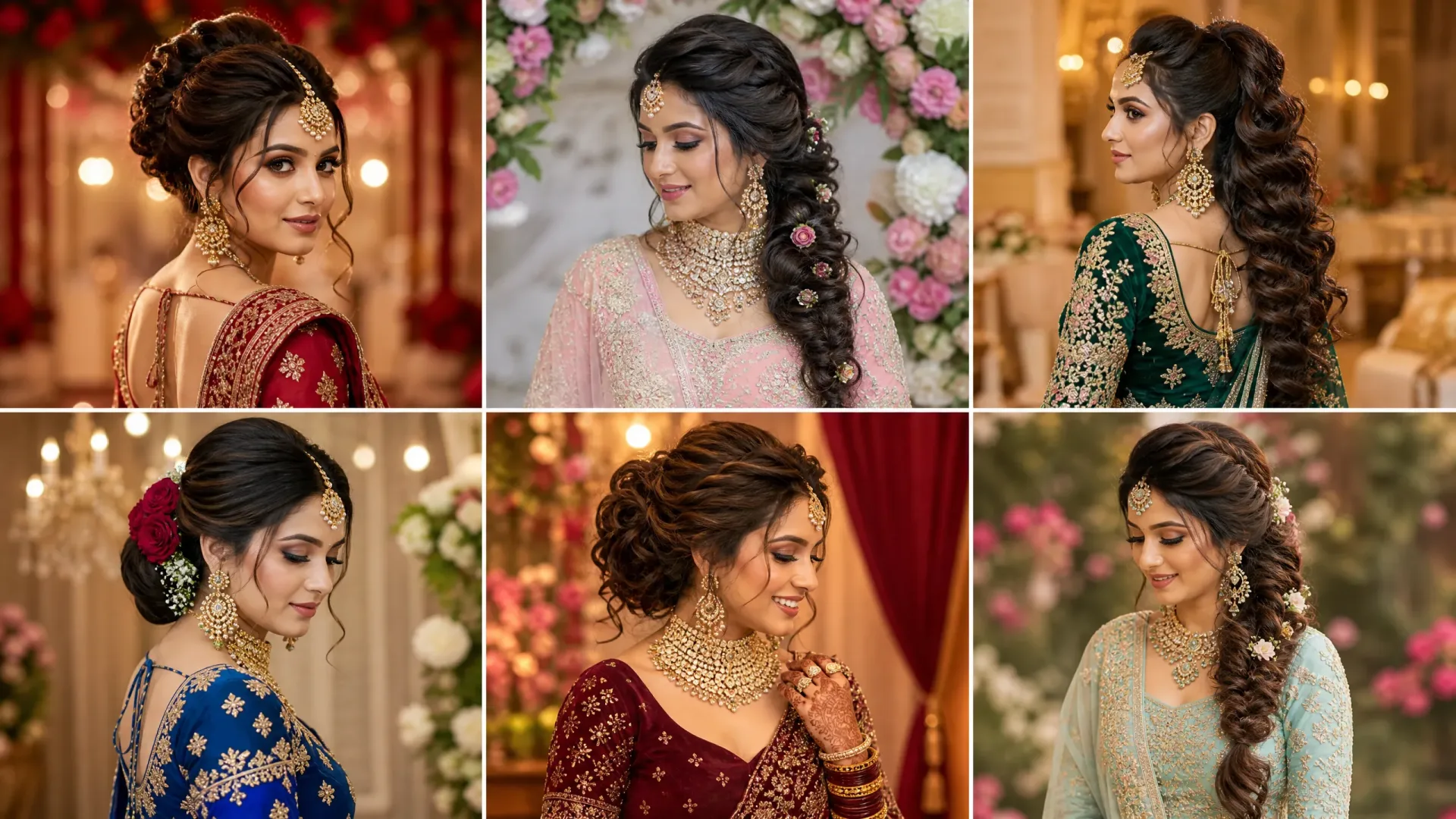
Your bridal hair can change the whole mood of your wedding look.
A neat bun can feel royal. A long braid can feel classic. Soft curls can make a reception outfit look dreamy. And the right flowers, dupatta, tikka, or jewelry can turn a simple hairstyle into a full bridal moment. This guide to Indian Bridal Hairstyles is made for brides who want ideas that feel beautiful, real, and easy to imagine. It covers buns, braids, gajra, curls, lehenga looks, saree-friendly styles, and hair ideas for long wedding functions.

Whether your style is soft, traditional, modern, or full South Asian bridal glam, you’ll find looks that work with jewelry, flowers, veils, dupattas, and heavy outfits without feeling messy or hard to manage. The best Indian Bridal Hairstyles include low buns with gajra, long decorated braids, soft reception curls, sleek lehenga buns, floral hairstyles, and tikka-friendly center parts. Choose your hairstyle based on your outfit neckline, dupatta placement, jewelry weight, hair length, and how long your ceremony will last.
Traditional Bridal Buns with Gajra

A bridal bun with gajra is one of the most loved looks in traditional Indian bridal hair. It feels graceful, rich, and timeless. The bun sits low or mid-height, then fresh jasmine flowers wrap around it like a soft white frame.
This style works well with heavy lehengas, silk sarees, temple jewelry, kundan sets, and dupattas. It also keeps hair secure, which matters during long wedding rituals.
For a clean look, keep the front smooth with a center part. For a softer look, leave light face-framing pieces near the cheeks. A tight bun can look sharp, while a slightly full bun feels more romantic.
Avoid making the bun too flat. Indian bridal outfits usually have strong details, so the hair needs shape, volume, and balance.
For more full wedding-day ideas, you can pair this with inspiration from classic bridal hair looks for the main ceremony.
Long Braids with Bridal Jewelry

A long braid gives a bride a very elegant and cultural look. It is one of the most beautiful Indian wedding hairstyles for brides who want their hair to look rich without leaving it open.
The braid can be simple, thick, twisted, or decorated from top to bottom. Add gold clips, pearl strings, fresh flowers, or small hair chains to match your jewelry. Brides with long hair can use their natural length. Brides with medium hair can add extensions for a fuller braid.
This look is perfect when your blouse has a deep back or detailed embroidery. The braid becomes part of the outfit, not just the hair.
Keep the top section smooth if your jewelry is heavy. If the braid has too many loose pieces, it can get messy during photos and movement. A slightly padded crown can also help the braid look more bridal.
For more plaited ideas, save this with romantic braided styles for brides.
Reception Curls for Indian Brides

Reception hair can feel softer than the main wedding look. Many brides choose open curls, side-swept waves, or half-up curls because they look romantic in evening photos.
Soft curls work well with gowns, lehengas, sarees, and Indo-western outfits. They also make the face look softer after a heavy ceremony look. If your wedding day bun is very traditional, reception curls can give you a fresh change.
For a polished look, keep the crown smooth and add volume near the roots. The curls should look shaped, not stiff. A side part gives a glamorous feel. A center part feels more modern and balanced.
A small pin, passa, or delicate clip can hold one side in place. This keeps the hair away from your face while still giving that flowy bridal look.
For brides who love soft South Asian glam, Pakistani bridal hair inspiration can also give good ideas for waves, dupatta styling, and jewelry placement.
Lehenga Hairstyles for Wedding Day

A lehenga usually has heavy work, a bold dupatta, and strong jewelry. So the hairstyle should support the whole look. The safest choices are a low bun, soft bun, half-up waves, or a long braid.
For a red or maroon bridal lehenga, a neat bun with gajra or roses feels classic. For pastel lehengas, loose waves or a soft bun can look more dreamy. For gold or ivory lehengas, sleek hair with pearl details feels clean and royal.
Here’s a realistic example:
A bride wearing a deep red lehenga, kundan necklace, and matha patti may look best with a center-parted low bun. The bun keeps the dupatta secure, lets the jewelry show, and keeps the whole look neat for hours.
The biggest mistake is choosing hair only from a photo. Always check how it works with your blouse neckline, dupatta weight, and jewelry size.
Saree-Friendly Bridal Hair Ideas

Saree bridal looks often need hair that feels neat, graceful, and secure. A bun is the most common choice because it shows the saree border, blouse work, earrings, and necklace clearly.
A low bun with gajra looks beautiful with silk sarees. A sleek bun with a center part feels royal with temple jewelry. A soft bun with side pieces works well with lighter sarees and pastel colors.
Open hair can also work, but it depends on the fabric and event. For heavy silk sarees, open curls may compete with the outfit. For a lighter reception saree, soft curls can look elegant.
Simple saree-friendly ideas include:
- Low bun with jasmine
- Side bun with roses
- Center-parted sleek bun
- Soft waves with one side pinned
Keep the hair clean around the face. Sarees already have rich drapes, so messy hair can make the look feel crowded.
Veil and Dupatta Hair Styling

Dupatta placement should be planned before the hairstyle is final. This is very important for Indian Bridal Hairstyles because the dupatta can change how the hair looks from the front and back.
If your dupatta will cover the head, a low bun or mid bun gives strong support. The pins can sit into the bun, which helps the dupatta stay in place. If your dupatta is only on the shoulder, you can choose curls, waves, or a braid more easily.
A heavy dupatta needs a strong base. A light net dupatta gives more freedom. Brides who want a soft face look can keep the front slightly lifted, then pin the dupatta behind the crown.
Do not pin a heavy dupatta into loose curls without support. It can pull the hair down and flatten the shape.
A good bridal hair trial should include the actual dupatta or a similar fabric weight.
Maang Tikka Hair Placement

Maang tikka placement can make or break the front look. It works best when the center part is clean and straight. The tikka should sit flat, not float above the hair or pull to one side.
For heavier tikkas, keep the front hair sleek. This gives the jewelry a strong base. For smaller tikkas, soft waves around the face can still look balanced.
The tikka should match the hairstyle mood. A large matha patti looks beautiful with a bun. A small tikka can work with curls, braids, or half-up styles. If you are wearing a passa or jhoomar, avoid too much volume on that side.
This is one of the most useful details in bridal bun hairstyles because the front view appears in almost every photo. Ask your stylist to secure the tikka with hidden pins and a small anchor at the back.
The goal is simple: centered, secure, and comfortable.
Floral Hairstyles for Indian Brides

Flowers bring softness to bridal hair. They also help connect the hairstyle with the outfit color, jewelry, and wedding theme. Fresh jasmine gives a traditional feel. Roses feel romantic. Baby’s breath gives a soft modern touch.
Floral Indian Bridal Hairstyles can be simple or full. A small flower cluster near the bun looks neat. A full gajra circle looks classic. Tiny flowers placed through a braid feel fresh and pretty.
Match flower size with your outfit. Heavy lehengas can handle fuller flowers. Light outfits look better with smaller floral details.
Good flower pairings include:
- White jasmine with red lehenga
- Pink roses with pastel lehenga
- Baby’s breath with soft curls
- Orange flowers for mehndi looks
Avoid flowers that wilt quickly. Also avoid placing large flowers too close to the ears if your earrings are heavy. It can make the side profile look too full.
South Indian Bridal Braid Ideas

South Indian bridal braids are rich, graceful, and full of detail. They often include flowers, gold hair pieces, temple jewelry, and a long braid that falls down the back.
This look works beautifully with silk sarees, heavy gold jewelry, and traditional wedding rituals. The braid is not just a hairstyle. It becomes part of the full bridal styling.
A classic South Indian braid may include a center part, smooth crown, long plait, jasmine garland, and decorative braid jewelry. Some brides add flowers from the crown down to the braid end. Others keep flowers only near the top and use gold pieces along the braid.
If your hair is not long enough, extensions can help create length and fullness. The braid should feel secure but not painful.
This is one of the strongest forms of traditional Indian bridal hair, especially for brides who want a cultural and photo-rich look.
North Indian Bridal Bun Looks

North Indian bridal hair often centers around the dupatta, matha patti, tikka, passa, and heavy necklace. Because the jewelry is bold, a bun often works better than open hair.
A center-parted bun gives the most classic look. It helps frame the tikka, supports the dupatta, and keeps the neck area clean for layered jewelry. A soft bun with flowers can make the same look feel more romantic.
For brides wearing a red, wine, gold, or blush lehenga, the bun can be styled with roses, jasmine, pearls, or small hair pins. If the dupatta has a heavy border, keep the bun lower so the back does not look bulky.
Many bridal bun hairstyles work well here, but balance matters. If your matha patti is large, keep the front hair smooth. If your jewelry is light, you can add more texture to the bun.
Modern Indian Bridal Hair

Modern bridal hair is softer and less fixed. It can include loose waves, textured buns, half-up styles, smooth ponytails, or soft braids. These looks are popular for receptions, engagement shoots, intimate weddings, and pastel bridal outfits.
A modern bride may choose a clean center part with soft waves instead of a heavy bun. Another bride may choose a textured low bun with pearl pins instead of full flowers. Both can still feel bridal.
The key is to keep the hair polished. Modern does not mean messy. It means lighter, cleaner, and more relaxed.
This style works well for brides who want:
- less weight
- soft movement
- minimal jewelry
- fresh makeup
- easy photo angles
For more soft wedding beauty ideas, you can also connect this section with romantic hair ideas with bridal accessories.
Hair Prep for Long Ceremonies

Indian weddings can be long. A hairstyle has to survive rituals, photos, hugs, dancing, weather, and dupatta changes. That is why prep matters as much as the final look.
Clean hair is good, but very silky fresh hair may not hold well. Many stylists prefer hair washed the night before, depending on texture. Light texture helps curls, buns, and pins stay in place.
Before the wedding, avoid trying a new haircut or treatment too close to the event. Give your hair time to settle. Also check how your hairstyle works with earrings, necklaces, tikka, and dupatta.
Useful prep notes:
- Do a trial with your real jewelry or similar weight
- Take photos from front, side, and back
- Check if pins feel painful
- Test curls for hold
- Keep small touch-up pins ready
Good prep helps Indian wedding hairstyles stay beautiful without constant fixing.
Accessories for Indian Bridal Hair

Hair accessories finish the bridal look. They should match the outfit, not fight with it. A bride wearing heavy kundan jewelry may need a simple bun with gajra. A bride wearing a light pastel lehenga may look better with pearl pins or small flowers.
Common Indian bridal hair accessories include maang tikka, matha patti, passa, jhoomar, gajra, roses, pearl pins, gold braid pieces, and decorative combs.
The best choice depends on your hairstyle:
- Bun: gajra, roses, pearl pins, tikka
- Braid: gold braid jewelry, flowers, hair chains
- Curls: side clip, passa, small pins
- Half-up hair: comb, pearl details, soft flowers
Do not wear every accessory at once. The most beautiful Indian Bridal Hairstyles usually have one strong focus. It may be the tikka, the gajra, the braid jewelry, or the flowers.
Choose comfort too. You will wear this look for hours, so it should feel secure, balanced, and easy to carry.