
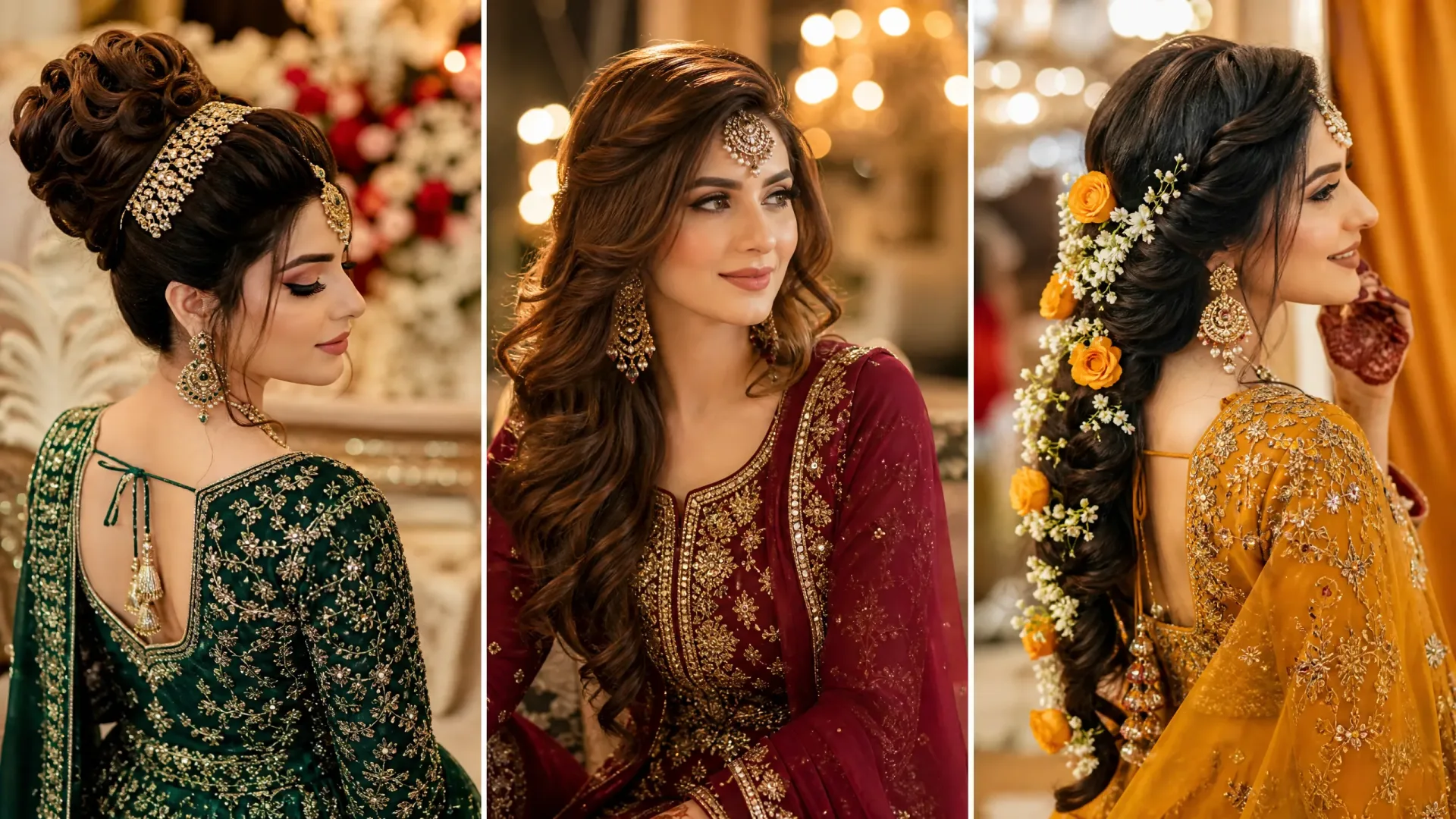
A Pakistani bridal look is never only about the dress.
It is the dupatta sitting softly on the head, the matha patti shining near the hairline, the jhoomar placed just right, and the hairstyle holding everything together from the first photo to the last dance.For 2026, bridal hair is moving toward styles that feel soft, graceful, and wearable. Brides still love traditional buns, long curls, and dupatta-friendly looks, but the finish is lighter now. Less stiff. More romantic. More picture-ready.

This guide to Pakistani Bridal Hairdo 2026 is made for brides who want beauty with comfort. You will find ideas for Barat, Walima, Nikah, Mehndi, heavy jewelry, long events, and South Asian wedding functions where hair needs to look elegant and stay secure. The best Pakistani Bridal Hairdo 2026 ideas include soft Barat buns, Walima waves, dupatta-friendly updos, matha patti placement styles, jhoomar side hairstyles, floral Mehndi hair, and sleek traditional bridal buns. The right hairstyle depends on your outfit, jewelry weight, dupatta style, face shape, and wedding function.
Barat Bridal Hair Trends

Barat hair usually carries the most drama. The outfit is heavier, jewelry is richer, and the dupatta often needs firm support. In Pakistani Bridal Hairdo 2026, Barat styles are still grand, but they are not as stiff as older bridal looks.
A low bun with soft front pieces is one of the most loved choices. It gives space for a matha patti, tikka, necklace, earrings, and dupatta without making the face look crowded.
Some brides also choose a center-parted bun with gentle volume at the crown. This works well with traditional bridal hairdo styling because it keeps the look royal and clean.
For a more modern touch, the bun can have soft twists, pearl pins, or light waves tucked around the back. The goal is simple: strong hold, soft finish, and balanced jewelry placement.
For more wedding-day ideas, you can also link this section to your pillar guide on romantic wedding day hairstyle ideas.
Walima Hair with Soft Waves

Walima hair usually feels softer than Barat hair. The mood is graceful, fresh, and polished. Brides often wear pastel shades, lighter jewelry, and softer makeup, so loose waves fit beautifully.
Soft waves give a gentle flow around the shoulders. They look lovely with open hair, half-up styles, or one-side pinned hair. This is a good choice for brides who want a feminine and relaxed bridal look without losing elegance.
For 2026, many Pakistani brides are choosing waves that look smooth but not overly perfect. The curls are brushed out, the roots have light volume, and the front pieces frame the face softly.
This style works best when the dupatta is light or placed behind the head. If your Walima dupatta is heavy, ask your stylist to create hidden pins near the crown so the waves do not flatten too quickly.
Soft waves are also a beautiful part of South Asian bridal hair because they match both modern and traditional outfits.
Nikah Hairstyles with Dupatta

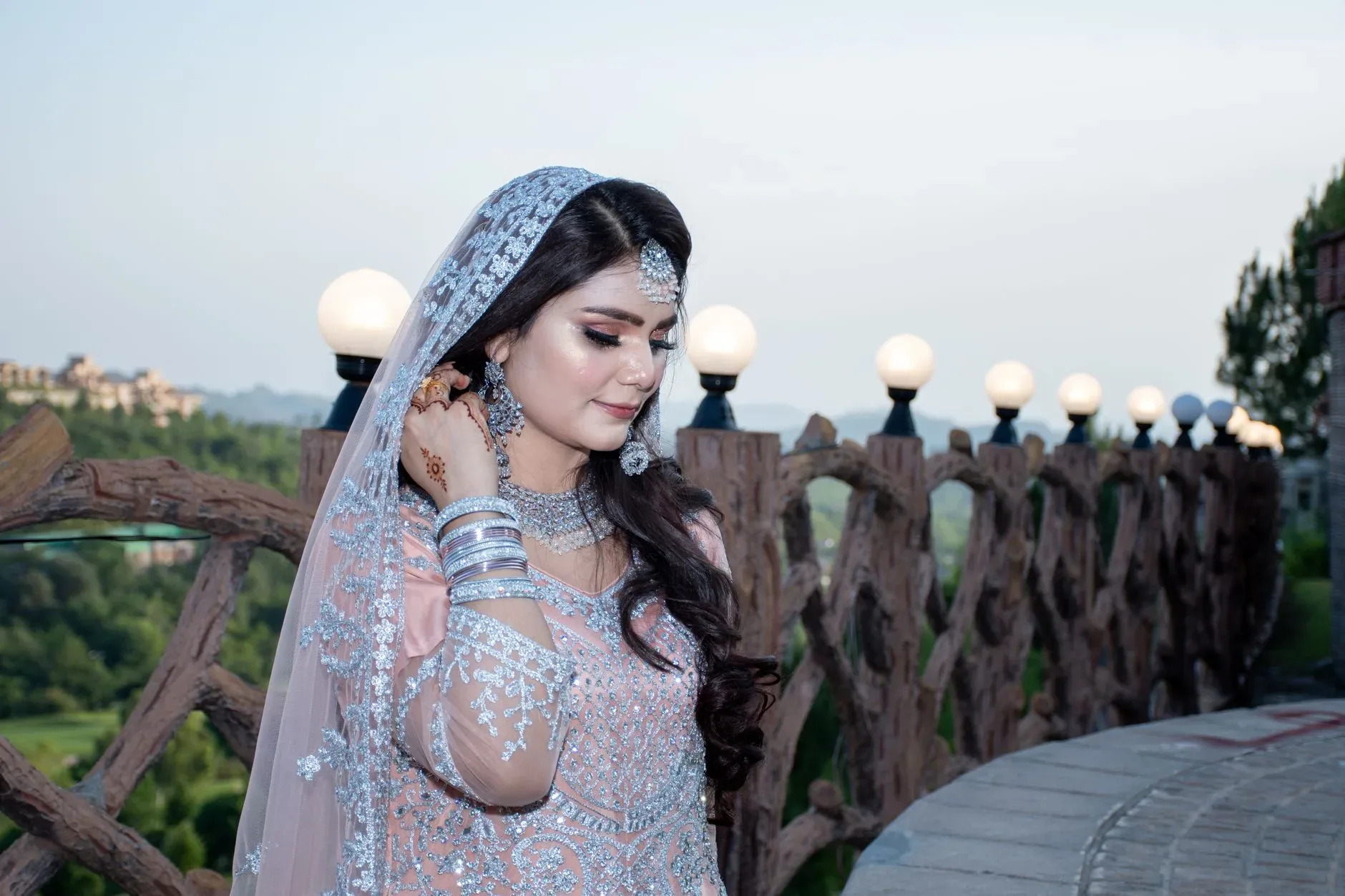
Nikah hairstyles often look gentle, modest, and peaceful. Many brides prefer a covered dupatta look, so the hairstyle needs to support the fabric without feeling bulky.
A center-parted low bun is a safe and pretty choice. It keeps the hair neat under the dupatta and gives the jewelry a clear place to sit. If you want a softer look, add light face-framing strands near the cheeks.
Another lovely option is a low braided bun. It adds texture but stays secure. This works well when the dupatta is sheer because the hair shape can still show through softly.
For a simple Nikah at home or in a small venue, keep the hair smooth near the crown and add small pearl pins or floral details at the back. It gives a bridal feel without looking too heavy.
A good Nikah hairstyle should feel calm, elegant, and easy to carry.
Dupatta-Friendly Bridal Buns

A dupatta-friendly bun is one of the most practical choices for Pakistani brides. It gives the dupatta a strong base and keeps the whole look neat during long ceremonies.
The best bun placement depends on how you want to wear your dupatta. A low bun works well when the dupatta sits at the back of the head. A mid bun can support a heavier dupatta and create more height under the fabric.
Keep these points in mind:
-
Choose a bun that matches the weight of your dupatta
-
Avoid too much height if your jewelry is already heavy
-
Keep the crown smooth if you are wearing a matha patti
-
Ask for hidden pins so the dupatta feels secure
This is where Pakistani bridal hairstyles need both beauty and function. A bun may look simple, but when it is built well, it can hold jewelry, fabric, and curls for hours.
For similar styling support, use an internal link to bridal hair accessories that suit wedding hairstyles.
Matha Patti Hair Placement

Matha patti placement can change the full face shape. If it sits too low, it can make the forehead look smaller. If it sits too high, it may look disconnected from the hairstyle.
For a clean look, part the hair from the center and keep both sides smooth. The matha patti should sit close to the hairline but not press into the skin. The tikka should fall naturally in the center.
Soft volume at the crown can balance heavy jewelry, but avoid puffing the front too much. It can disturb the placement and make the dupatta harder to pin.
For brides with round faces, a little height near the crown can help. For long faces, a flatter crown with soft side details may look better.
In Pakistani Bridal Hairdo 2026, matha patti styles are becoming more balanced. The focus is on clean parting, soft texture, and secure pins instead of heavy hairspray and tight pulling.
Jhoomar Hairstyles for Brides

A jhoomar gives a Pakistani bridal look a soft royal feel. It usually sits on one side, so the hairstyle needs to support that side without pulling the whole look down.
Side-parted buns are beautiful with a jhoomar. The hair can be swept gently toward one side, with the jhoomar placed above the temple. This gives the face a graceful frame and works well for Barat or Nikah.
For brides who prefer open hair, one-side pinned waves can also work. The key is to keep the jhoomar secure with hidden support. Do not depend only on the jewelry clip.
A jhoomar looks best when the opposite side of the hair is not too busy. If both sides have too much volume, the style can look crowded.
This is a strong choice for South Asian bridal hair because it brings culture, softness, and detail into one look.
Long Hair Pakistani Bridal Looks

Long hair gives you many bridal options. You can wear it open, half-up, braided, curled, or tucked into a full bun. The best choice depends on your outfit neckline, jewelry, and dupatta placement.
For a soft bridal look, long curls with a center part feel romantic. Add a tikka, light crown volume, and soft face pieces. This style is lovely for Walima or engagement-style bridal shoots.
For Barat, long hair can be styled into a fuller bun with twisted sections. This gives the look more strength and keeps the dupatta secure.
A long braid is another beautiful idea, especially for Mehndi. Add small flowers, pearls, or thread details for a festive touch.
One mistake to avoid is leaving long hair too flat at the roots. Even soft curls need light lift near the crown so the style does not fall during photos.
For more open-hair ideas, link to Indian bridal hairstyle inspiration for long hair.
Soft Curls for Heavy Jewelry

Heavy jewelry needs careful hair balance. If the hair is too tight, the face can look severe. If the hair is too loose, the jewelry may take over the whole look.
Soft curls are a good middle choice. They add movement around the face and make large earrings or layered necklaces feel softer. This works well for brides wearing a tikka, choker, jhumkas, or heavy dupatta border.
Keep the curls smooth, not frizzy. Brushed curls look more bridal than tight ringlets. Add a little volume at the crown and keep the front clean so the jewelry has space.
A simple styling idea:
-
Center part for a classic look
-
Side part for a softer face frame
-
Half-up curls for more hold
-
Low pinned curls for dupatta support
This type of traditional bridal hairdo is ideal when you want the jewelry to shine without making the hair disappear.
Sleek Buns for Traditional Brides

A sleek bun is timeless. It works for brides who love a clean, royal, and classic look. It also photographs well because the face, jewelry, and dupatta stay clear.
This style usually starts with a center part. The hair is smoothed close to the head and gathered into a low or mid bun. The bun can be simple, twisted, or wrapped with soft texture.
A sleek bun is perfect for brides wearing a heavy matha patti or full bridal set. Since the hair is not too busy, the jewelry gets attention.
But sleek does not mean flat. The crown should still have a little softness so the style looks bridal, not too strict.
For 2026, brides are choosing sleek buns with gentle shine and natural edges. The finish feels polished but still soft enough for close-up portraits.
This is one of the most reliable Pakistani bridal hairstyles for long wedding days.
Floral Hair for Mehndi Brides

Mehndi hair can be playful, colorful, and full of life. This is the function where brides can try flowers, braids, loose curls, and lighter jewelry.
Floral hair looks beautiful with a braid, half-up curls, or a messy bun. Fresh flowers feel soft and real, while artificial flowers can last longer in warm weather or long events.
Yellow, white, orange, pink, and green details often match Mehndi outfits. Keep the flowers placed in one clear area instead of spreading them everywhere. Too many flowers can hide the hairstyle.
A braid with small floral pieces is perfect for a bride who wants comfort. A low bun with flowers around one side feels more elegant. Half-up curls with tiny blooms look sweet and youthful.
For a budget-friendly version, use fewer flowers and focus on placement. Even three to five well-placed flowers can make the style feel bridal.
You can link this section to easy bridal hairstyle ideas for pre-wedding events.
Bridal Hair with Tikka

A tikka needs a clear center line. That is why center-parted hairstyles are so common in Pakistani bridal looks. The part gives the tikka a natural path and keeps the face balanced.
You can wear a tikka with a bun, waves, half-up hair, or a braid. The main rule is to secure it well. A loose tikka can shift during photos, hugs, or dupatta changes.
For a soft look, keep the front slightly lifted but not puffy. Let the tikka sit flat on the parting. If your tikka is large, keep the rest of the hair simple. If your tikka is small, you can add more texture or curls.
This is also a good place to think about makeup. Strong eye makeup and a heavy tikka may need cleaner hair. Softer makeup can handle more curls around the face.
A tikka hairstyle is a key part of Pakistani Bridal Hairdo 2026 because it blends tradition with a neat modern finish.
Hair Ideas by Wedding Function
Each wedding function has its own feeling, so the hair should not look the same every day. This is where planning helps.
For Nikah, choose a soft bun, low braid, or dupatta-friendly style. Keep the look calm and graceful.
For Mehndi, try flowers, braids, loose curls, or half-up styles. This function can handle color and movement.
For Barat, go for a secure bun, center part, matha patti, jhoomar, and strong dupatta support.
For Walima, soft waves, side-pinned curls, or polished half-up hair look fresh and romantic.
Here is one realistic example. A bride may wear a floral braid for Mehndi, a sleek bun with matha patti for Barat, and soft side waves for Walima. The full wedding album then looks varied, but still connected.
This kind of planning makes South Asian bridal hair feel thoughtful instead of random.
For more style pairing, add a sideways internal link to bridal hairstyles with hairpieces and veils.
Hold Tips for Long Events

Pakistani weddings are long. Hair has to survive photos, stage sitting, greetings, heat, dupatta weight, and sometimes dancing too.
The secret is not only hairspray. It is the base. Clean but not too silky hair usually holds better than freshly softened hair. Many stylists prefer hair washed the night before.
Ask your stylist to secure the dupatta separately from the main hairstyle. This helps reduce pulling and keeps the bun or curls safe.
A few smart hold tips:
-
Use hidden pins under the dupatta
-
Keep extra pins with a bridesmaid
-
Avoid touching front curls again and again
-
Do a trial if your jewelry is very heavy
-
Choose comfort over extreme tightness
The best Pakistani Bridal Hairdo 2026 is not only pretty in the first photo. It should still look graceful after hours of real wedding moments.
Final Styling Notes for Pakistani Brides

Your bridal hair should support your full look, not fight with it. Before choosing a style, look at your outfit neckline, dupatta weight, jewelry size, face shape, and wedding timing.
If your outfit is heavy, softer hair can balance it. If your dress is simple, textured curls or floral details can add beauty. If your jewelry is bold, a clean bun may be the strongest choice.
A traditional bridal hairdo does not have to feel old. It can be soft, fresh, and personal. The most beautiful bridal hair is the one that lets you feel comfortable while still looking dressed for the moment.
Save a few looks before your hair trial. Show the front, side, back, and dupatta placement you like. This helps your stylist understand the full picture.
Pakistani Bridal Hairdo 2026 is all about soft tradition, secure styling, and picture-ready details that feel beautiful in real life.