
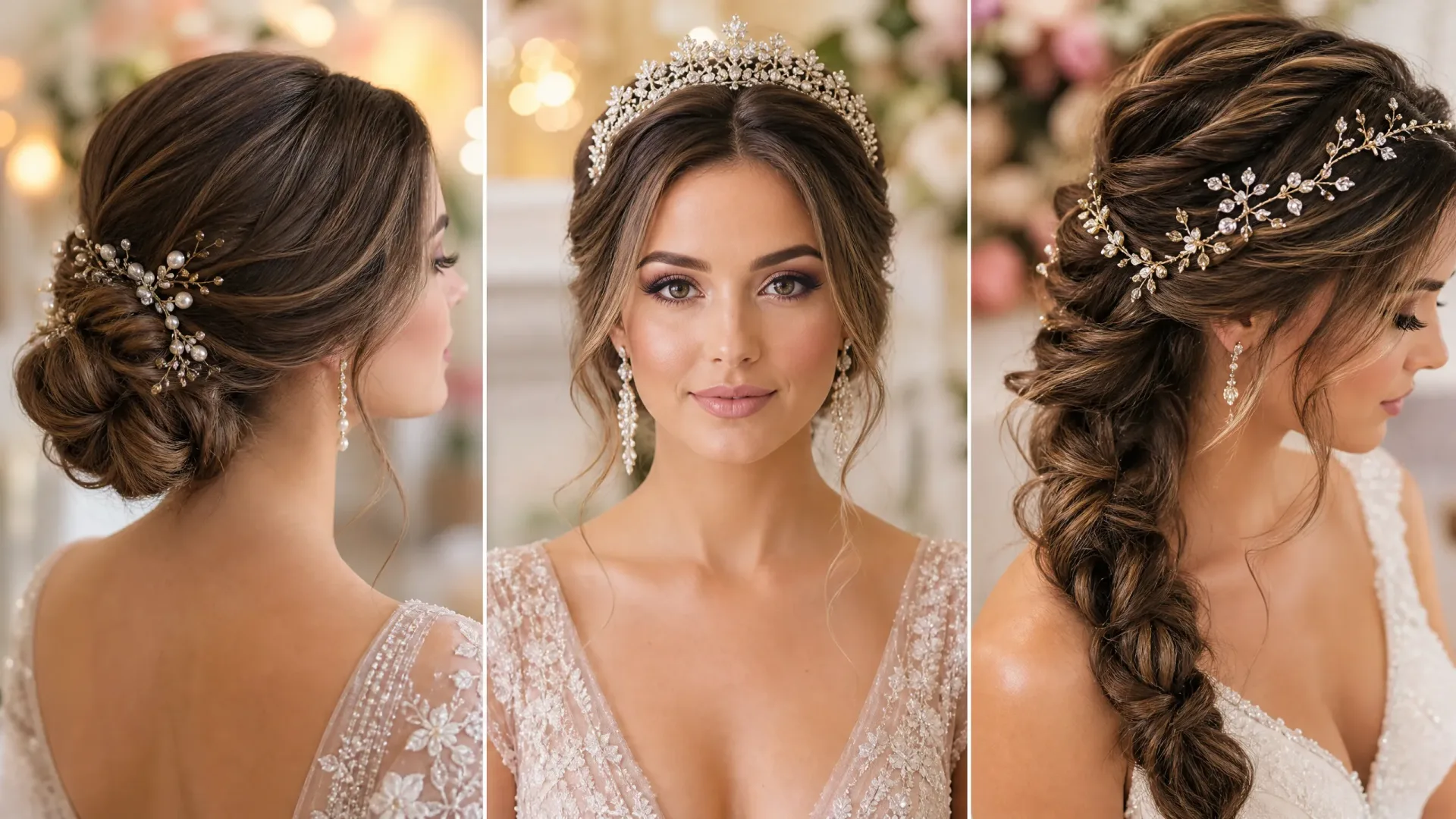
How to Plan an Updo Around Bridal Hair Accessories

A beautiful bridal hairstyle starts with one clear question. What accessory will the updo need to support? A bridal comb needs grip. A hair vine needs space to curve. A tiara needs a smooth crown. Pearl pins need soft texture. A maang tikka needs a neat center part. Do not choose the updo first and hope the accessory fits later. That can make the final style look crowded, uneven, or weak. Instead, build the hairstyle around the hairpiece. This helps the accessory look intentional, not random. Look at your full outfit before deciding. A lace dress may suit pearls or a floral vine. A satin dress may look beautiful with crystal details. A heavily embroidered outfit may need cleaner hair so the jewelry and dress can breathe. Your hair texture also matters. Fine hair may need a smaller piece. Thick hair can hold a larger comb. Curly hair can carry scattered pins beautifully. Shorter hair may need a lighter clip or hidden anchor.
For a full hairstyle plan, use romantic wedding updo hairstyle ideas as your main guide. It helps compare bun height, chignon shape, front pieces, and veil-friendly styles.
Planning tip: Pick your hairpiece before your hair trial, not after the hairstyle is already finished.
Best focus: accessory shape, hair hold, front view, outfit balance, and all-day comfort.
Hair Comb, Hair Vine, and Hair Pin Differences

A hair comb is best when you want one clear detail. It can sit above a bun, beside a chignon, near a veil, or under soft twisted hair. The teeth need a firm base, so the comb does not slide out during the ceremony. A hair vine feels more flexible. It can bend around a low bun, follow a braid, or sit across the back of the head. A vine is pretty for garden weddings, boho dresses, soft lace gowns, and romantic outdoor photos. Hairpins are smaller and easier to spread. Pearl pins, floral pins, and crystal pins can sit inside a textured bun, along a braid, or around a chignon. They are helpful when you want details without one heavy piece. Think about hair length before choosing. A long vine may feel too much on short hair. A tiny pin may disappear in very thick hair. A large comb may feel heavy in fine hair unless the stylist builds a stronger base. Also, think about the veil. If the veil comb sits near the accessory, the two pieces need enough space. A crowded back view can make both pieces look weaker.
Quick match: comb for focus, vine for movement, pins for soft detail, and clips for side sparkle.
Common mistake: Choosing a heavy accessory without checking if the updo can hold it for hours.
Crown Styling for Tiaras

A tiara changes the front look fast, so the crown shape matters. If the crown is too flat, the tiara can look heavy. If the crown has too much height, the tiara may sit too high and feel costume-like. A tiara updo works well with smooth buns, soft chignons, clean pinned curls, and elegant bridal hair. The front should look neat because the tiara brings attention to the forehead, part, and crown. For a strapless dress, a tiara can add height near the face. For a high-neck dress, keep the crown cleaner so the full look does not feel crowded. For a lace dress, soft styling around the tiara can make it feel more romantic. Face pieces should be planned carefully. Too many loose pieces can hide the tiara or make the front look untidy. A soft middle part, side part, or tucked front usually works better. Comfort is just as important as style. A tiara that presses behind the ears can feel painful later. A piece that slides forward can ruin photos. Ask your stylist to pin it in a way that feels firm but not tight.
Best base: clean crown, hidden pins, smooth bun, soft front, and firm tiara placement.
Trial note: Wear the tiara for at least twenty minutes during the trial to check pressure and balance.
Low Bun Ideas With Pearl Pins

A low bun with pearl pins is soft, classic, and easy to love. The pearls add light without taking over the whole hairstyle. This makes them perfect for brides who want detail but still want the hair to feel calm. Pearl pins look beautiful around a chignon, tucked into a textured bun, placed beside a twist, or scattered near a braid. They also pair well with veils, lace gowns, satin dresses, pearl earrings, and soft makeup. If the bun is smooth, use fewer pins. Too many pearls on a sleek bun can look busy. If the bun has texture, you can use more pins because the hair has natural spaces for them to sit. Fine hair usually looks better with smaller pearls. Large pins can pull or stand out too strongly. Thick hair can carry mixed pearl sizes, but the pins need to be placed deep enough so they do not float on top. Color matters too. White pearls feel bridal and classic. Ivory pearls feel softer with warm dresses. Gold pearl pins can match warm jewelry. Silver pearl pins can match crystal or cool-tone accessories.
For softer bridal bun ideas, use classic bridal hair updo inspiration before choosing your pearl placement.
Best pairings: low chignon, pearl earrings, lace veil, soft makeup, and clean neckline.
Style tip: Place pearl pins in small groups instead of a stiff straight line.
Crystal Clips for Glam Bridal Hair

Crystal clips add shine, so the hairstyle around them should stay clean and controlled. A crystal piece can look beautiful beside a sleek bun, above one ear, near a side chignon, or at the base of a twisted updo. A crystal hair clip works well for evening weddings, ballroom venues, satin gowns, and brides who want a polished look. It can also make simple hair feel more dressed up without changing the whole updo. The main thing is balance. If your dress has heavy beading, choose a smaller clip. If your dress is plain, a stronger crystal detail can work. If your earrings are large, do not place the clip too close to them. Crystal clips are often heavier than pearl pins. Your stylist may need to build a firmer side section, add a hidden braid, or cross pins behind the clip. This keeps the piece from sliding down as the day goes on. Think about lighting, too. Crystals can reflect strongly in flash photos. A clip that looks soft in daylight may look much brighter at night. Test it in a few photos during your trial.
Example: A bride wearing a plain satin dress, small earrings, and a low side chignon could wear one crystal clip above the bun. The clip adds shine, while the simple dress keeps the full look balanced.
Best match: sleek bun, side chignon, evening reception, satin dress, and soft side part.
Updo Placement for a Maang Tikka

A maang tikka needs careful front planning. The center part should be clean, smooth, and stable enough to hold the piece. The updo should support the front look without pulling the accessory out of place. A maang tikka updo can work with a low bun, bridal juda, braided bun, smooth chignon, or soft pinned curls. The hair should not have too much loose volume near the part because the tikka needs a clear path. If you are wearing a dupatta, test it with the tikka and bun. The dupatta, tikka chain, earrings, necklace, and pins can all pull in different directions. This is why the trial should include the full front look, not only the bun. For heavy outfits, a clean bun often works better than a very loose updo. It keeps the jewelry balanced and makes the front look neat in close photos. If the outfit is lighter, a soft bun with a gentle texture can feel more relaxed. Think about the forehead shape and parting, too. The middle part feels traditional and clean. A slightly softer front can look more romantic. The tikka should sit straight and not shift when you smile, look down, or turn your head.
Best base: center part, smooth crown, secure bun, strong pins, and balanced jewelry.
Comfort check: The tikka should not pull at the hairline or feel tight on the scalp.
Clean Bridal Looks With Minimal Accessories

Minimal accessories can look very elegant. A small pin, thin comb, soft pearl clip, or simple barrette can give the hair just enough detail without making the style feel busy. A minimal bridal updo works well with modern dresses, clean necklines, satin gowns, city weddings, courthouse ceremonies, and brides who like simple beauty. It also helps when the dress, veil, or earrings already have strong detail. For this style, the updo shape matters more than the accessory. The bun should be neat. The front should feel clean. The accessory should look placed with care. A tiny pin in the wrong spot can look random. If the accessory is small, place it where it will show in photos. Near the bun, above one ear, beside a twist, or at the side of a chignon usually works well. Avoid hiding it under thick hair or behind the veil. Minimal styling also works well for brides who plan to change looks from the ceremony to the reception. You can wear a veil first, then add a tiny pin or barrette after removing it. This keeps the hair fresh without a full restyle.
Best choices: tiny pearl pin, small crystal comb, slim barrette, soft gold hairpin, and delicate side clip.
Style rule: With minimal accessories, clean hair shape matters more than sparkle.
Balancing Simple Hair With Heavy Jewelry

Heavy jewelry can be beautiful, but it needs space. If your earrings, necklace, tikka, headpiece, or dupatta border are large, your hairstyle should not fight for attention. A simple bridal bun often looks best with heavy jewelry. It lets the face, earrings, neckline, and outfit stay clear. A neat chignon, low juda, smooth bun, or tucked twist can hold the look together without adding too much texture. If your earrings are long, avoid placing a large clip right beside them. If your necklace is heavy, keep the neck area clean. If your dupatta has a strong border, test how it sits over the bun and accessory. Simple hair does not mean plain hair. It means the shape is clean and the details are controlled. One well-placed accessory can be stronger than many small pieces spread across the head. For brides wearing heavily embroidered outfits, think about color and shine. Gold jewelry may pair better with warm pins. Silver jewelry may look cleaner with crystal or pearl details. A colorful outfit may need neutral hair accessories so the full look stays soft.
For veil pairing, read veil-friendly bridal updo styling before choosing large accessories.
Best balance: heavy jewelry, clean part, low bun, light pins, and soft face framing.
Photo tip: Take front and side photos with jewelry on before approving the accessory placement.
Checking Accessory Weight and Hair Hold

Accessory weight is one of the most missed details in bridal hair planning. A hairpiece can look light in photos but feel heavy after one hour. Heavy combs, crystal clips, tiaras, and long vines need better support than tiny pins. For a secure Updo for Bridal Hair Accessories, your stylist may use hidden braids, crossed pins, texture spray, padding, or a stronger bun base. The goal is to hold without pain. Fine hair may need lighter accessories. Thick hair may need longer pins. Curly hair may hold pins well, but placement should not crush the curl shape. Short hair may need a smaller comb or extra grip near the crown. Scalp comfort matters. If a piece pinches, pulls, scratches, or feels sharp during the trial, do not ignore it. The wedding day is long. A small pressure point can feel much worse after hours of photos and movement. Think about skin contact, too. Some accessories touch the scalp, ears, or hairline. If you are sensitive to metals, coatings, or styling products, read neutral public guidance on contact dermatitis before wearing a new piece close to the skin for many hours.
Hold check: move your head, hug someone, sit down, look down, and remove the accessory once.
Common mistake: Testing the accessory only while standing still in front of a mirror.
Testing Your Hairpiece on Trial Day

Your trial day should test the real hairpiece, not just the hairstyle. Bring your comb, vine, pins, tiara, tikka, veil, earrings, and dress photos. These details can change the shape of the updo. A bridal hair trial should include front photos, side photos, back photos, and movement checks. The accessory should stay secure when you walk, turn, hug, sit, and tilt your head. Ask your stylist how the piece will be removed if you plan a reception hair change. Some accessories slide out easily. Others need pins removed in a certain order. A hair vine can tangle if it is pulled too fast. Also test how the piece feels over time. A tiara may feel fine for five minutes, but tight after thirty. A comb may slowly slide. A clip may press behind the ear. Pearl pins may move if the bun is too soft. If you are using heated tools, smoothing products, or special styling prep during wedding week, review neutral safety guidance from the FDA hair smoothing product safety page. This is useful if salon treatments or heated products are part of your prep. Do not forget the weather. Humidity, wind, heat, and long outdoor photos can all affect the hold. A style that looks perfect indoors may need stronger pinning for a garden or beach wedding.
Trial list: real accessory, veil, earrings, neckline photo, comfort test, removal plan, and outdoor photo check.
Smart move: Ask your stylist to take one photo after the accessory has been worn for a while.
Detail Shot Ideas for Bridal Hair Accessories

Accessory photos are a big part of bridal hair planning. A pretty hairpiece should be seen from the right angle. The back view shows a bun shape. The side view shows placement. The front view shows how the accessory works with the face. Ask for close-up photos before the ceremony. This is helpful for pearls, crystals, flowers, vines, tiaras, barrettes, combs, and maang tikka details. If the accessory is small, close shots matter even more. A Pinterest-friendly photo often shows the updo, accessory, earrings, neckline, and veil in one soft frame. A side-back angle is usually the easiest way to capture all of this. If your accessory is shiny, check it in natural light. Some crystals reflect strongly. Some pearls look softer in shade. Some gold pieces look warmer near sunset. A detail that looks perfect indoors may look different outside. Ask for photos with the veil and without it. If you remove the veil later, the accessory should still make the hair look complete. This is especially important for reception photos and dancing shots. For floral accessories, pair this guide with floral wedding updos for soft bridal detail. It helps you choose flower size, season, placement, and outfit balance.
Photo list: front view, side-back view, close detail, veil-on photo, veil-off photo, and reception look.
Final styling note: The best accessory updo feels secure, balanced, and beautiful from every angle.
Before the wedding day, save your favorite angle from the trial. Show it to your photographer and stylist. This helps everyone understand which part of your hairpiece matters most to you.