What Are Wedding Updo Hairstyles?

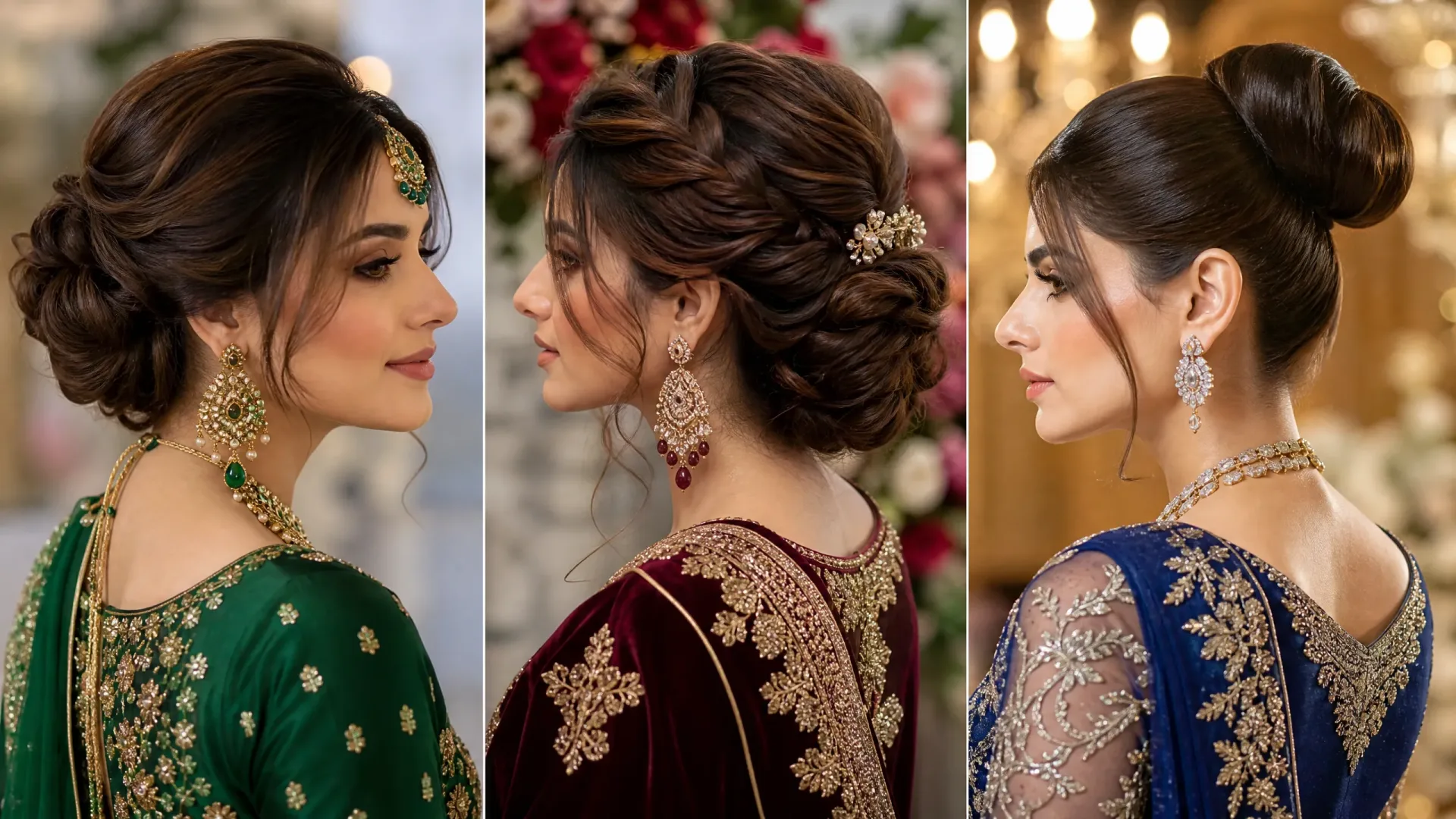
Wedding Updo Hairstyles are hairstyles where most or all of the hair is pinned up instead of left fully loose. The hair may sit low at the nape, high near the crown, softly twisted at the back, or braided into a neat shape. Some updos feel clean and formal. Others look soft, loose, and romantic. These styles are popular for weddings because they keep hair away from the face and help the dress neckline show clearly. They also hold better during hugs, photos, warm rooms, dancing, and outdoor moments. A bridal updo can also make it easier to wear a veil, dupatta, pearl pins, flowers, a comb, or a tiara. A good updo does not need to look stiff. Many modern wedding updos use soft curls, loose texture, and small pinned sections. This makes the style feel natural while still giving enough hold. If you are making a wedding hair board, save both front and back views. A bun may look perfect from behind but too plain from the front. A wedding hairstyle should feel balanced from every angle.
For more connected ideas, you can use this wedding updo hairstyles guide as the main pillar page.
Best Updos for Brides, Bridesmaids, and Guests

Brides usually need an updo that feels special but still feels like them. A soft chignon, textured low bun, braided crown bun, or smooth bridal bun can all look beautiful. The key is balance. The hair should support the dress, makeup, jewelry, and headpiece without taking over the whole look. Bridesmaids often look best in styles that match the wedding mood but are not too detailed. A low bun wedding hairstyle, soft twist, or simple braided updo can look polished in group photos. Guests can go lighter with a loose bun, a side bun, or pinned curls.
- For brides: soft bridal bun, chignon, braided updo, veil-ready bun.
- For bridesmaids: neat low bun, soft twist, simple textured updo.
- For guests: easy wedding hair up styles, side buns, loose pinned curls.
Helpful tip: If you are not the bride, keep the style pretty but slightly simpler.
Bun, Chignon, Twist, and Braid Styles Explained

A bun is the most common wedding updo. It can be round, loose, sleek, high, low, or placed to one side. A bridal bun often feels timeless because it shows the face, neck, earrings, and dress clearly. A chignon is usually a low, tucked style near the nape of the neck. It looks graceful and works well with veils, pearl pins, and classic gowns. A twist is made by rolling or folding sections of hair into shape. It can feel soft, clean, and modern. A braided updo uses one or more braids as part of the style. This could be a crown braid, side braid, fishtail braid, rope braid, or a braid wrapped into a bun. If you love texture, a braided wedding updo can give your hair more detail without needing too many accessories.
Style note: A messy bun should still be shaped with care. Loose does not mean untidy.
How to Choose an Updo for Your Face Shape

Your face shape can help you choose a more flattering updo, but it should not become a strict rule. Comfort matters most. Still, small changes in height, width, parting, and front curls can change how the style looks in photos. Round faces often look lovely with soft height at the crown and loose side pieces. Square faces can feel softer with waves around the jaw and a relaxed bun. Oval faces can wear many styles, from sleek wedding bun hairstyles to loose braided updos. Heart-shaped faces often suit low buns with gentle volume near the neck. If your face is long, avoid too much height on top. A low chignon or side bun can add balance. If your face is small, avoid a huge bun that takes over the look.
Try this: Save one front-view photo and one back-view photo before your hair trial.
Wedding Updos for Short, Medium, and Long Hair

Short hair can still work beautifully in an updo. A stylist may use small twists, hidden pins, soft waves, or a mini low bun shape. Hair accessories can help fill the style without making it look fake. Pearl pins, tiny flowers, and slim combs are great for short bridal updos. Medium hair is very flexible. It can hold a chignon, low bun, French twist, or braided bun without feeling too heavy. This length often gives the best balance of hold and softness. Long hair gives more room for full buns, long braided details, rolled twists, and bigger textured shapes. But long hair can also feel heavy, so good pinning matters. A heavy updo may pull at the scalp if it is not built well. For more ideas by length, see these low bun wedding hairstyles for brides. Low buns work across short, medium, and long hair because the shape can be adjusted.
Simple rule: shorter hair usually needs a softer and smaller updo. Longer hair usually needs more structure.
Updo Ideas for Fine, Thick, Curly, and Straight Hair

Fine hair can look fuller with soft curls, light teasing, and texture spray. A low textured bun, braided bun, or tucked chignon can create the look of more volume. Very flat styles may make fine hair look thinner unless the finish is meant to be sleek. Thick hair needs control. A stylist may divide the hair into sections so the bun does not feel bulky. A smooth chignon, twisted bun, or braided shape can keep thick hair neat and secure. Curly hair is beautiful in wedding updos because the texture already gives shape. Wedding updos for curly hair can show natural curls while keeping the style pinned and comfortable. A few curls around the face can soften the full look.
Straight hair can look clean and graceful in sleek buns, polished twists, and smooth bridal updos. It may need extra grip so pins stay in place.
Important tip: Do not fight your natural texture too much. The best updo works with your hair, not against it.
Matching Your Updo With Your Dress Neckline

Your dress neckline can guide your hairstyle. A strapless dress often looks pretty with a soft low bun, loose front pieces, or romantic bridal updos that add softness around the shoulders. A high neckline usually works better with hair lifted away from the neck so the dress detail stays clear. For a V-neck dress, a low chignon or side bun can follow the shape of the neckline. For an off-shoulder dress, a soft bun with face-framing curls keeps the look balanced. For a backless dress, think about the back view. A clean bun or detailed braided updo can make the open back stand out. If your dress has heavy beading, lace, or a bold neckline, keep the hair cleaner. If the dress is simple, your updo can have more texture, braids, or accessories.
A good wedding hair up style should not hide the dress. It should frame it.
Small detail: Big earrings often look better with a cleaner bun. Tiny studs can pair well with soft curls.
Styling an Updo With a Veil, Dupatta, or Hairpiece

Veils, dupattas, combs, pins, flowers, and tiaras need a strong base. That does not mean the hair has to look stiff. It only means the inner structure should be secure. A veil can sit above a bun, under a bun, or near the crown. A wedding updo with veil often looks best when the veil placement is planned before the final pinning. If the veil is heavy, the stylist may need extra hidden support. A dupatta may need more hold around the crown and sides, especially for long ceremonies. The updo should feel comfortable under the fabric and should not pull at the roots. Hairpieces such as pearl pins or floral combs look lovely when placed along the curve of a bun or tucked into a braid.
- Use small pins for soft detail.
- Use a comb for one clear focal point.
- Use flowers for a romantic garden look.
Do not add every accessory at once. Choose one main piece and let it stand out.
Soft Romantic Updos vs Sleek Formal Updos

Soft romantic updos usually have loose curls, airy texture, face-framing strands, and a slightly undone finish. They work well for garden weddings, beach weddings, rustic venues, outdoor photos, lace dresses, and soft makeup. Sleek formal updos are cleaner. They may have a smooth middle part, polished bun, tight chignon, or glossy twist. They work well for ballroom weddings, evening events, satin dresses, modern gowns, and bold earrings. A sleek wedding bun hairstyle can look very elegant in photos. Neither style is better. They create different moods. If you like soft movement, choose texture. If you like clean lines, choose polish.
Example. A bride wearing a lace off-shoulder gown for an outdoor spring wedding may choose a loose low bun with soft curls and pearl pins. Her sister, wearing a satin bridesmaid dress, may choose a smoother low chignon. Both styles feel connected, but each one fits the person and outfit.
Best choice: match the updo to the dress fabric, venue, makeup, and your normal style.
Best Updo Styles for Indoor and Outdoor Weddings

The wedding setting matters more than many people think. Indoor weddings are kinder to hair because there is less wind, less humidity, and fewer weather surprises. For an indoor venue, you can choose soft curls, loose tendrils, or a more detailed bun because the style is easier to protect. Outdoor weddings need stronger hold. Wind, heat, moisture, and long photo sessions can loosen hair. A low bun, braided bun, twisted chignon, or pinned curly updo can hold better than a loose style with many free pieces. For beach weddings, keep the updo soft but secure. For garden weddings, small flowers or pearl pins can look natural. For winter weddings, smooth buns and tucked styles work well with coats, scarves, or high necklines.
Weather note: If the ceremony is outside, ask for a style that looks better as it softens instead of falling apart.
Wedding Updo Hairstyles should feel pretty at the start and still look good after hours of movement.
Front View, Side View, and Back View Hair Details

Many people save only back-view photos of updos. The back matters, but the front is what most people see when they talk to you. It is also what appears in many close-up portraits. A good wedding updo should look balanced from the front, side, and back. The front view includes the part, crown height, soft curls, face-framing pieces, and how the hair sits around the ears. The side view shows the shape of the bun, the volume at the crown, and how the style works with earrings. The back view shows the full design, such as a twist, braid, chignon, or bridal bun. Before choosing a style, save photos from different angles. This helps your stylist understand what you like. You may love the back of one style but prefer the front of another.
Common mistake: choosing a style only because the back looks pretty. Make sure you like how it frames your face too.
How to Prepare for a Bridal Hair Trial

A hair trial helps you see if the style works before the wedding day. Bring clear photos, but do not bring too many. Three to five strong examples are enough. Try to include one front view, one side view, and one back view. Wear a top with a neckline close to your dress if possible. Bring your veil, dupatta, comb, pins, or earrings if you already have them. This makes the trial more realistic. If you are still choosing accessories, ask your stylist what would suit the updo shape. Come with clean, dry hair unless your stylist says otherwise. Some stylists prefer hair washed the day before because it has more grip.
- Take photos in natural light.
- Move your head to test comfort.
- Check if any pins pull or hurt.
- Ask how the style will hold for your venue.
Best trial goal: leave knowing what you want changed, not just whether you like it.
Questions to Ask Your Wedding Hairstylist

A good stylist does more than pin hair. They help you choose a style that works with your hair, dress, venue, and schedule. Before the wedding day, ask simple questions so you know what to expect. Ask how long the style will take, how it will hold, and what products will be used. If your scalp is sensitive, say that early. If your hair drops curls, gets oily, or frizzes in humidity, tell the stylist before they start. You can also ask if extensions are needed. Some wedding bun hairstyles look full because extra hair has been added. That is not wrong, but you should know before choosing the look.
- Will this updo hold for my venue?
- Can my veil or dupatta be removed safely?
- Do I need padding, extensions, or extra pins?
- How should I prep my hair the night before?
Smart move: take photos after the trial and check them later before making final changes.
Final Wedding Hair Checklist Before the Big Day

The final days before the wedding are not the time for big hair changes. Avoid a new haircut, new color, or strong treatment unless your stylist already planned it. Keep your hair healthy, clean, and easy to style. Confirm your appointment time, location, and style plan. Send your stylist a final photo of your chosen look. Make sure they know whether you are wearing a veil, dupatta, flowers, pearl pins, or any other hairpiece. Keep accessories in one small bag so nothing gets lost. On the wedding day, wear a button-up shirt or robe so you do not pull clothing over the finished updo. Eat before styling if you can. A calm morning helps everything feel easier. Before leaving the chair, check your front, side, and back views. Make sure the pins feel secure but not painful. Ask for a few extra pins if needed.
Wedding Updo Hairstyles should feel beautiful, steady, and comfortable. The right one lets you move, smile, hug, dance, and enjoy the day without thinking about your hair every few minutes.
Final note: the prettiest updo is not always the most complex one. A simple bun that feels comfortable and photographs well can be the better choice.