
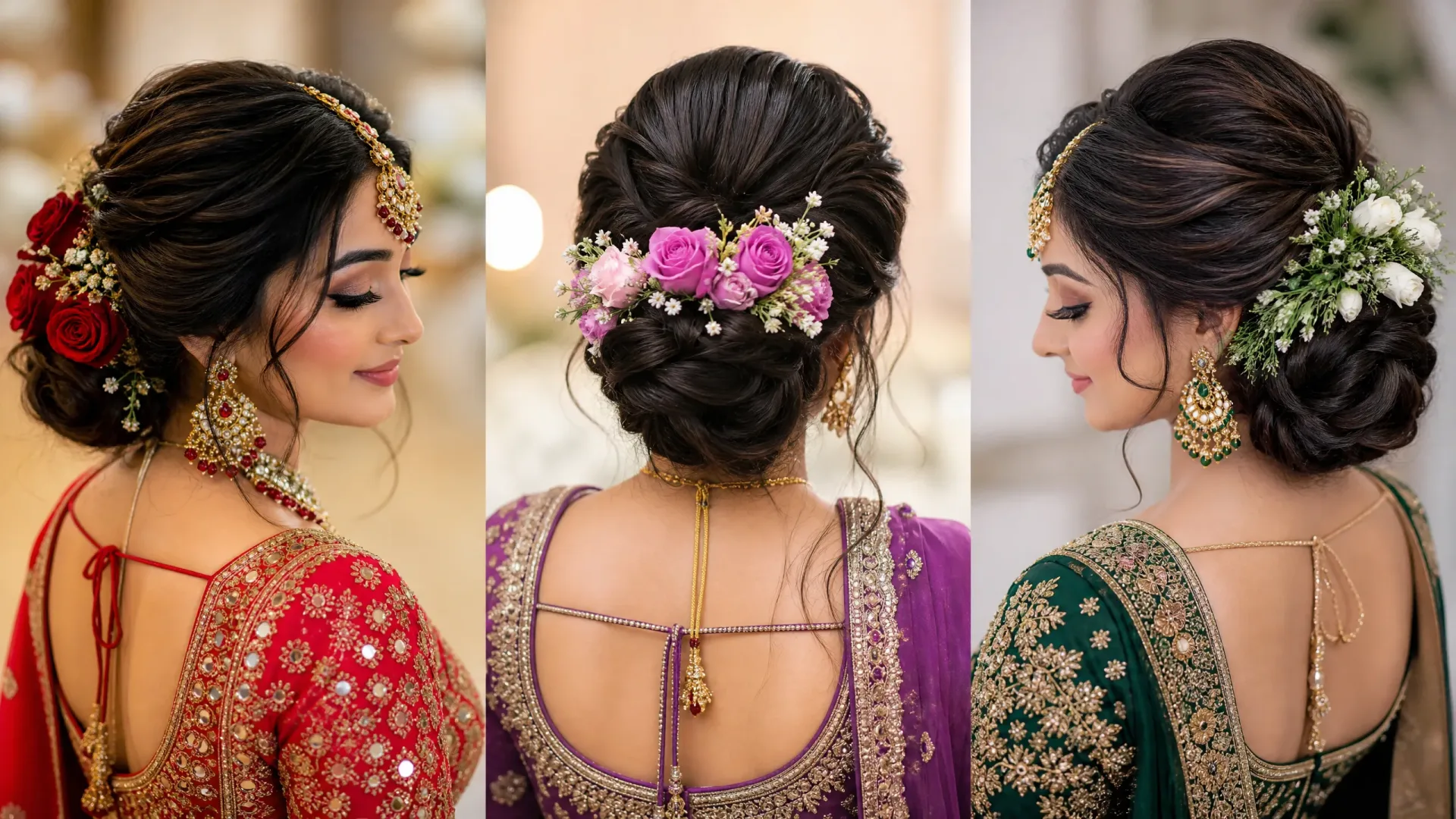
This guide covers Indian bridal juda ideas with mogra wraps, rose buns, fresh gajra, floral side accents, braided sections, full petal coverage, and bridal bun with flowers styles that feel elegant for wedding day.
Bridal juda hairstyles with flowers look best when the flower placement supports the bun shape, matches the outfit, and stays secure without hiding jewelry, dupatta details, or the back view.
Mogra Wrapped Juda Styles for Bridal Hair

Mogra wrapped juda styles are one of the most loved looks for South Asian bridal hair. The white flowers sit around the bun and create a soft frame that feels traditional without looking harsh. This works beautifully for bridal juda hairstyles with flowers because the flower ring shows clearly in back photos, side portraits, and dupatta shots. A mogra wrap can go around the full bun, sit along the lower edge, or form a half-circle at the nape. A full wrap feels more classic. A lower wrap feels softer and lets more of the bun show. The right choice depends on the bride’s outfit, jewelry, and photo plan. This style suits red lehengas, ivory sarees, gold jewelry, silk outfits, and traditional ceremony looks. It also works when the bride wants a graceful Indian bridal juda shape without too much shine. The bun should be pinned first, then the mogra should be added as the final frame.
Fresh mogra can have a strong scent, so brides should test comfort before the event. It is also smart to ask how long the flowers stay fresh, especially for outdoor weddings or warm weather. If the flowers wilt too fast, the back view of the bun may lose its shape before the main photos.
For brides planning a traditional bun base, Indian bridal bun shapes for wedding day styling fits naturally here because the bun size and flower wrap have to work together.
Mogra styling tip: keep the flower wrap even and close to the bun, so it does not shift during hugs or ceremony photos.
Rose Bun Details With a Classic Round Shape

Rose bun details look rich, romantic, and full in wedding photos. A classic round juda gives roses a clean base, so the flowers look placed instead of scattered. This is a strong choice for a bridal bun with flowers when the bride wants a bold but polished finish. Roses can sit along one side of the bun, around the lower edge, or in a soft half-moon shape. Red roses feel deep and traditional with maroon, red, and gold outfits. Pink roses feel softer with pastel lehengas. Ivory roses work well with champagne, cream, gold, or pearl details. The bun shape should still be visible. If roses cover everything, the hairstyle can look more like a flower ball than a bridal juda. A classic round bridal shape gives structure, while the roses add softness. This is especially helpful when the bride has heavy jewelry, because the hair still has a clear shape.
For a heavy dupatta, roses should sit lower or slightly to the side. If they sit too high, the dupatta may crush them. If they sit too close to the ears, they can crowd jhumkas or side jewelry.
A rose bun also needs fresh flower planning. Roses that are too open may shed petals. Very tight buds may not show enough shape in photos. Medium blooms are usually easier to balance. A few smaller roses mixed with tiny white flowers can create soft depth around the bun without making the hairstyle too heavy.
Flower size note: medium roses often look more balanced than very large blooms on a bridal bun.
Fresh Gajra Placement Around the Nape

Fresh gajra around the nape gives bridal hair a soft, traditional finish. The flowers curve around the lower part of the bun and make the back view look complete. This placement is graceful for a juda hairstyle with flowers because it adds detail without covering the whole bun. A nape gajra works well with sarees, lehengas, ghararas, shararas, and dupatta styles. If the bride is wearing a heavy necklace, the gajra should not sit too low. It should frame the bun, not crowd the neck. If the blouse has a deep back, a nape gajra can help connect the hair and outfit in photos.The shape should follow the curve of the juda. A tight gajra may look stiff. A loose one may slip or look uneven. The best placement feels firm, neat, and soft at the edges. Fresh flowers should also be checked for scent, shedding, and heat response.
This style works well for brides who want flower detail but still want the bun to show. It can be paired with a center part, tikka, pearl pins, or a simple front. For very heavy outfits, keep the gajra simple so the full look does not feel too crowded.
When flowers are the main hair detail, wedding updo hairstyles shaped with flowers can help connect bloom size, bun height, and outfit detail in a useful way.
Gajra placement tip: pin the bun first, then place the gajra as a final frame.
Floral Side Accents for Traditional Hairdos

Floral side accents are a good choice when the bride wants flowers without covering the full bun. The flowers sit on one side of the juda, near the lower edge, or slightly behind the ear. This gives the hairstyle a soft detail while keeping the Indian bridal juda shape visible. This style works well with side portraits, passa jewelry, side dupatta draping, and soft bridal makeup. A small group of flowers can balance heavy earrings or a detailed neckline. It also helps brides who want a little color, but not a full gajra wrap. The flower size should match the jewelry. Large jhumkas need smaller flowers. A simple earring can handle a fuller side cluster. If the bride has a side part, flowers can sit on the opposite side to balance the face. If the front is center-parted, the floral accent can sit closer to the bun instead of the hairline.
Placement matters more than quantity. Flowers placed too close to the ear can press against earrings. Flowers placed too far out can look like they are floating away from the hairstyle. The best side accent sits close to the bun, where it supports the traditional hairdo with jewelry balance.
This look is also useful for brides with heavy dupattas. A side accent can stay below the main fabric line, so the flowers are less likely to get crushed. If the dupatta border is wide, the flower cluster should be tested with the actual fabric during the trial.
Side flower tip: keep the flowers angled toward the bun, not hanging outward.
Low Juda Looks With Tiny White Blooms

Tiny white blooms can make a low juda look soft, clean, and elegant. They are smaller than roses and lighter than a full gajra, so they add detail without taking over the hairstyle. This is a beautiful option for floral bun styling that feels gentle and easy to wear. The blooms can be tucked around the lower bun, placed in small groups, or added near soft twists. They work well with ivory outfits, pastel lehengas, pearl jewelry, soft sarees, and reception looks. They also suit brides who want flowers but do not want a very traditional full wrap. A low juda with tiny blooms should still have a clear shape. If too many flowers are scattered, the style can look busy. Three to five small clusters are often enough. The stylist can place them where the bun naturally turns, so the flowers feel connected to the hair.
This style is also practical for lighter dupattas. Since the flowers are small, they are less likely to flatten under fabric. For a heavier dupatta, keep the blooms below the main pin area. If the bride wears a tikka and large earrings, tiny flowers keep the back pretty without making the whole look too heavy.
Tiny white blooms also photograph well in soft natural light. They create small points of detail around the bun and make the back view feel more finished. For darker hair, the contrast can be beautiful. For lighter brown hair, the look feels more blended and delicate.
Tiny bloom note: use small flowers to show texture, not to hide the bun.
Braided Sections Finished Into a Flower Bun

Braided sections can make a flower bun look more detailed and secure. A braid can start near the side, move toward the back, and blend into the juda. Then flowers can be placed around or inside the bun. This gives bridal juda hairstyles with flowers more structure without making the look too stiff. This idea works well for long hair and medium hair. A side braid can soften the face. A back braid can add texture to the bun. A small braid around the bun can make the flower placement look more planned. The braid also gives pins a stronger place to hold, which is useful for long ceremonies. For traditional weddings, keep the braid smooth and add mogra, jasmine, or a small gajra near the bun. For softer modern looks, loosen the braid slightly and add tiny blooms or pearl flowers. The braid should not compete with the flowers. It should guide the eye toward them.
This look is helpful when the bride wants more than a plain floral bun but does not want a very heavy hairstyle. A braid can add shape even if the flower detail is simple. It also helps with layered hair because shorter pieces can be tucked into the woven section.
For more woven bridal ideas, braided wedding updo patterns finished into bridal buns fits this section naturally, since braid direction changes how the final flower bun looks.
Braided flower tip: hide the braid end inside the bun before adding flowers.
Full Petal Coverage for a Statement Back View

Full petal coverage is made for brides who want the back of the hairstyle to stand out. The bun is covered with petals, small flowers, or a tight floral layer so the back view looks rich and bold. This is a strong bridal bun with flowers idea for portraits where the dress, dupatta, and hair are seen from behind. This style works best when the front is cleaner. If the back has full flower coverage, the front should not have too many loose pieces or heavy extras. A center part, sleek side part, or soft crown lift can balance the statement bun. Petal coverage should be planned by color. Red petals create a deep bridal look. White petals feel classic. Pink and peach flowers feel softer. Mixed colors can work for Mehndi, but they should match the outfit. Too many colors can make the bun look less refined.
Since full coverage adds weight, the base must be strong. The flowers should be pinned into the bun structure, not only tucked into the outer hair. A statement back view should still feel comfortable through the full event.
This look is best for brides who want the hair to be a major part of the wedding style. It can work beautifully with simpler jewelry, clean makeup, and a dupatta that does not fully cover the bun. If the dupatta is placed over the bun, petal coverage may get crushed, so the fabric setting should be tested first.
Statement bun tip: keep the flower layer even so the bun shape stays round.
Soft Front Hair With a Floral Bun Finish

Soft front hair can make a floral juda feel more modern and gentle. The front may have a soft center part, light side pieces, gentle waves near the temples, or a smooth crown with a little lift. The floral bun finishes the style at the back. This look is useful when the bride wants a traditional juda hairstyle with flowers but does not want the front to feel too tight. A few shaped pieces can soften the face and help the style look natural in close portraits. The front should still stay controlled. Too many loose pieces can get caught in earrings, tikka chains, dupatta borders, or necklace details. The best soft front has small, placed sections that frame the face without hiding it. This style works well for brides with round, square, oval, or heart-shaped faces. A little crown lift can add length. Soft side pieces can balance heavier jewelry. A floral bun in the back keeps the full look bridal and grounded.
If the dupatta is part of the outfit, the front has to be planned with the fabric. The dupatta should not press the face pieces flat or push them into the eyes. A hidden pin near the temple can hold the shape while still looking soft.
For brides wearing a dupatta with floral juda, Pakistani bridal updo shapes planned around dupatta support connects well because the front hair and fabric placement need to work together.
Soft front tip: shape the face pieces before placing the dupatta or tikka.
Minimal Flower Details for a Clean Bridal Look

Minimal flower details are perfect for brides who want a clean bridal look. Instead of a full gajra or large floral bun, the hairstyle uses a few small blooms placed with care. This keeps the juda elegant and lets the outfit, jewelry, and makeup stay in focus. A minimal Indian bridal juda can use one flower cluster near the lower bun, tiny white blooms along one side, or a small floral pin tucked into a twist. It works well for reception looks, Nikkah styling, modern sarees, pastel lehengas, and brides who prefer simple details. The bun should be polished because fewer flowers mean the hair shape is more visible. A smooth rounded bun, soft chignon, or tucked low juda can all work. The key is clean placement. Random flowers can look accidental, while one planned cluster looks graceful. Minimal flowers are also useful when the bride is wearing heavy jewelry or a detailed dupatta. The hair supports the full bridal look without adding too much visual weight. It also works when the outfit has heavy embroidery, because the hairstyle does not compete with the fabric.
This style can feel very elegant in close portraits. A small white flower near a low bun can highlight the shape without taking attention from the bride’s face. For brides who want a very soft finish, pearl pins can be mixed with tiny blooms.
Clean look rule: use fewer flowers, but place them where they shape the bun.
Traditional Juda Shapes Styled With Fresh Garland

A fresh garland can turn a traditional juda into a full bridal statement. The garland may be mogra, jasmine, rose buds, or mixed small flowers. It can wrap around the bun, sit under the bun, or frame the nape. This gives bridal juda hairstyles with flowers a rich wedding-day finish. The traditional juda shape should be built first. A rounded bun, low nape bun, or smooth classic bun gives the garland a steady base. Once the bun is secure, the garland can be placed around it. If the garland is added too early, it may shift while the final pins are placed. This style is especially strong for ceremony photos, family portraits, and bridal entry shots. It pairs well with sarees, lehengas, temple jewelry, dupattas, and classic makeup. It also suits brides who want a cultural hairstyle that still feels soft and romantic.
Fresh flowers need planning. Ask how long the garland will stay fresh, how strongly it smells, and whether it sheds. Brides with sensitive skin should test flower contact before the event. Neutral allergy information from MedlinePlus can help with general allergy and skin reaction awareness, especially when fresh flowers touch the neck or scalp.
A garland also has weight. If it is thick, the bun must be pinned well. The garland should not pull the bun down or press into the neck. The final look should feel secure, not tight.
Fresh garland tip: keep the garland secure, but not so tight that it flattens the bun.
A floral juda should feel beautiful, but it should also feel secure and balanced. The flowers, bun shape, jewelry, dupatta, neckline, and photo plan all need to work together. A full gajra can feel classic. A rose bun can feel rich. Tiny white blooms can feel soft. A fresh garland can bring a strong traditional finish. Before the wedding day, test the bun with the same type of flowers, jewelry, and dupatta. Check the back view, side view, and close portraits. The best bridal juda does not hide under flowers. It lets the flowers frame the hair while the bride still looks comfortable, graceful, and ready for every ceremony moment.